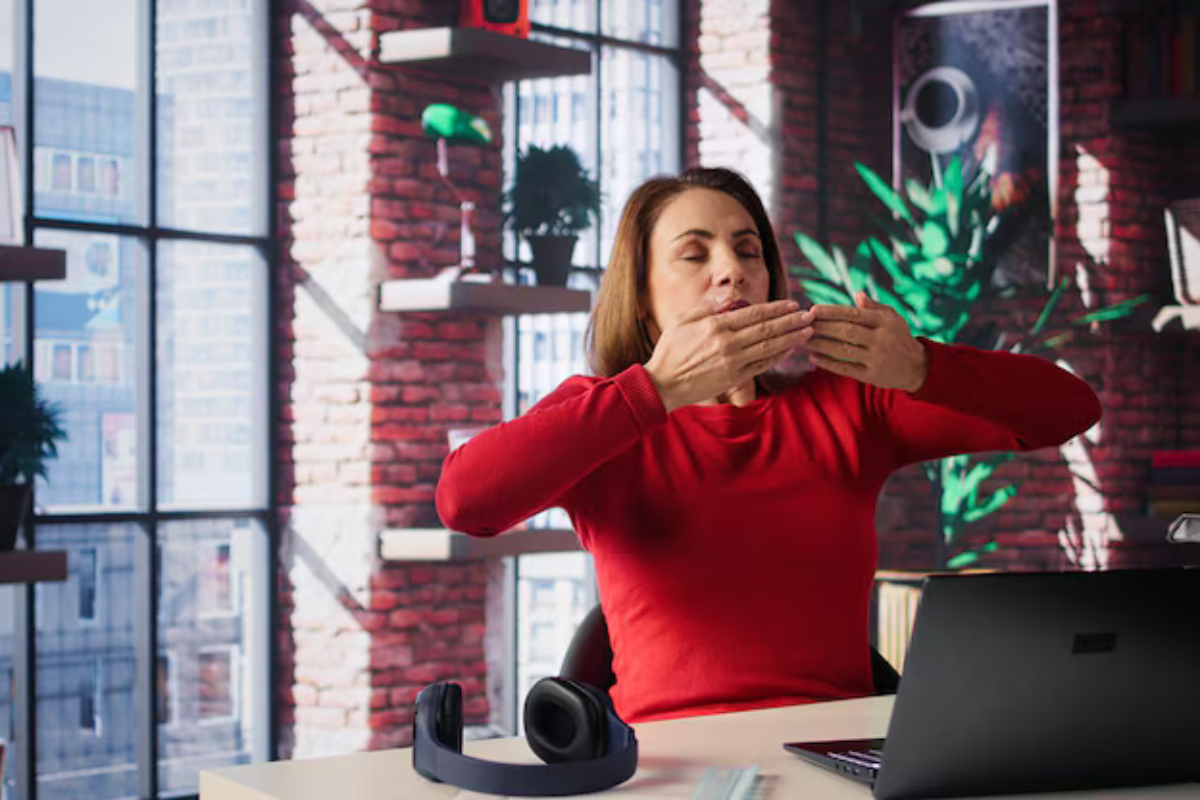
When Sunday Night Hits Too Hard
It starts as a quiet hum—maybe Saturday night, definitely by Sunday afternoon. The what-ifs, the to-do lists, the student needs you’re still carrying from last week. You tell yourself to relax, but your mind keeps wandering to your desk, your planner, that lesson that still doesn’t feel quite right.
Anxiety about the week ahead isn’t a sign that you’re unprepared. It’s often the echo of how much you care.
But you don’t have to carry that care into bedtime.
Tonight, try something gentle. No screens, no late-night scrolling, no to-do list hacks. Just your breath—and a simple rhythm designed to help your body let go.
It’s called 4-7-8 breathing. And it’s not just a technique—it’s a message to your nervous system: You’re safe. You can rest now.
The 4-7-8 Breath: A Nighttime Anchor
This practice takes less than two minutes. But in that time, you’re doing something powerful: you’re interrupting the loop of anxious thoughts and giving your body a different signal—one of calm, of grounding, of release.
You don’t need to sit a certain way or light a candle (though you can). Just find a quiet moment tonight—maybe while lying in bed, or sitting beside your lamp with a soft blanket over your lap.
Then begin.

Here’s how to do it:
1. Get Comfortable
Sit or lie down somewhere quiet. Let your hands rest on your belly or by your sides. Close your eyes if that feels good.
2. Breathe In (4 counts)
Inhale slowly through your nose for a count of four.
Feel your breath rise—gently, without effort.
3. Hold (7 counts)
Pause and hold your breath for a count of seven.
Let the stillness settle in your chest.
4. Breathe Out (8 counts)
Exhale through your mouth slowly for eight counts.
Imagine the tension in your body flowing out with the breath.
Repeat this pattern for four rounds—or more if you like. Let your breath be the only thing you follow.
If your mind drifts (it will), just begin again. Every new breath is a fresh start.
Why This Breathing Helps You Let Go

You might think stress is just a mind thing—but your body knows it too. It shows up in tight shoulders, racing thoughts, clenched jaws, and the kind of sleep that feels more like tossing than resting.
The 4-7-8 breath is gentle, but it speaks directly to the part of your nervous system that decides whether you stay in fight-or-flight—or soften into rest.
Here’s what happens when you give it just a few minutes:
- Your heart rate slows, naturally guiding your body into calm
- Your mind quiets, because counting gives it something safe to hold
- Your muscles release, especially around the belly and chest
- Your breath deepens, signaling safety and grounding
- Your thoughts loosen, because presence replaces planning
This isn’t about erasing your worries. It’s about creating space from them—enough space to fall asleep not with pressure, but with peace.
Turning This Into a Ritual, Not a Rule
You don’t need to “get it right.” You don’t even need to do it every night. What matters is that you give yourself permission to pause—to make space between the stress of tomorrow and the rest you need tonight.
Here are a few ways to make the 4-7-8 breath your own:
- Tie it to something soft. A mug of tea. The moment you slip under the covers. A dimmed lamp. Let it be part of a feeling, not a task.
- Keep it short. One round is better than none. Four is lovely. Ten? If it feels good.
- Whisper a phrase as you exhale.
- “I release this day.”
- “Nothing needs fixing right now.”
- “I am safe to rest.”
- Be kind to your thoughts. If your mind wanders, that’s okay. Just come back to the next inhale like a home you never left.
- Let it be imperfect. It’s not a performance—it’s a soft landing.
Some nights, this might be all you need to drift off. Other nights, it might just help you breathe through the tension. Either way, it’s a way of choosing care—right when you need it most.
Other Relaxation Techniques to Try
While 4-7-8 breathing is a powerful tool on its own, pairing it with other calming practices can deepen your sense of rest and support emotional resilience—especially during stressful school weeks.
Here are a few gentle techniques that work well alongside breathwork:
Guided Imagery
Use your imagination to picture a peaceful place—a forest path, a quiet beach, or your favorite cozy chair. Let your breath and mental imagery work together to create a sense of safety and stillness.
Progressive Muscle Relaxation
This technique involves slowly tensing and then releasing each muscle group in your body—from your toes to your jaw. It’s a great way to help your body unwind when it’s holding tension you may not even notice.
Mindfulness Meditation
Simply sit and notice your thoughts, breath, or sensations without trying to change anything. Mindfulness builds awareness and emotional balance, making it easier to respond to stress without being overwhelmed by it.
Repetitive Prayer or Affirmations
A quiet phrase like “I am safe” or “This too will pass” can act like an anchor during moments of anxiety. Repeat it slowly as you breathe—let it become a rhythm of reassurance.
Yoga, Tai Chi, or Qigong
These gentle movement practices blend breath, awareness, and flow. Even a few minutes of slow stretching in sync with your breath can help you release tension stored in the body.
These practices aren’t about doing more—they’re about making space for less: less pressure, less noise, less overwhelm. Try combining one or two with 4-7-8 breathing to find a nighttime rhythm that truly supports your rest.
FAQs: Breathing Through the Sunday Scaries

1. I’ve never done breathwork before—will this even help?
Yes. You don’t need experience to benefit from this. The 4-7-8 breath is simple, beginner-friendly, and often surprisingly effective the very first time you try it.
2. What if I can’t hold my breath that long?
Start with shorter counts—maybe 3-4-6 instead of 4-7-8. The goal isn’t perfection; it’s ease. Over time, your breath will naturally lengthen.
3. Do I need to sit up or lie down?
Whatever feels safe and comfortable. You can do this breath sitting on your bed, lying down with a blanket, or even resting in a chair.
4. How many rounds should I do?
Try four rounds to start. If it feels calming, continue for up to eight. Even one round can shift your state of mind.
5. Can this help me fall asleep?
Often, yes. By slowing your breath and heart rate, 4-7-8 breathing tells your body it’s time to rest—making it easier to fall asleep or return to sleep if you wake up during the night.
6. What if it doesn’t “work” right away
That’s okay. Think of it like planting a seed. Sometimes the shift is subtle. Sometimes it takes a few nights. The fact that you paused and breathed is already a win.
7. Does Circle Wellness offer other stress support for teachers?
Absolutely. From breathwork and restorative yoga to nervous system resets and bodywork, our care is designed with real teachers in mind—because we know how much you carry.
8. Is this backed by professionals?
Yes. Techniques like 4-7-8 breathing are frequently recommended by licensed therapists, yoga instructors, and integrative health practitioners for their simplicity and calming effects on the nervous system.
Because Rest Isn’t a Reward—It’s a Right
There’s nothing small about what you carry into each school week. The planning, the presence, the pressure to show up at your best—even when you’re running on empty.
But rest doesn’t have to wait until everything’s done.
You don’t have to earn stillness. You’re allowed to have it now.
A few quiet breaths. A rhythm that reminds your body it’s safe.
That’s all this is.
And sometimes, that’s all you need to shift from racing thoughts to soft sleep.
So tonight, instead of bracing for Monday, try leaning into your breath. Let it hold you for once.
And when you’re ready for deeper care, we’re here—no pressure, no performance. Just support, shaped gently around your needs.