When You Carry the Day in Your Shoulders
By 3:00 p.m., it’s not just your mind that’s tired.
It’s your body—especially your shoulders, your upper back, and that tight line across your neck you barely noticed forming.
All that standing, reaching, writing, hovering over desks—it adds up. And even when you’re off your feet, your posture still carries the echo of your day.
You don’t need a full yoga flow to feel better.
You just need a wall. And a breath.
This gentle shoulder-opening stretch can help you reset your body and return to yourself—before the tension becomes something you wake up with tomorrow.
How to Do the Wall Shoulder Opener (Takes Under 2 Minutes)
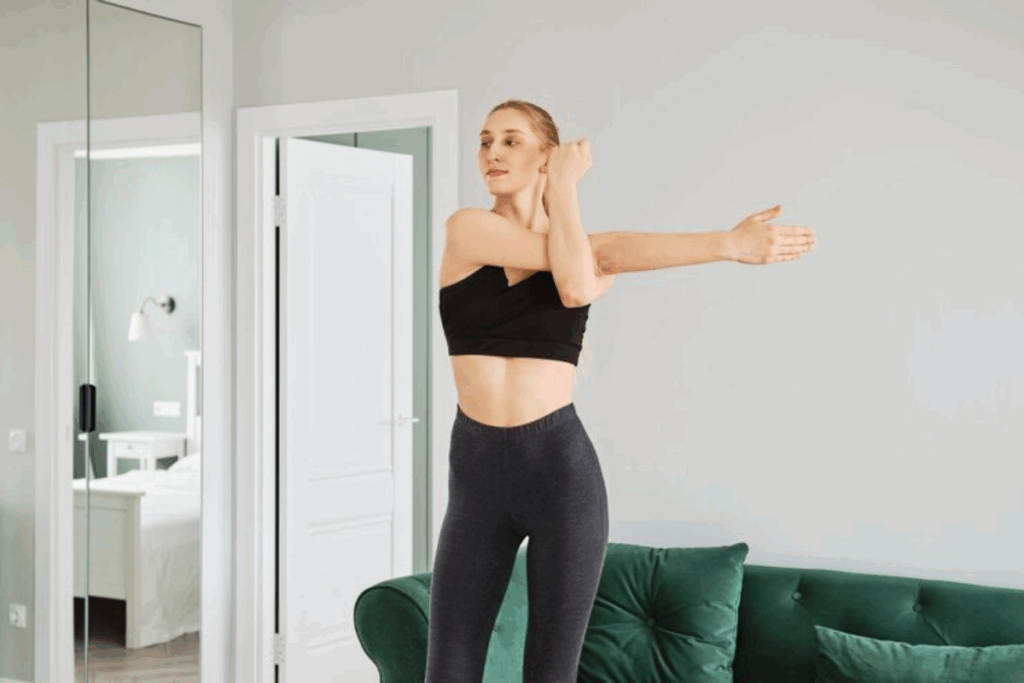
You can do this stretch in your classroom, a hallway, even at home against the kitchen wall. No mat, no gear—just a moment to return to your body.
Step-by-Step:
1. Find a wall and stand sideways
Your right shoulder should be closest to the wall, with your feet about hip-width apart. Soften your knees—no need to lock out your joints.
2. Place your right palm on the wall
Your arm should be straight and extended slightly behind you at shoulder height.
Fingers spread, palm flat.
3. Start the stretch
Gently begin turning your chest away from the wall, rotating to the left.
You’ll feel the stretch across your right shoulder and chest.
Keep your shoulder relaxed—no tension in the neck or jaw.
4. Breathe and hold
Stay here for 3–5 deep breaths.
Inhale to create space, exhale to soften deeper into the stretch.
This should feel like opening, not strain.
5. Switch sides
Slowly release and repeat on the other side.
Here’s the next section—explaining why this wall stretch is so beneficial, especially for teachers who spend long days standing, writing, reaching, and holding emotional space:
Why This Shoulder Stretch Helps So Much

Teaching on your feet isn’t just tiring for your legs—it’s your shoulders that often carry the weight. Not just physically, but emotionally too.
When you’re constantly reaching up to write, leaning over desks to help, or staying upright for hours without a break, your chest tightens. Your shoulders pull forward. Your upper back starts doing work it was never meant to do on its own.
This simple wall stretch helps reset all of that:
- Opens the front of your body, where we tend to collapse under stress
- Releases shoulder and upper back tension caused by repetitive movements
- Improves posture, so you can breathe deeper and stand with more ease
- Signals safety to your nervous system, inviting calm in just a few breaths
And maybe most importantly?
It gives you a moment to pause—where your body isn’t performing or pushing, just softening and receiving.
How to Make This a Midday Reset, Not Another Task

This stretch doesn’t require a time block or a calendar alert.
It’s something you can return to when your body starts whispering: “Hey, I’m tightening up.”
Here are a few soft cues to help make it part of your day:
- Right after dismissal: Before heading to your car or the copier, find a wall and take two quiet minutes for yourself.
- During your planning block: Use this as a physical break between mental tasks—grade, breathe, stretch.
- After lunch: Reset your posture and energy before stepping back into the classroom.
- While waiting: In the hallway before a meeting? At home while dinner’s heating up? If there’s a wall nearby, you’ve got what you need.
- Anytime you feel “closed in”: This stretch quite literally helps you open up—especially after hours of holding space for others.
Let it be something kind you give to yourself—not something you have to check off.
One side. Two breaths. That counts.
FAQs: Shoulder Tension, Stretching, and Teacher Life

1. How often should I do this wall stretch?
Even once a day can help, especially after long teaching blocks. Many teachers find it most helpful mid-afternoon or right after school.
2. What if my shoulders are super tight?
That’s totally normal. Start gently and don’t force the rotation. This stretch is meant to feel like relief—not a challenge.
3. Do I need to hold it for a long time?
Not at all. Even one or two slow, deep breaths per side can make a difference. You can build up to longer holds if and when it feels good.
4. Can I do this if I’ve had shoulder or neck issues in the past?
Most likely yes, but always listen to your body. If something feels sharp or uncomfortable, stop. And if you’re working with an injury, check in with your provider first.
5. What if I don’t have privacy at school?
That’s real. Even doing this at home after school (or while standing in a quiet corner) can still offer the reset you need.
6. Can I combine this with other stretches?
Absolutely. Try pairing it with neck rolls, wrist circles, or a gentle forward fold for a full-body refresh in just a few minutes.
7. I don’t always feel stress in my shoulders—is this still helpful?
Yes. This stretch helps with posture, breath, and overall circulation—even if you’re not feeling specific tightness. It’s great as a preventative, not just a remedy.
8. Do I need to warm up first?
Nope. This is a gentle stretch designed for everyday use. Just move slowly and mindfully, especially if you’ve been cold or still for a while.
9. How do I know it’s “working”?
You might notice a deeper breath, a little more space in your chest, or a softened sensation in your upper back. Sometimes the relief is subtle—but that doesn’t mean it’s small.
10. Does Circle Wellness MD offer more movement or stress support for teachers?
Yes—we offer bodywork, breath-led sessions, and teacher-centered care that supports both the emotional and physical weight you carry. Our services are made to fit your real schedule, not compete wit.
Because You’re Carrying More Than Just the Day
By the end of your shift, it’s not just your legs that are tired.
It’s your shoulders—the ones that lift, reach, hold space, and rarely get a moment to soften.
And while the work may demand a lot from you, that doesn’t mean you have to push through discomfort just to keep up.
This wall stretch is simple, but it does something important.
It gives you your breath back. Your posture. Your pause.
And if you’re feeling like the tension goes deeper than a quick stretch can reach—if your body’s been carrying too much for too long—we’re here to support you in that, too.