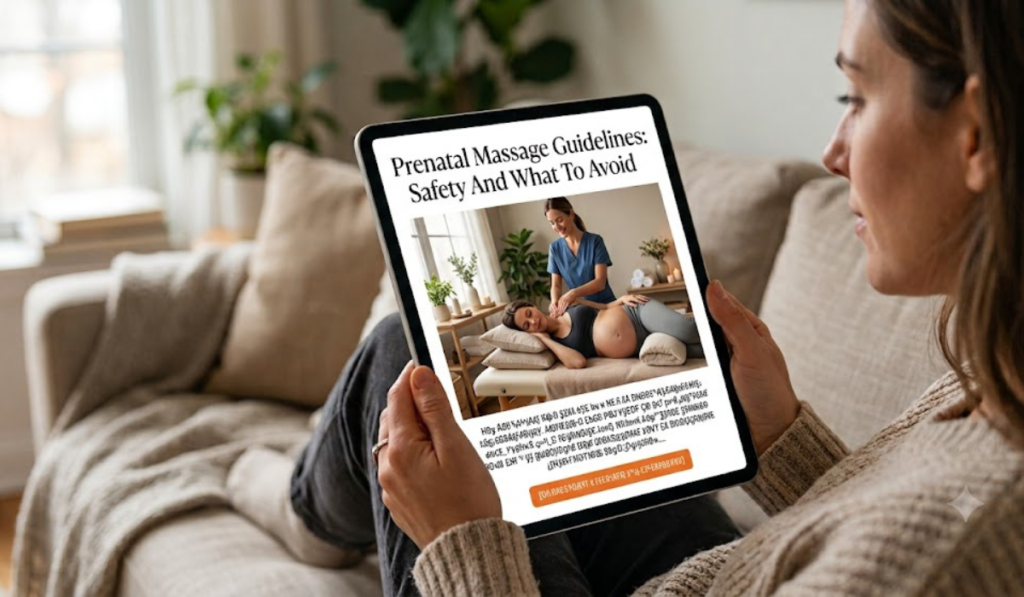
There is no universal map of body parts that must never be touched during pregnancy. Safety depends more on symptoms, medical history, pregnancy stage, pressure, positioning, and the therapist’s training.
A prenatal massage therapist should avoid a leg or arm with possible blood-clot symptoms, infected or injured tissue, unexplained severe pain, and any area restricted by the pregnancy-care provider. Deep abdominal work, painful pressure, prolonged flat-on-the-back positioning later in pregnancy, and techniques intended to stimulate labor also require caution.
For most healthy pregnancies, gentle massage from a properly trained therapist can usually be performed with appropriate screening and positioning.
Editorial and Commercial Disclosure
- Pregnancy does not create a universal list of forbidden massage points.
- Do not massage a limb with one-sided swelling, warmth, redness, or unexplained tenderness.
- Avoid known blood clots, inflamed veins, wounds, infections, unhealed incisions, fractures, or severe unexplained pain.
- Deep abdominal massage is inappropriate during routine prenatal massage.
- Feet, ankles, hands, and wrists are not automatically forbidden.
- First-trimester massage is not universally prohibited.
- After about 20 weeks, side-lying or semi-reclined positioning is generally preferred over prolonged flat-on-the-back positioning.
- Bleeding, leaking fluid, regular contractions, severe headache, vision changes, breathing problems, or reduced fetal movement require medical assessment.
Key Takeaways
- Pregnancy does not create a universal list of forbidden massage points.
- Do not massage a limb with one-sided swelling, warmth, redness, or unexplained tenderness.
- Avoid known blood clots, inflamed veins, wounds, infections, unhealed incisions, fractures, or severe unexplained pain.
- Deep abdominal massage is inappropriate during routine prenatal massage.
- Feet, ankles, hands, and wrists are not automatically forbidden.
- First-trimester massage is not universally prohibited.
- After about 20 weeks, side-lying or semi-reclined positioning is generally preferred over prolonged flat-on-the-back positioning.
- Bleeding, leaking fluid, regular contractions, severe headache, vision changes, breathing problems, or reduced fetal movement require medical assessment.
Is Prenatal Massage Safe?
For most healthy, uncomplicated pregnancies, prenatal massage appears reasonably safe when provided by a trained therapist using appropriate techniques and positioning.
A systematic review found possible improvements in stress, anxiety, back pain, and leg discomfort, although research often excluded high-risk pregnancies and did not establish that every massage technique or pressure level is safe.
Massage should be presented as a comfort-focused option—not a treatment that prevents pregnancy complications or guarantees better birth outcomes.
What Does “Avoid This Area” Really Mean?
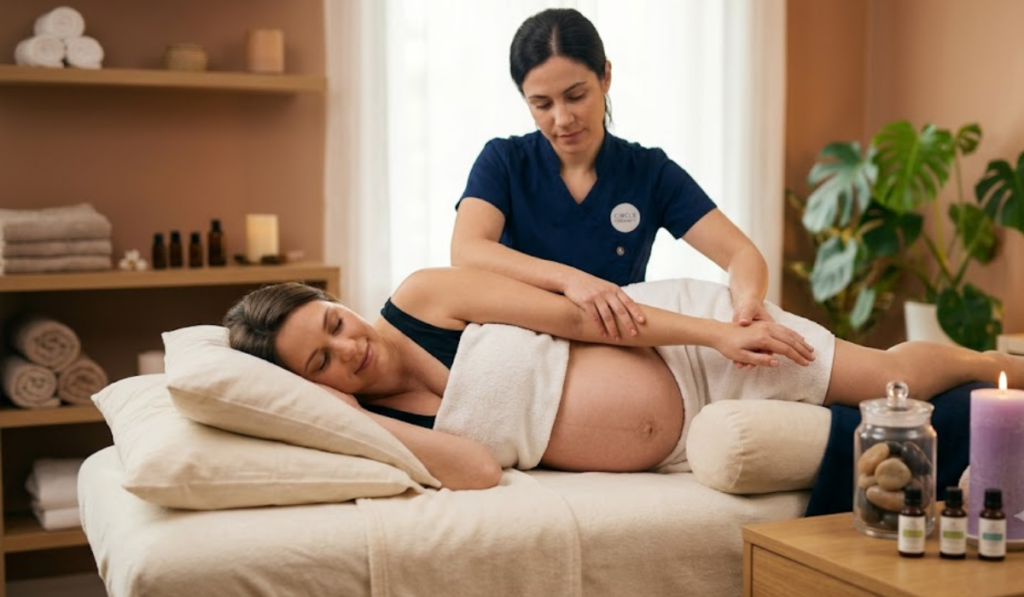
Prenatal safety usually falls into three categories:
Stop and refer: symptoms may require medical assessment before massage continues.
Avoid the area: local tissue should not be massaged.
Modify treatment: the area may be treated, but pressure, position, or technique should change.
The therapist should continually ask whether symptoms are unusual, one-sided, painful, warm, swollen, or restricted by the obstetric provider.
Areas That Should Not Be Massaged
A Limb With Possible Blood-Clot Symptoms
Pregnancy increases the risk of venous thromboembolism.
Do not massage a leg or arm with:
- One-sided swelling
- Unexplained calf or limb pain
- Redness or discoloration
- Unusual warmth
- Marked tenderness
Do not knead, deeply compress, or attempt lymphatic drainage over the area.
Chest pain, difficulty breathing, coughing blood, fainting, or a fast or irregular heartbeat may indicate pulmonary embolism and require emergency care.
Known Blood Clots or Inflamed Veins
Do not massage directly over a diagnosed DVT, thrombophlebitis, or inflamed vein.
Blood-thinning medication does not automatically make deep pressure safe and may increase bruising risk.
Painful Varicose Veins
Gentle work around uncomplicated varicose veins may be possible, but avoid deep pressure directly over prominent, painful, red, warm, or hardened veins.
Wounds, Infections, and Recent Incisions
Avoid:
- Open wounds
- Cellulitis
- Contagious rashes
- Burns
- Draining wounds
- Active skin infections
- Recent unhealed surgical or procedure sites
Acute Injuries or Severe Unexplained Pain
Do not massage suspected fractures, severe bruising, unstable joints, major injuries, sudden weakness, severe neurological symptoms, or unexplained abdominal or pelvic pain.
Areas That Usually Need Modification
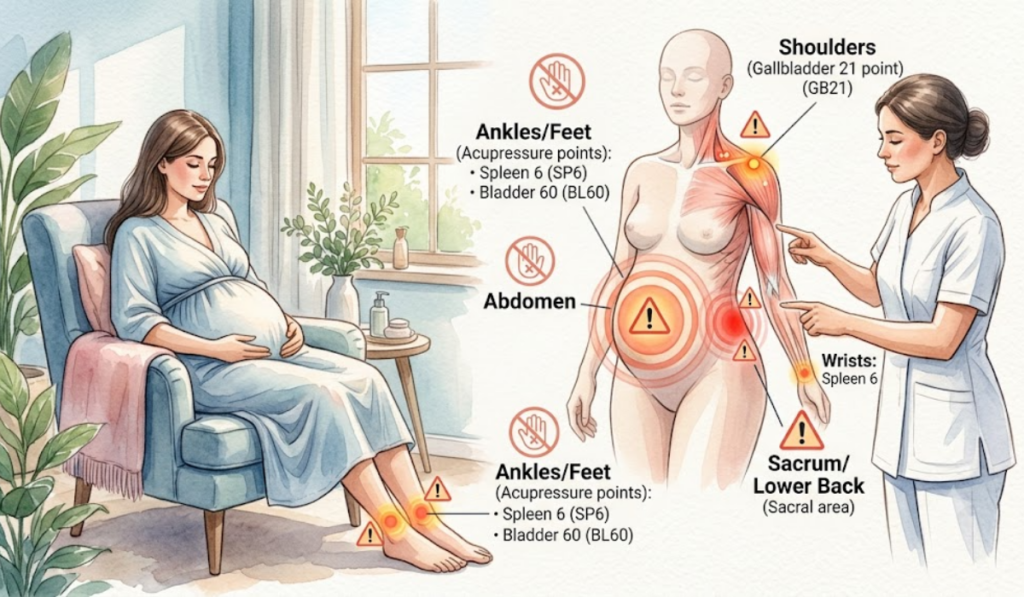
Abdomen
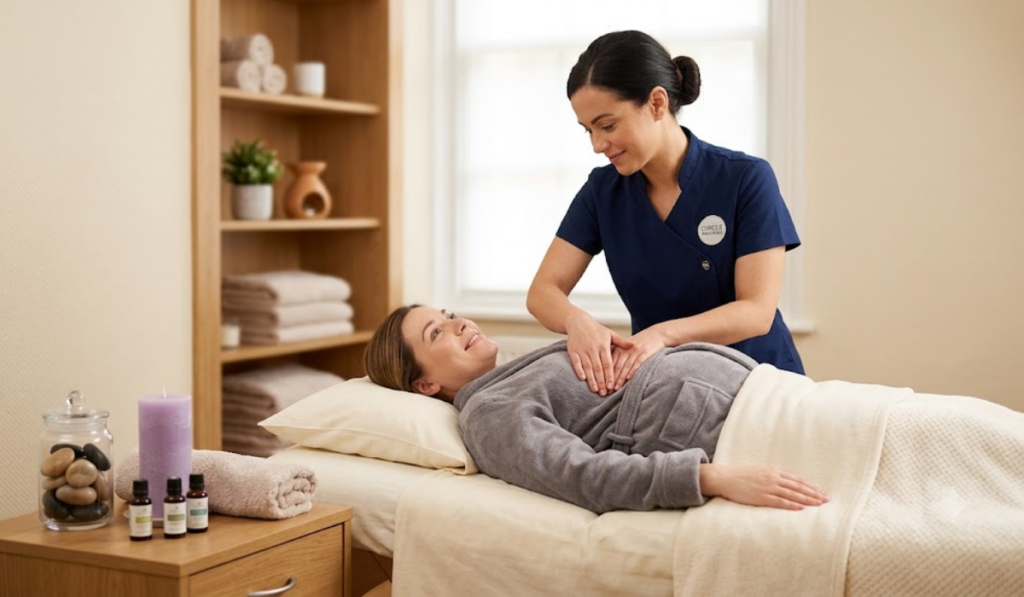
Deep, forceful abdominal massage should not be performed during routine prenatal massage.
Avoid:
- Deep compression
- Aggressive kneading
- Forceful stretching
- Deep trigger-point work
- Techniques intended to move the fetus or manipulate internal organs
Gentle surface contact is not automatically dangerous. When appropriate, it should be optional, comfortable, clearly explained, and within the therapist’s prenatal training.
Legs
The legs are not automatically off-limits.
Gentle massage may be appropriate when there are no clot warning signs. Avoid painful calf work, deep pressure over varicose veins, or deep work over unexplained swelling.
Swollen Feet and Ankles
Mild, symmetrical swelling can occur during pregnancy.
Massage should stop when swelling is sudden, severe, mostly one-sided, accompanied by calf pain, or associated with severe headache, vision changes, or significant swelling of the hands or face.
Lower Back and Hips
The lower back, hips, and gluteal muscles are commonly treated during prenatal massage.
Stop treatment if back pain occurs with:
- Vaginal bleeding
- Leaking fluid
- Regular contractions
- Fever
- Severe abdominal pain
- New weakness or numbness
- Reduced fetal movement
Breasts and Nipples
Routine prenatal massage does not require nipple stimulation.
Nipple stimulation can influence oxytocin and has been studied for labor induction, so it should not be used casually or before term without obstetric guidance.
Pregnancy Massage Positions to Modify
Prolonged Flat-on-the-Back Positioning
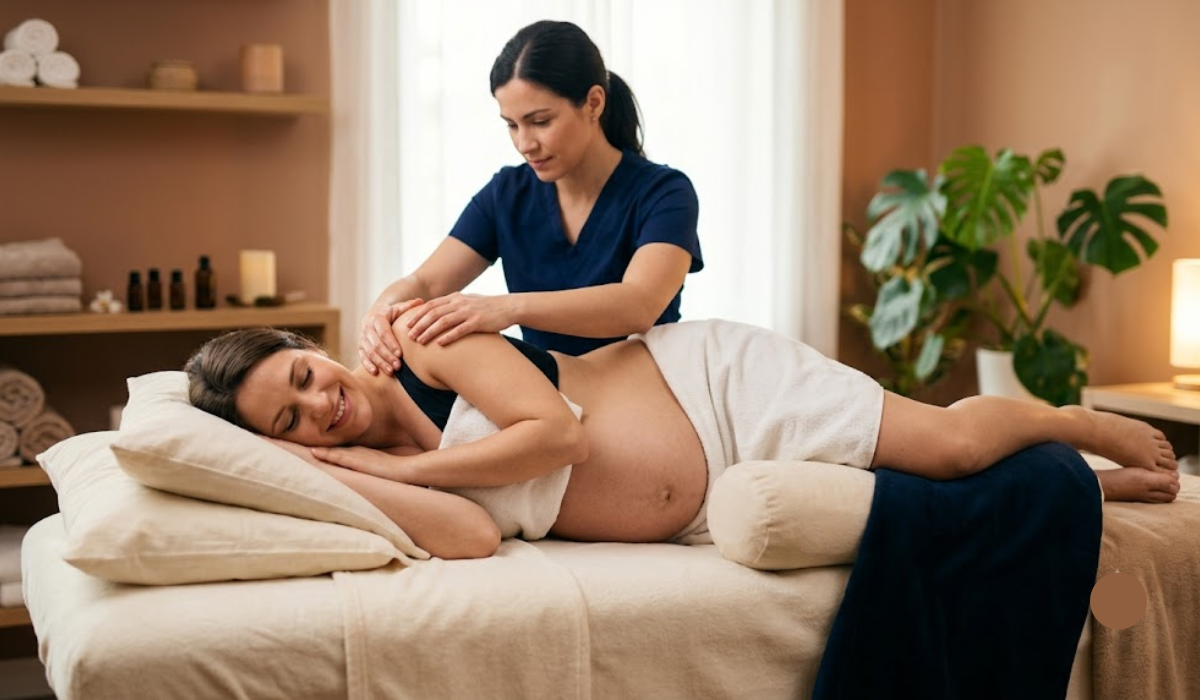
After approximately 20 weeks, prolonged supine positioning may reduce blood return in some pregnant patients and cause dizziness, nausea, sweating, or shortness of breath.
Safer options include:
- Side-lying
- Semi-reclined positioning
- Supported tilt
- Seated massage
Face-Down Positioning
A growing abdomen should not be compressed against a standard flat table.
Side-lying is often easier to support and adjust. The patient should never remain in a position that causes abdominal pressure, back strain, breathing difficulty, or dizziness.
Are Ankles and Feet Dangerous?
No evidence shows that ordinary gentle massage of the ankles, feet, hands, or wrists reliably starts labor.
Focused acupressure intended specifically to influence labor is different from ordinary massage and should be coordinated with the pregnancy-care provider.
Is First-Trimester Massage Safe?
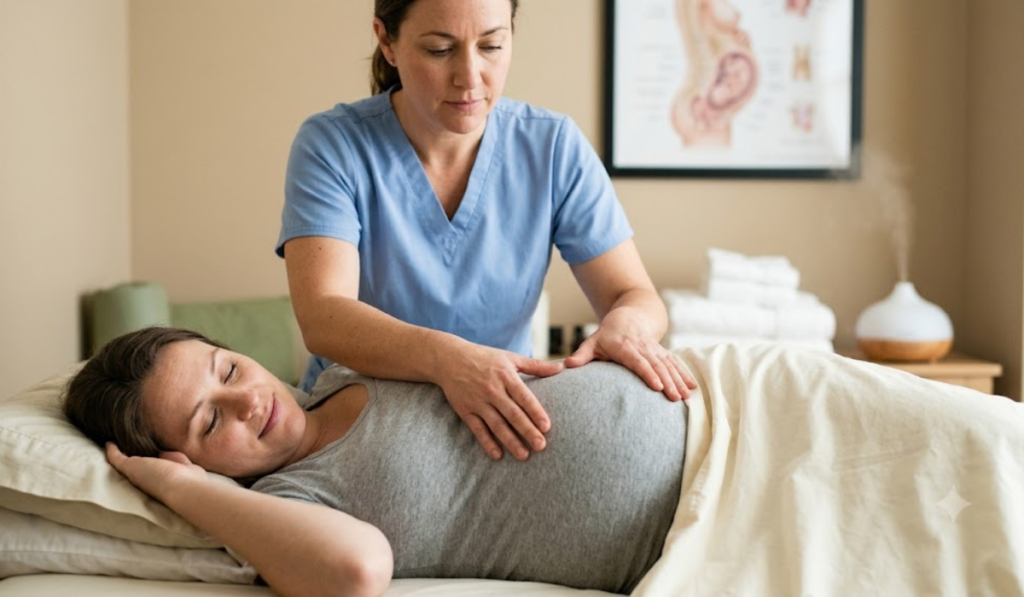
Massage is not automatically prohibited during the first trimester.
There is no good evidence that properly performed gentle massage causes miscarriage. However, research during very early pregnancy is limited.
Some clinics delay first-trimester massage because of internal policies, nausea, fatigue, or limited evidence. That is a clinic policy—not proof that first-trimester massage causes miscarriage.
Medical guidance is especially appropriate when there is bleeding, severe pain, recurrent pregnancy loss, activity restrictions, or a high-risk pregnancy.
When Should the Entire Massage Be Postponed?
Do not begin—or stop immediately—when there is:
- Vaginal bleeding
- Leaking fluid
- Regular or preterm contractions
- Severe headache
- Vision changes
- Fever
- Chest pain
- Difficulty breathing
- Severe abdominal pain
- Reduced fetal movement
- Severe vomiting
- One-sided painful swelling
- Fainting or severe dizziness
A massage therapist should recognize these warning signs and refer rather than attempt to diagnose them.
Conditions That May Require Provider Clearance
Individual medical guidance may be appropriate for:
- High-risk pregnancy
- Preeclampsia or pregnancy-related hypertension
- Placental conditions
- Preterm-labor risk
- Cervical insufficiency
- Vaginal bleeding
- Ruptured membranes
- Complicated multiple pregnancy
- Heart or kidney disease
- Clotting disorders
- Previous DVT or pulmonary embolism
- Anticoagulant use
- Poorly controlled diabetes
- Significant swelling
- Recent surgery or procedures
Safe Areas Commonly Treated
When no contraindications are present, prenatal massage may include gentle work on:
- Neck
- Shoulders
- Upper and lower back
- Hips and glutes
- Arms and hands
- Thighs and legs
- Feet
- Scalp
- Jaw
Pressure should remain comfortable and should be reduced when bruising risk, joint laxity, or medical restrictions are present.
Forceful stretching should also be avoided.
Therapist Screening Checklist
Before treatment, ask about:
- Weeks of pregnancy and due date
- Whether the pregnancy is high risk
- Bleeding or leaking fluid
- Contractions
- Severe headaches or vision changes
- Unusual swelling
- One-sided leg pain, redness, or warmth
- Previous blood clots
- Blood-thinning medications
- Preeclampsia or high blood pressure
- Placental conditions
- Provider restrictions
- Recent procedures
- Preferred positioning and pressure
- Product allergies
- Areas the patient wants avoided
Prenatal Massage at Circle Wellness
Circle Wellness provides prenatal massage through licensed, pregnancy-trained massage professionals in Melville.
A session may include screening, side-lying or semi-reclined positioning, pillow support, pressure adjustments, and discussion of symptoms that should be referred back to the pregnancy-care provider.

Not Sure Whether Prenatal Massage Is Appropriate?
Pregnancy discomfort can be normal, but pain, swelling, headaches, dizziness, and shortness of breath can also require medical evaluation.
FAQs

Can the lower back be massaged?
Yes, when the pregnancy is stable and there are no warning signs.
Is foot massage safe?
Generally yes, but do not massage a limb with one-sided swelling, warmth, redness, or unexplained pain.
Can ankle massage induce labor?
Ordinary gentle ankle massage has not been shown to reliably induce labor.
Can the belly be massaged?
Gentle surface contact may be appropriate, but deep or forceful abdominal work should be avoided.
Is deep tissue massage safe?
Pressure must be individualized. Painful calf work, aggressive abdominal pressure, and deep work over inflamed veins should be avoided.
Should massage be avoided in the first trimester?
Not automatically. Research is limited, but there is no strong evidence that properly performed gentle massage causes miscarriage.
Is lying on the back safe?
Brief supported positioning may be tolerated, but prolonged flat positioning later in pregnancy should generally be avoided.
When should massage be postponed completely?
Postpone for bleeding, leaking fluid, contractions, severe headache, vision changes, breathing difficulty, chest pain, fever, severe abdominal pain, reduced fetal movement, or possible blood-clot symptoms.
Final Takeaway
The safest answer to “Where should you not massage during pregnancy?” is not a list of magical pressure points.
A trained therapist avoids blood-clot warning areas, wounds, infections, unhealed incisions, acute injuries, severe unexplained pain, deep abdominal pressure, and areas restricted by the pregnancy-care provider.
The feet, ankles, lower back, hips, and legs may often be treated safely with appropriate screening, positioning, pressure, and consent.
Pregnancy massage safety depends less on memorizing forbidden points and more on recognizing warning signs, respecting medical restrictions, and knowing when not to proceed.
Medical Disclaimer
This article provides general educational information and is not a substitute for individualized medical advice.
Pregnancy conditions can change quickly. Contact an OB-GYN, midwife, maternal-fetal medicine specialist, or emergency service when warning signs are present.
Massage therapists should follow applicable state law, professional scope, training standards, informed-consent requirements, and the patient’s documented medical restrictions.
Do not use massage to delay evaluation of bleeding, leaking fluid, contractions, severe headache, vision changes, chest pain, breathing difficulty, severe swelling, reduced fetal movement, or suspected blood-clot symptoms.
Book a Pregnancy-Safe Massage Consultation
Prenatal massage is intended to support comfort and relaxation. It is not a treatment for pregnancy complications and should never delay obstetric or emergency care.