
We’ve all felt it—that stubborn “knot” in the neck, shoulder, or back that just won’t let go. These knots, known as trigger points, are tight bands of muscle that not only cause local soreness but also send pain to other parts of the body.
A knot in the shoulder might spark headaches, while one in the lower back can radiate discomfort down the leg. Left untreated, these trigger points limit movement, create chronic stiffness, and keep the body in a constant cycle of tension.
The good news?
Whether through targeted pressure from a skilled therapist or a quick injection using natural compounds like Sarapin or mild anesthetics like lidocaine, both approaches aim to restore mobility and ease pain.
Understanding how they work—and when to use each option—can be the key to breaking free from persistent muscle pain and regaining flexibility.
Manual Trigger Point Therapy

What It Is
- Hands-on technique where therapists apply direct pressure to muscle knots (trigger points).
- Reference: Simons & Travell’s Myofascial Pain and Dysfunction (1999) is the foundational work on trigger point therapy.
How It Works
- Sustained pressure interrupts the pain cycle, improves blood flow, and helps release tight fibers.
- Reference: A 2015 review in the Journal of Bodywork and Movement Therapies found manual trigger point release effective for musculoskeletal pain.
Benefits
- Relieves muscle tension and restores normal mobility.
- Decreases referred pain (e.g., neck knots leading to headaches).
- Reference: A 2017 meta-analysis in Pain Medicine showed significant pain reduction after manual trigger point therapy.
Best For
- Mild to moderate muscle tightness.
- Stress-related muscle tension.
- Recurring musculoskeletal pain, especially in the neck and shoulders.
- Reference: American Journal of Physical Medicine & Rehabilitation (2018) reported strong benefits for neck and shoulder pain.
Trigger Point Injections (TPI)

What They Are
How They Work
Benefits
Insurance Coverage
Manual Therapy vs. Trigger Point Injections
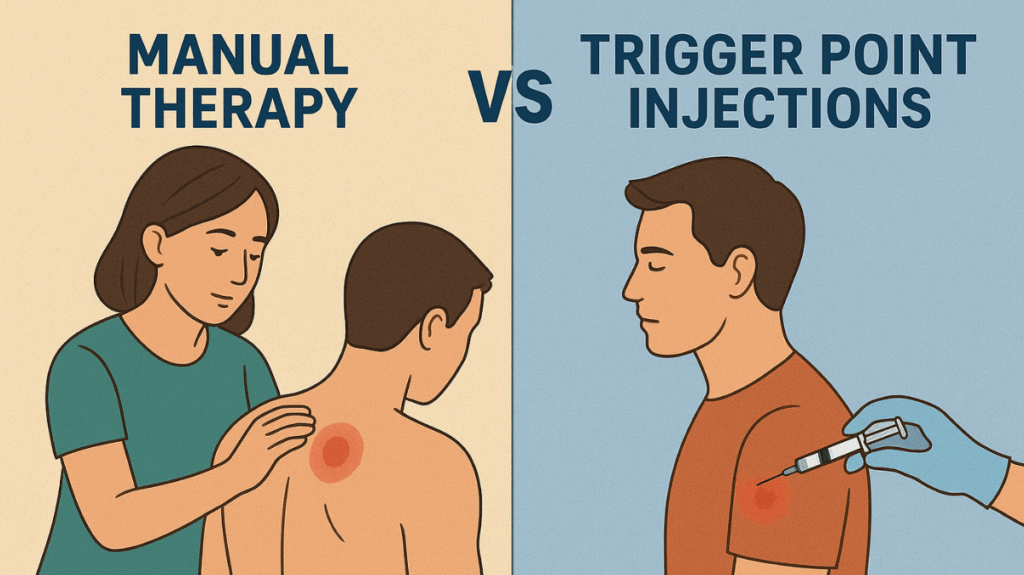
| Feature | Manual Trigger Point Therapy | Trigger Point Injections (TPI) |
|---|---|---|
| Method | Hands-on pressure applied by a massage therapist to release muscle knots. | Small needle delivers natural compounds (e.g., Sarapin) or mild anesthetics (e.g., lidocaine) into the trigger point. |
| Best For | Mild to moderate knots, stress-related tension, recurring musculoskeletal pain. | Stubborn knots, chronic muscle spasms, or pain not relieved by manual therapy alone. |
| Relief Type | Gradual release, improves circulation and reduces pain through repeated sessions. | Faster, more targeted relief with longer-lasting effects in many cases. |
| Benefits | Restores mobility, decreases referred pain, improves flexibility. | Breaks up adhesions, reduces inflammation, increases blood flow, restores range of motion. |
| Accessibility | Widely available from massage therapists. | Performed by licensed medical professionals; covered by many insurance plans including NYSHIP Empire Plan. |
Trigger Point Injections (TPI)

Trigger points can feel small, but their impact on pain, posture, and quality of life is huge. The good news is that both manual trigger point therapy and trigger point injections (TPI) offer proven ways to release stubborn muscle knots and restore mobility.
Manual therapy provides a natural, hands-on approach for everyday tension, while injections offer faster, deeper relief for chronic or resistant pain. With both options available—and often covered by insurance such as NYSHIP Empire Plan—patients have access to safe, effective solutions tailored to their needs.
For anyone searching “trigger point injections Melville” or exploring natural pain management strategies, combining knowledge of these therapies is the first step toward lasting comfort, flexibility, and a healthier body.