
Ever notice how a basketball dunk, a soccer kick, running, throwing, or even a yoga pose come from the whole body, not just one muscle? That’s because of the kinetic chain—the way your legs, hips, core, and arms pass energy. A powerful jump or kick doesn’t start at your foot or hand; it begins in your legs, flows through your hips and core, and only then explodes outward to finish the move. Working together with fascia—the web-like tissue that connects everything—your kinetic chain shows that the body isn’t a collection of parts, but one powerful, connected system.
When most people hear the word bodywork, they imagine a relaxing massage that melts away stress. That’s true, however Fascia Release Technique (also called Myofascial Release) goes much further—it can reshape the way your body moves, heals, and adapts.
| Aspect | Fascia Release (Myofascial Release) | Regular Massage |
|---|---|---|
|
Focus |
Works on the fascia (the web of connective tissue around muscles, bones, and organs) |
Works mainly on the muscles themselves |
|
Technique |
Gentle, sustained pressure or slow stretching on tight areas |
Rhythmic kneading, pressing, and gliding strokes |
|
Goal |
Release restrictions in fascia, improve movement, reduce chronic pain |
Relax muscles, reduce stress, ease soreness |
|
Pressure |
Usually steady, slow, and held for a longer time |
Can be light, medium, or deep, depending on the style |
|
Benefits |
Improves flexibility, posture, mobility, and long-term pain relief |
Relieves muscle tension, boosts circulation, promotes relaxation |
|
When it’s helpful |
Chronic pain, stiffness, poor posture, injury recovery |
Stress relief, general relaxation, muscle soreness from exercise |
Focus
Fascia Release (Myofascial Release): Works on the fascia (the web of connective tissue around muscles, bones, and organs)
Regular Massage: Works mainly on the muscles themselves
Technique
Fascia Release (Myofascial Release): Gentle, sustained pressure or slow stretching on tight areas
Regular Massage: Rhythmic kneading, pressing, and gliding strokes
Goal
Fascia Release (Myofascial Release): Release restrictions in fascia, improve movement, reduce chronic pain
Regular Massage: Relax muscles, reduce stress, ease soreness
Pressure
Fascia Release (Myofascial Release): Usually steady, slow, and held for a longer time
Regular Massage: Can be light, medium, or deep, depending on the style
Benefits
Fascia Release (Myofascial Release): Improves flexibility, posture, mobility, and long-term pain relief
Regular Massage: Relieves muscle tension, boosts circulation, promotes relaxation
When it's helpful
Fascia Release (Myofascial Release): Chronic pain, stiffness, poor posture, injury recovery
Regular Massage: Stress relief, general relaxation, muscle soreness from exercise
- Fascia acts like a web of connective tissue, linking every part of the body.
- The kinetic chain describes how movement in one area affects the rest of the system.
Understanding The Kinetic Chain

Types of Kinetic Chain
- Open Kinetic Chain (OKC): The distal end (hand or foot) is free to move.
Examples: bicep curls, kicking a ball, leg extensions. - Closed Kinetic Chain (CKC): The distal end is fixed against a surface.
Examples: push-ups (hands fixed), squats (feet fixed), pull-ups.
What happens when one link is restricted?
The entire system compensates which can cause pain or dysfunction far away from restricted link.
Real World Examples
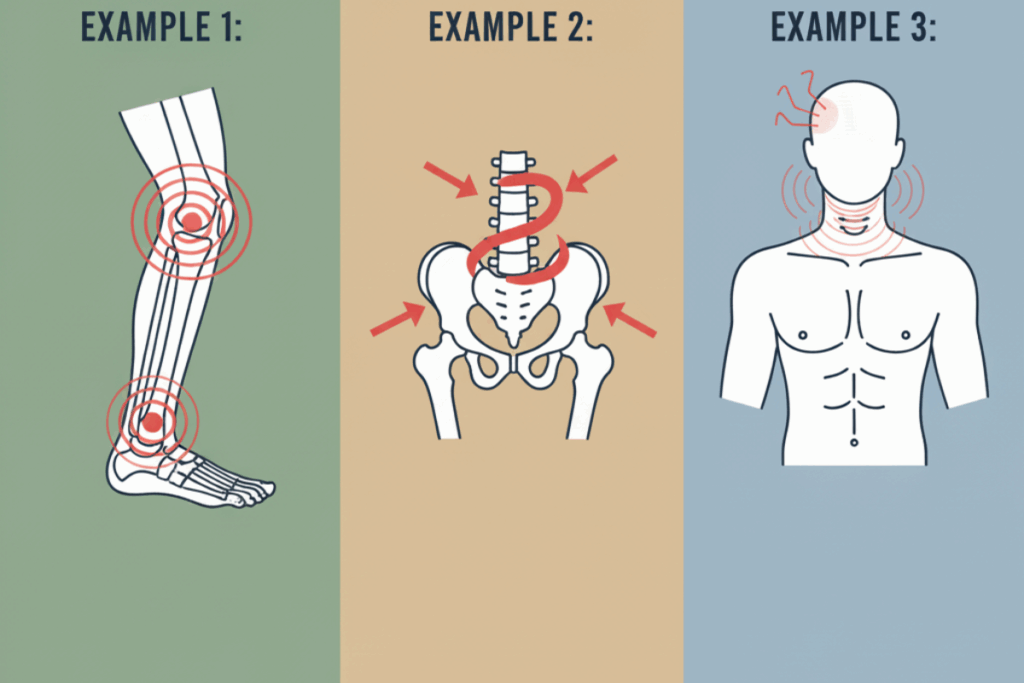
- Limited ankle mobility forces the knee to absorb more stress during walking or running. Over time, this can cause pain or even injury.
- When the hips can’t rotate properly, the lumbar spine twists more than it should, leading to discomfort or strain.
- Poor posture in the upper body shifts tension up the chain, creating neck tightness and tension headaches.
Why It Matters
Research Note: A 2023 study in the Journal of Biomechanics confirmed that limited ankle dorsiflexion significantly altered hip and knee movement patterns, supporting the chain-reaction principle in human motion.
Fascia: The Body’s Hidden Web
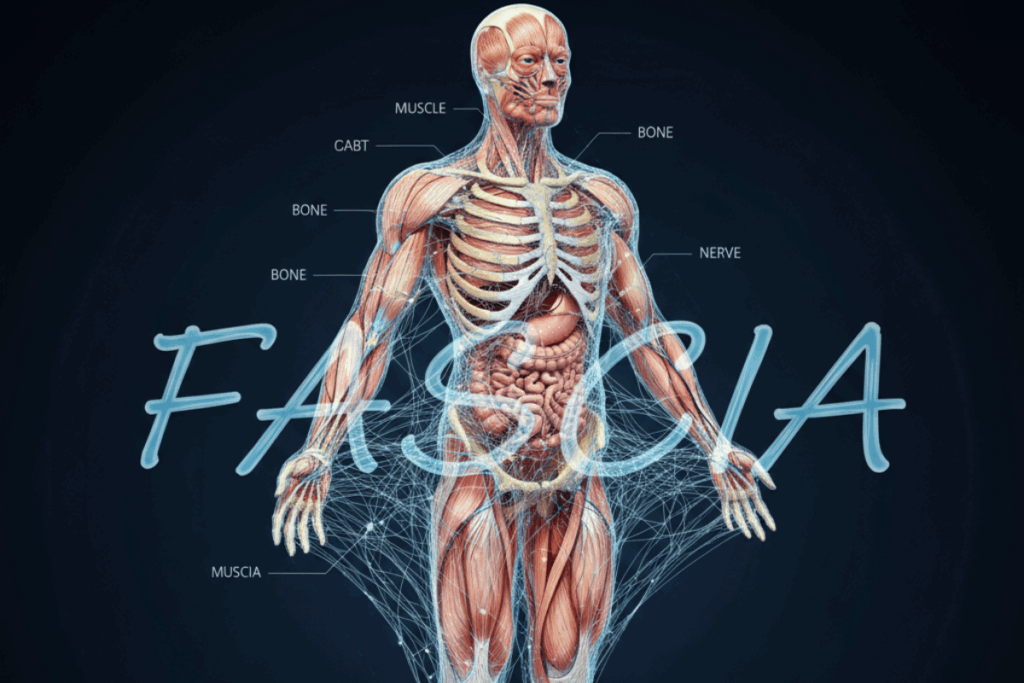
If the kinetic chain is the body’s system of links, then fascia is the web that holds everything together. Fascia is a thin, fibrous tissue that surrounds and interconnects every muscle, bone, organ, and nerve. Rather than being inert “packing material,” as once believed, fascia is now recognized as an active, responsive tissue that plays a critical role in movement and overall health.
Functions of Fascia
- Structural Support: Provides shape and stability by linking tissues.
- Movement Efficiency: Transmits force between muscles, allowing coordinated motion.
- Nervous System Connection: Contains sensory nerve endings, influencing how we perceive pain and movement.
- Fluid Exchange: Healthy fascia stays hydrated, helping tissues glide smoothly.
When Fascia Becomes Restricted
- Injury or surgery
- Poor posture and repetitive strain
- Dehydration and lack of movement
- Chronic stress, which creates tension patterns in the body
- Restricted fascia disrupts the kinetic chain, forcing compensations elsewhere and often leading to pain, stiffness, and reduced mobility.
Myth vs. Fact
- Myth: Fascia is just an inert wrapping around muscles.
- Fact: Research shows fascia is richly innervated and plays a major role in proprioception (your body’s sense of position) and pain perception. (Schleip et al., 2021, Frontiers in Physiology).
Bodywork Approaches That Restore Balance

Myofascial Release
This technique applies gentle, sustained pressure into fascial restrictions. Unlike deep-tissue massage, which focuses on muscle fibers, myofascial release targets the connective web itself—helping it rehydrate, soften, and regain elasticity.
- Benefits: Reduces chronic pain, improves range of motion, and resolves long-standing movement imbalances.
Massage Therapy
Massage not only relaxes muscles but also enhances circulation and improves the body’s natural healing capacity. When combined with fascia-focused techniques, it supports better posture and movement efficiency.
- Research Insight: A 2022 meta-analysis in BMC Musculoskeletal Disorders found that massage therapy significantly reduced pain intensity and improved function in people with chronic musculoskeletal issues.
Acupuncture and Fascia
Acupuncture isn’t just about energy flow—it also mechanically stimulates fascia. In fact, studies using ultrasound imaging have shown that inserting and rotating needles can cause measurable changes in fascial tissue, improving mobility and reducing stiffness.
Evidence that Myofascial release works
- A 2021 study in Journal of Bodywork & Movement Therapies showed that myofascial release led to greater improvements in flexibility than static stretching alone.
- Research from Clinical Rehabilitation confirmed fascia-based interventions reduced chronic low back pain more effectively than standard exercise programs.
Practical Benefits for Everyday Life

When bodywork integrates fascia and kinetic chain awareness, the results go beyond immediate relief. Clients often discover improvements that touch nearly every aspect of daily life.
Pain Relief and Injury Prevention
Posture Correction and Mobility Gains
- Restores natural alignment
- Reduces strain on joints and muscles
- Makes everyday movements—like sitting, standing, or walking—feel easier and more fluid
Athletic Performance & Recovery
- Example: A runner with hip tightness may improve stride length and speed once fascial restrictions are released.
Nervous System Regulation & Stress Reduction
Did You Know? A 2022 review in Frontiers in Psychology found that massage and myofascial therapies significantly lowered stress markers and improved sleep quality in participants with chronic pain.
Long-Term Impact on Whole-Body Wellness

The benefits of fascia- and kinetic chain–focused bodywork extend well beyond the treatment table. When you consistently support your body’s connective tissue and movement systems, you’re investing in long-term resilience and vitality.
Improved Sleep and Energy
Building Resilience
Strengthened Mind-Body Connection
Tip Box: Daily Habits to Keep Fascia Healthy
- Stay Hydrated: Fascia functions best when well-lubricated by water.
- Move Frequently: Avoid long periods of sitting; even small stretches or walks keep fascia supple.
- Practice Gentle Stretching: Dynamic stretches and yoga improve elasticity.
- Mind Stress Levels: Breathwork, meditation, or mindfulness reduces tension patterns stored in fascia.
Common Misconceptions & Clarifications
-
Myth 1: Deep tissue is always better
- Reality: More pressure doesn’t always mean more effective. Overly aggressive techniques can cause fascia to tighten further as a protective response. Gentle, sustained release often leads to longer-lasting results.
-
Myth 2: Pain during bodywork equals effectiveness
- Reality: While mild discomfort may occur during fascial release, sharp or intense pain is counterproductive. Effective bodywork works with the body—not against it—helping tissues soften without triggering protective tension.
-
Myth 3: Fascia is just passive wrapping around muscles
- Reality: Modern research shows fascia is an active tissue, rich in nerves and capable of transmitting force. It plays a central role in posture, movement, and proprioception.
-
Myth 4: Stretching alone can fully restore fascia health
- Reality: Stretching helps, but fascia often requires targeted manual release, hydration, and varied movement to regain optimal function.
Investing in Resilience
Bodywork is more than a way to relax—it is a pathway to restoring balance across your entire body. By addressing the fascia and the kinetic chain, this holistic approach doesn’t just provide short-term relief. It helps your body move as one unified, intelligent system.
Why It Matters
- Fascia ensures tissues remain supple, connected, and responsive.
- The kinetic chain ensures that no part of the body carries more than its share of stress.
- Together, they form the foundation of long-term resilience and wellness.
At Circle Wellness, every session is designed not only to ease discomfort but to support your body’s natural intelligence—helping you sleep better, move freely, and feel more connected to yourself.
The Circle Wellness Difference: By treating the body as a whole, we guide you toward balance, vitality, and wholeness—not just today, but for the years to come.
Relief is this close
FAQs

What makes fascia-focused bodywork different from regular massage?
Fascia-focused bodywork addresses the connective tissue web that links your entire body, not just muscles. This approach promotes lasting mobility, balance, and pain relief.
How does the kinetic chain affect everyday movement?
The kinetic chain ensures your body moves as one. If one joint is restricted, stress shifts elsewhere, often leading to pain or injury in unexpected places.
Is bodywork only for people with pain or injury?
No—bodywork also helps with stress reduction, posture, athletic performance, and prevention of future injuries.
Does fascia release always have to hurt to be effective?
Not at all. Gentle, sustained techniques often achieve better results than aggressive pressure.
Can fascia really cause pain far from the actual tight spot?
Yes. Because fascia connects the entire body, tension in one area (like the foot) can cause pain higher up the chain (like the hip or back).
How many sessions are usually needed?
It depends on the individual. Some notice changes in one session, while others benefit from a series for deeper, lasting shifts.
Is this approach supported by research?
Yes. Multiple studies in Frontiers in Physiology and Journal of Bodywork & Movement Therapies confirm fascia’s role in pain, mobility, and overall function.
Can bodywork help athletes?
Absolutely. It improves efficiency, prevents injuries, and supports faster recovery after training or competition.
What can I do at home to keep fascia healthy?
Stay hydrated, move often, stretch dynamically, and manage stress with breathwork or mindfulness.