Is Acupuncture Safe? What Every Beginner Should Know
Trying acupuncture for the first time can bring up a lot of questions—especially around safety. If the idea of tiny needles makes you uneasy, it’s completely understandable. But here’s the reassuring truth: when performed by a licensed professional, acupuncture is considered both safe and gentle.
Used for over 2,000 years in Traditional Chinese Medicine (TCM), acupuncture is now supported by modern clinical research. Reputable health organizations, including the National Institutes of Health and the World Health Organization, recognize its value for managing chronic pain, anxiety, and more. For first-time patients, the key concern is often: Is it safe? The answer is a confident yes—when delivered by trained hands.
How Deep Do Acupuncture Needles Typically Go?

The actual depth depends on a few factors, including where on the body the needle is placed. In more fleshy areas like the thighs, buttocks, or abdomen, a needle might go deeper—up to 1.5 inches. But in delicate areas like the face, hands, or scalp, the depth is often just a few millimeters.
Importantly, deeper does not mean better. Your acupuncturist will choose the right depth for each point based on your health goals, anatomy, and comfort level. The goal is to reach specific energy channels (meridians), not to puncture deeply into tissue.
So, for beginners: rest easy knowing that acupuncture involves superficial, carefully controlled insertion, not deep penetration.
Book your consultation today and walk you through your first session step-by-step.
What Determines Needle Depth in Acupuncture?

Licensed acupuncturists use a carefully considered approach—not guesswork. Several factors determine how deep a needle should go:
- Body Location: Muscle-dense areas (like glutes or shoulders) allow for deeper insertion than thinner regions (like wrists or the face).
- Body Type: Everyone’s anatomy is unique. Practitioners consider tissue depth and sensitivity.
- Treatment Goals: Calming the nervous system might require shallow points; releasing muscle tension may call for deeper stimulation.
- Anatomical Caution Zones: Certain areas near vital organs require shallower placement. Professional training ensures these zones are respected for patient safety.
This level of personalized care and anatomical precision is one of the most important reasons to seek treatment from a licensed provider.
Do Deeper Needles Mean More Effective Results?

Not necessarily. In acupuncture, precision matters more than depth.
The goal is to stimulate a specific point on a meridian to restore balance or relieve symptoms. For example, treating anxiety might involve shallow needling near the wrist, while treating sciatica may require deeper insertion into the gluteal region.
In some cases, deeper insertion may enhance the effect—especially for stubborn muscle knots or chronic pain. But “deeper” isn’t always better and may increase discomfort or risk if not done properly.
The takeaway? Effectiveness comes from skillful placement, not how far the needle goes in.
Can Acupuncture Hurt or Cause Side Effects?
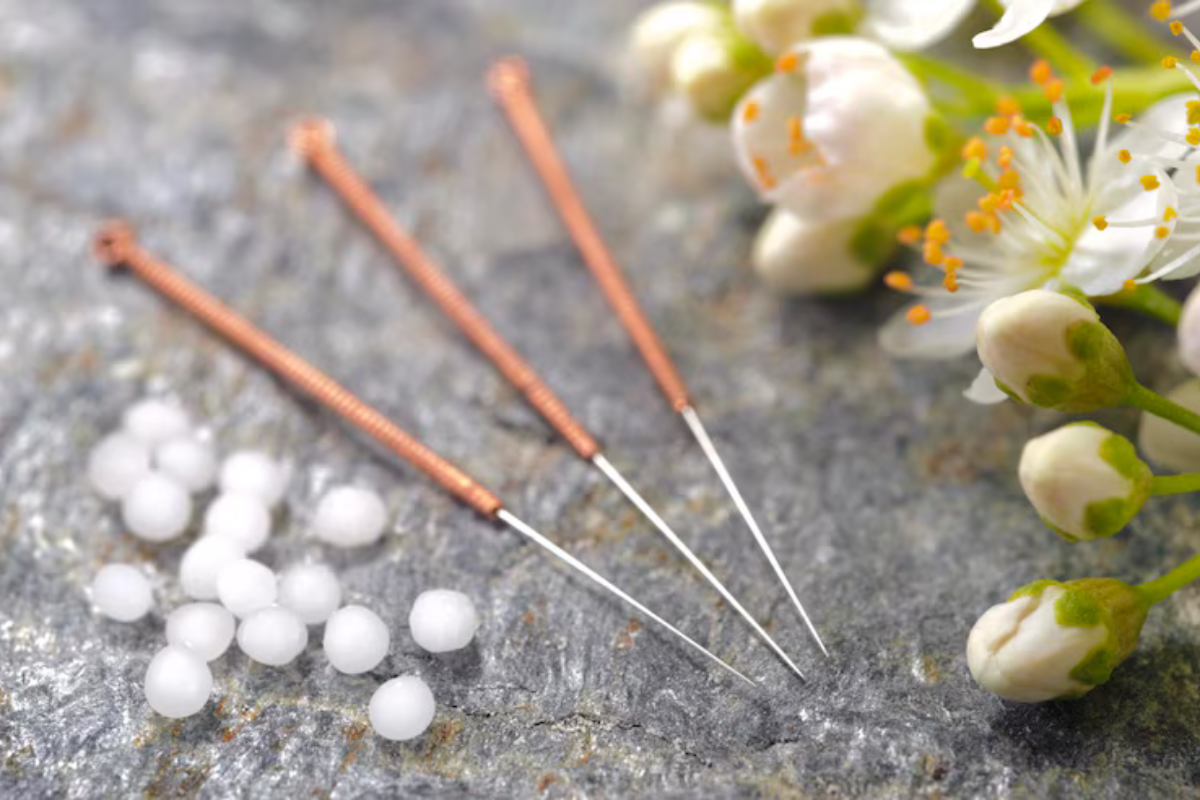
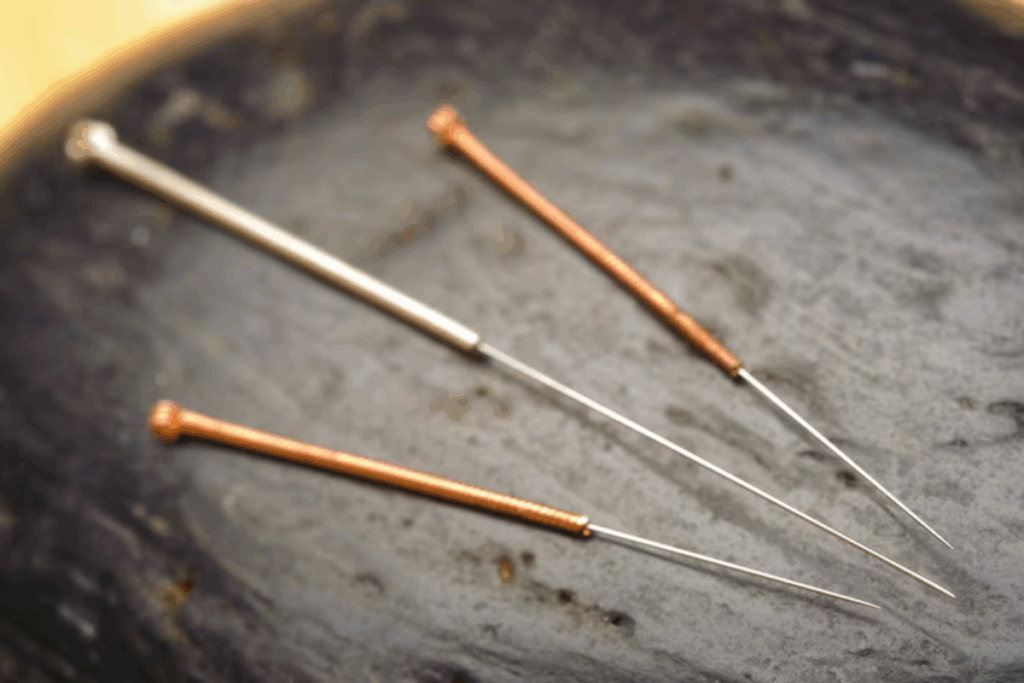
Most people are surprised by how painless acupuncture is. The needles are so fine (about the width of a human hair) that insertion often goes unnoticed. Some describe a tingling, heaviness, or “dull ache” sensation—but not sharp pain.
Still, everyone’s sensitivity is different. If something feels uncomfortable, your acupuncturist can adjust the depth or remove the needle entirely.
Possible mild side effects include:
- Slight bruising
- Soreness at the site
- Lightheadedness (rare)
Serious side complications are exceedingly rare—especially when working with a trained, licensed professional. That’s why your choice of provider matters so much.
How Licensed Acupuncturists Ensure Your Safety
Beyond mastering point locations, licensed acupuncturists are trained to adapt care to each individual. While general safety standards—like sterile, single-use needles and anatomical awareness—are baseline requirements, the real value lies in how practitioners tailor treatments to your body and comfort level.
Here’s what to look for:
- State Licensure: In New York, acupuncturists must complete 3-4 years of graduate training and pass national board exams.
- Clean Needle Technique (CNT): All needles must be sterile, single-use, and disposed of safely after treatment.
- Knowledge of Anatomy: A licensed provider understands safe depths for every part of the body—and avoids risky areas like near vital organs.
- Personalized Care: A good acupuncturist will ask about your symptoms, health history, and comfort preferences before selecting points and needle depths.
Our acupuncture providers are not only licensed but experienced in working with educators and professionals across Long Island.
What to Expect During Your First Acupuncture Visit
If you’re nervous about the needles, knowing what to expect can ease your mind.
- Consultation: Your session begins with a detailed intake, where your provider will ask about your symptoms, health goals, and any medical concerns.
- Treatment Plan: Based on your needs, a personalized acupuncture strategy is created—including which points to use and how deep to go.
- Needling: You’ll lie comfortably as the practitioner inserts needles—usually between 10 and 20—at precise locations. Most people feel relaxed or even sleepy during the session.
- Aftercare: You may feel deeply relaxed or slightly lightheaded afterward. Drink water and avoid strenuous activity for a few hours.
The most important thing? You’re in control. If you feel discomfort at any point, your provider can adjust the treatment immediately.
FAQs: Acupuncture Needle Depth & Safety
1.How deep do acupuncture needles go?
Typically 0.25 to 1 inch, depending on location and purpose.
2.Do acupuncture needles go into muscles or nerves?
They’re aimed at trigger points or meridians—sometimes near muscles, but not deep into nerves.
3.Can acupuncture needles hit organs?
Not when placed by a licensed provider trained in anatomy and safety techniques.
4. Is deeper needling more effective?
Not always—precise, shallow needling can be just as effective depending on the condition.
5.Does acupuncture hurt more with deeper insertion?
Discomfort can increase slightly, but most patients feel only minimal sensation.
6.How does an acupuncturist know how deep to go?
Training in anatomy, your body type, and the location guide their decisions.
7.Are the needles reused?
Never. All needles are single-use and disposed of immediately after treatment.
8.Can children or seniors safely get acupuncture?
Yes—with adjustments in needle size and depth tailored to their needs.
9.Should I avoid acupuncture if I’m on blood thinners?
It’s safe for many people, but always consult with your provider first.
Feel Safer, Feel Better: Start Your Wellness Journey with Confidence
Acupuncture is a gentle, proven therapy—and understanding how deep the needles go can take the fear out of trying it. Whether you’re managing chronic stress, physical tension, or recurring migraines, knowing that needle depth is safe, shallow, and expertly controlled offers peace of mind.
Circle Wellness MD, specializes in helping educators and professionals feel their best—without fear, and without pressure. If you’re curious about acupuncture but hesitant because of the needles, you’re not alone. And you’re not wrong to ask questions.