What to Expect at Your First Prenatal Massage Appointment
Booking your first prenatal massage can feel a little uncertain. What do I wear? Do I lie on my belly? Will it hurt? Can I talk? These are some of the most common questions we hear — and they all have simple, reassuring answers.
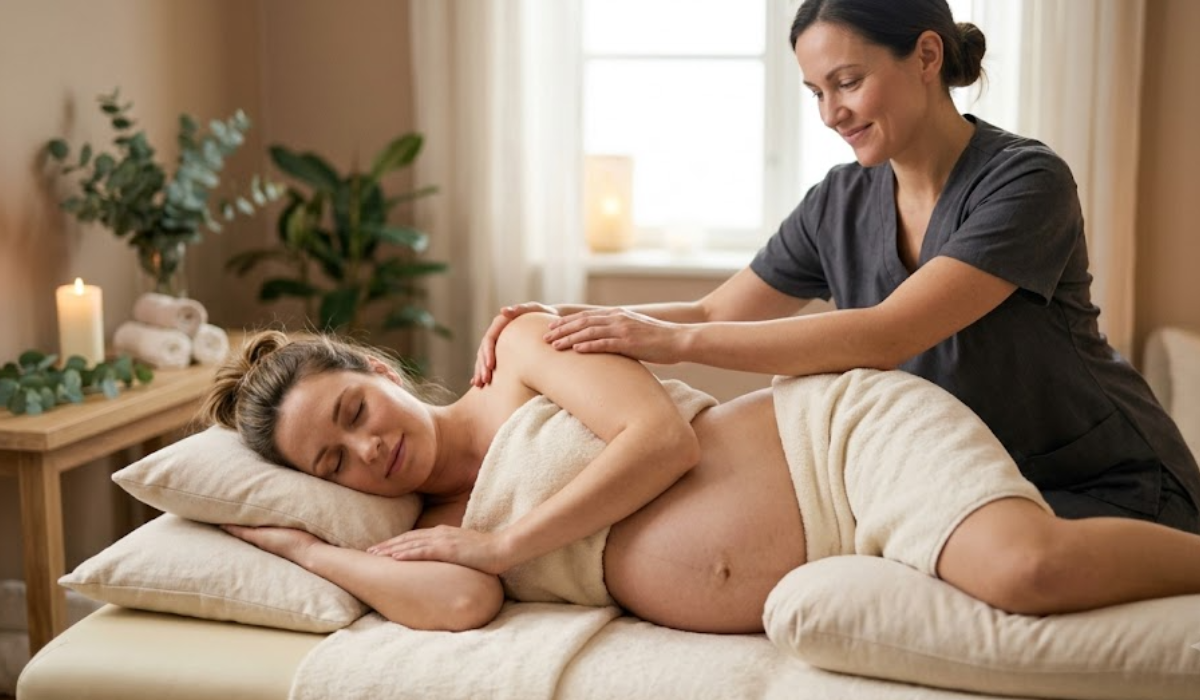
Here’s the short version: your first prenatal massage usually starts with a quick chat about your pregnancy, then a gentle, side-lying massage with plenty of pillow support, focused on the spots where pregnancy creates the most tension. You stay covered and comfortable the whole time, and you’re in control of everything.
This guide walks you through it step by step, so you can show up relaxed instead of guessing.
- Not sure if it’s the right time for you? The team at Circle Wellness in Melville is happy to answer a quick question before you book — no pressure. Call [Phone Number] or reach out here.
Key Takeaways
- Your first session starts with a short consultation about your trimester, symptoms, and any pregnancy concerns.
- You’ll likely lie on your side, supported by pillows or a pregnancy cushion — never face-down on your belly.
- You stay covered and in control. You choose your comfort level, and only the area being worked on is uncovered.
- Prenatal massage is gentle, focused on relief and relaxation, not deep, intense pressure.
- Check with your provider first if you have a high-risk pregnancy or any complications.
Who This Guide Is For
This is for first-time prenatal massage clients — especially expecting moms who feel a little nervous about what actually happens. If you’re dealing with back pain, sore hips, swelling, stress, or poor sleep and you want relief but don’t know what to expect, this will help you walk in feeling prepared.
Why You Can Trust This Guide
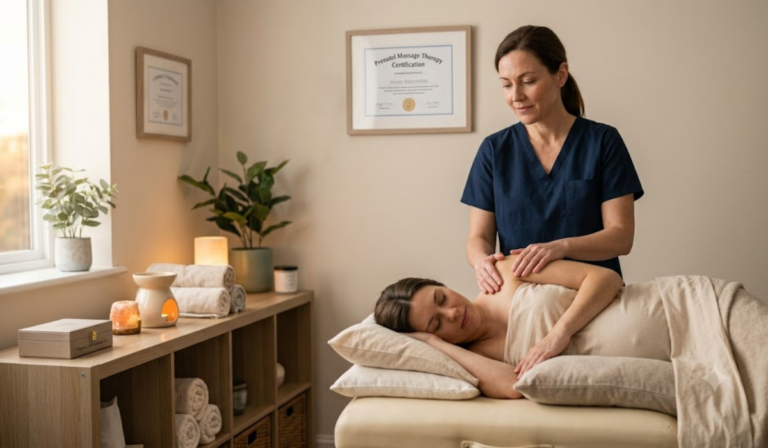
This article is based on widely accepted pregnancy-care guidance from sources like ACOG and the Mayo Clinic, combined with the everyday experience of working with expecting moms. At Circle Wellness, prenatal sessions are performed by certified prenatal massage therapists, within a practice built around medical oversight and licensed specialists. Our goal is to set honest expectations and always point you back to your own provider for personal medical advice.
First Things First: Is It a Good Time for You?
For most healthy pregnancies, prenatal massage is a safe, comforting option. The most important factor is choosing a therapist trained in pregnancy massage.
That said, a few situations call for your doctor’s okay before your first appointment, including a high-risk pregnancy, preeclampsia, uncontrolled high blood pressure, placenta previa, a history of preterm labor, unexplained bleeding, a history of blood clots, severe sudden swelling, or any condition your provider is monitoring. If that’s you, a quick check-in with your OB-GYN or midwife is all it takes. (For a deeper look, see our guide on whether [prenatal massage is safe during pregnancy].)
Why So Many Moms Book Their First Prenatal Massage
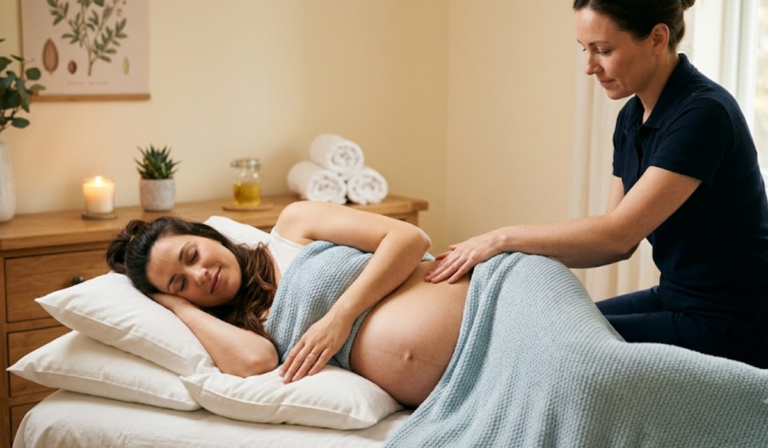
Pregnancy changes your body fast. A hormone called relaxin loosens your joints to prepare for birth, your growing belly shifts your posture, and your body holds extra fluid — which can lead to back pain, achy hips, tired legs, and restless sleep. Add everyday stress, and tension settles into the neck, shoulders, and back.
A first prenatal massage is often simply a mom saying, “I need some relief.” It may help ease muscle tension, support relaxation, and give you a calm hour to rest. Many women report feeling looser and more at ease afterward, though results vary and massage isn’t a cure for pregnancy discomfort.
Secondary benefits moms often mention: better sleep, less hip and lower-back tension, a calmer mind, and a welcome break from the physical demands of pregnancy.
Step by Step: What Happens at Your First Appointment
Here’s the typical flow, from the moment you arrive to when you head home.
| Stage | What happens | About how long |
|---|---|---|
| Check-in & consultation | You share your trimester, due date, symptoms, and any concerns. Your therapist plans the session around you. | 5–10 min |
| Getting settled | You undress to your comfort level in private, then get positioned with pillow support and covered with a sheet. | A few minutes |
| The massage | Gentle, side-lying work focused on your back, hips, shoulders, legs, and tension spots. | 30–45 min |
| Wrap-up | You get up slowly, have some water, and ask any questions before you leave. | A few minutes |
What should I wear to a prenatal massage?
Wear whatever is comfortable to arrive in. For the session itself, you’ll undress to your comfort level in private — some clients prefer to keep underwear on, others don’t. There’s no “right” choice. You’ll be covered with a sheet throughout, with only the area being worked on uncovered at a time.
What position will I be in?
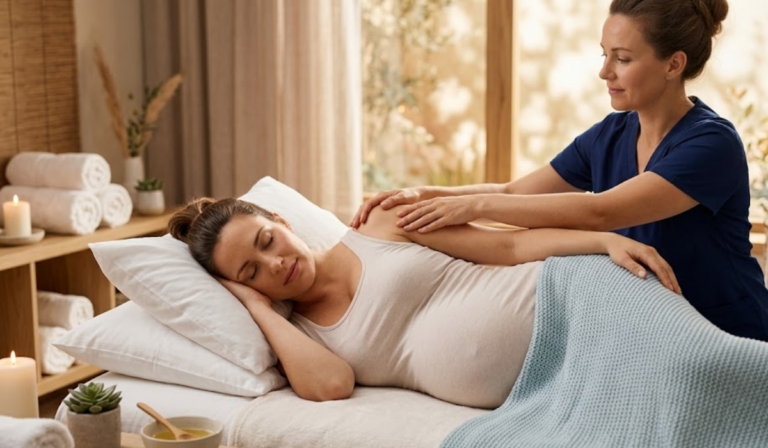
Most prenatal massage uses a side-lying position, cushioned with pillows or supportive bolsters so you and your baby stay comfortable. Some providers use specialized pregnancy cushions or tables. You won’t lie face-down on your belly, and you generally won’t lie flat on your back for long, especially later in pregnancy. Your comfort and safety guide the setup, and you can switch positions anytime.
How much pressure will be used?
Prenatal massage is usually gentler and more relaxation-focused than deep-tissue work. Your therapist will check in about pressure and adjust to what feels good. If you’d like it softer or firmer, just say so.
Can I talk during the session?
Absolutely — and you should speak up anytime. Whether you want lighter pressure, a new position, a blanket, a break, or to stop entirely, it’s your session and your comfort comes first.
How will I feel afterward?
Many moms feel relaxed and a little looser. Some feel sleepy or extra rested. It’s a good idea to drink water and take it easy for a bit. If anything feels off afterward, contact your healthcare provider.
What to Tell Your Therapist Before You Start

A few minutes of sharing helps keep your session safe and comfortable. Let your therapist know:
- How far along you are (trimester and due date)
- Your current symptoms (back pain, swelling, sciatica, poor sleep)
- Any pregnancy complications or a high-risk diagnosis
- Medications you’re taking
- Any restrictions from your OB-GYN or midwife
- Prior pregnancy history that may matter
- Comfort concerns, like positioning preferences or areas to avoid
Is the First Appointment Different by Trimester?
Your provider’s guidance always comes first, but here’s a general sense of timing.
- First trimester: Some therapists and providers are comfortable with early-pregnancy massage; others prefer to wait until after the early weeks. If you’re newly pregnant, check with your provider and pick a therapist experienced with early pregnancy.
- Second trimester: Often the most comfortable time for a first massage — early nausea has usually eased and back and hip aches start to build.
- Third trimester: A very common time to book, since swelling, pelvic pressure, and sleep struggles peak. Side-lying support becomes especially important.
When Not to Wait — Call Your Provider Right Away

Separate from massage, every expecting mom should know the symptoms that mean seek care promptly. If you notice any of these — at any time — don’t wait:
- A severe or constant headache
- Vision changes, like blurriness or seeing spots
- Chest pain or trouble breathing
- Pain, swelling, or redness in one leg (a possible blood clot)
- Heavy bleeding
- Severe belly pain
- A fever
- Your baby moving less than usual
- Sudden swelling of your face or hands
When something feels off, it’s always okay to call.
Common Myths About Your First Prenatal Massage
Myth: I have to be fully undressed.
Not at all. You undress only to your comfort level, in private, and stay covered with a sheet the whole time.
Myth: It’ll be an intense, deep massage.
Prenatal massage is gentle by design. Comfort and safety guide the pressure.
Myth: I have to stay silent and still.
You’re encouraged to communicate. Pressure, position, temperature, breaks — just ask.
Myth: I’ll lie on my belly.
You won’t. Side-lying with pillow support keeps you and your baby comfortable.
Who Benefits Most From a First Prenatal Massage?
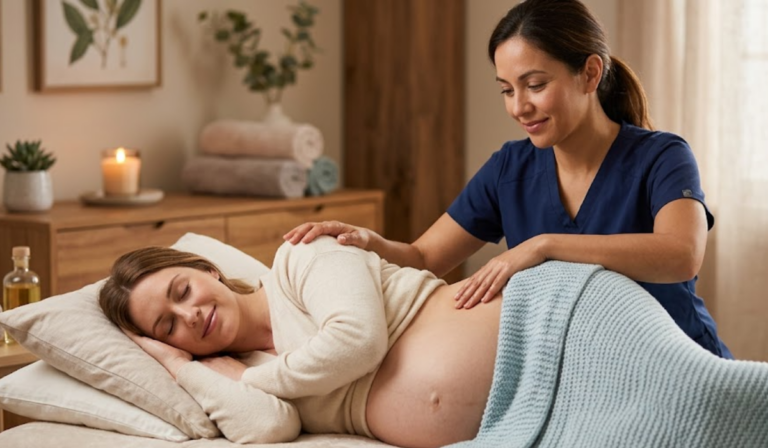
A prenatal massage may be especially helpful if you’re dealing with:
- Lower-back or hip discomfort
- Tired, swollen legs or feet
- Trouble sleeping
- Stress or tension in your neck and shoulders
- Or you simply need a calm, restful break
If you’re nervous because it’s your first time, that’s exactly who this kind of gentle, supportive session is designed for.
Questions to Ask Before Booking
- Are you trained and certified in prenatal massage?
- Do you work with moms in my trimester?
- What positioning do you use?
- Should I get clearance from my OB-GYN first?
- How do you adjust treatment for a high-risk pregnancy?
- What should I wear or bring?
Key Terms, Defined
- Prenatal massage: Massage adapted for pregnancy, using safe positioning and gentler techniques.
- Side-lying position: Lying on your side with pillow support, the most common position for pregnancy massage.
- Bolster: A firm cushion used to support your body and keep you comfortable.
- Draping: Covering you with a sheet so only the area being worked on is uncovered, protecting your privacy.
- Relaxin: A hormone that loosens joints during pregnancy to prepare for birth.
In Summary
- Your first prenatal massage starts with a short consultation, then gentle, side-lying work.
- You stay covered, supported, and in control the entire time.
- It’s relaxing, not intense — and you can adjust anything, anytime.
- Check with your provider first if you have a high-risk pregnancy or complications.
- The goal is simple: help you feel a little more comfortable in your pregnancy.
A Note From Our Prenatal Massage Team
Most first-time moms tell us the same thing once the session starts: “Oh — this is way more relaxing than I expected.” The nerves are almost always about the unknown, not the massage itself. So we take a few extra minutes up front to explain positioning, check in often, and make sure you feel safe and supported. That’s the part of the job we love most — watching someone finally exhale.
Ready for Your First Prenatal Massage in Melville?
If you’re pregnant and ready for some relief from back pain, swelling, stress, or restless sleep, your first prenatal massage doesn’t have to be intimidating. Our certified prenatal massage therapists will walk you through everything — positioning, comfort options, and what to expect — before you ever get on the table.
- Circle Wellness — 25 Melville Park Rd, Suite 200 B, Melville, NY 11747 (near Route 110 & the LIE)
- 📞 Call or text (631) 888-5957 / (888) 293-5577 ·
- 🗓️ Book your first prenatal massage
We’re proud to support expecting moms across Melville and Long Island. No pressure — just answers when you’re ready.
- Medical disclaimer: This article is for educational purposes only and is not a substitute for professional medical advice. Always speak with your OB-GYN, midwife, or qualified healthcare provider before starting any new treatment during pregnancy, especially if you have a high-risk pregnancy or any complications.
A Note From Our Prenatal Massage Team
Most first-time moms tell us the same thing once the session starts: “Oh — this is way more relaxing than I expected.” The nerves are almost always about the unknown, not the massage itself. So we take a few extra minutes up front to explain positioning, check in often, and make sure you feel safe and supported. That’s the part of the job we love most — watching someone finally exhale.
FAQs
What should I wear to a prenatal massage?
Arrive in whatever is comfortable. For the session, you’ll undress to your comfort level in private and stay covered with a sheet, with only the area being worked on uncovered at a time.
Do I have to get fully undressed?
No. You choose your comfort level — some clients keep underwear on, others don’t. There’s no right answer, and you’re draped throughout.
How long is a first prenatal massage appointment?
Plan for about 60 to 75 minutes total: a short consultation up front, roughly 30 to 45 minutes of massage, and a few minutes to settle in and wrap up.
Will a prenatal massage hurt?
It shouldn’t. Pregnancy massage is gentle and relaxation-focused. Your therapist checks in about pressure and adjusts to what feels comfortable for you.
What position will I be in during the massage?
Usually side-lying with pillow support, sometimes using a specialized pregnancy cushion. You won’t lie face-down on your belly, and you can change positions anytime.
Should I eat before my appointment?
A light snack beforehand is fine and can help you feel comfortable. Avoid arriving overly full or very hungry.
How will I feel after my first prenatal massage?
Many moms feel relaxed, loose, and rested, sometimes a little sleepy. Drink water and take it easy afterward. If anything feels off, contact your provider.
Do I need my doctor's approval before a prenatal massage?
Not always, but it’s strongly recommended if you have a high-risk pregnancy, a complication, or any condition your provider is monitoring.
How do I book a first prenatal massage in Melville?
You can call or text Circle Wellness at [Phone Number – (631) 888-5957 / (888) 293-5577] or book appointment ). We’re happy to answer questions before you schedule.