Few things wear a mom down like hip pain and sciatica during pregnancy. That deep ache in your hips, or the sharp, shooting pain down your leg, can make walking, sleeping, and even rolling over in bed miserable. If you’re dealing with it, you have our sympathy — and some real options.
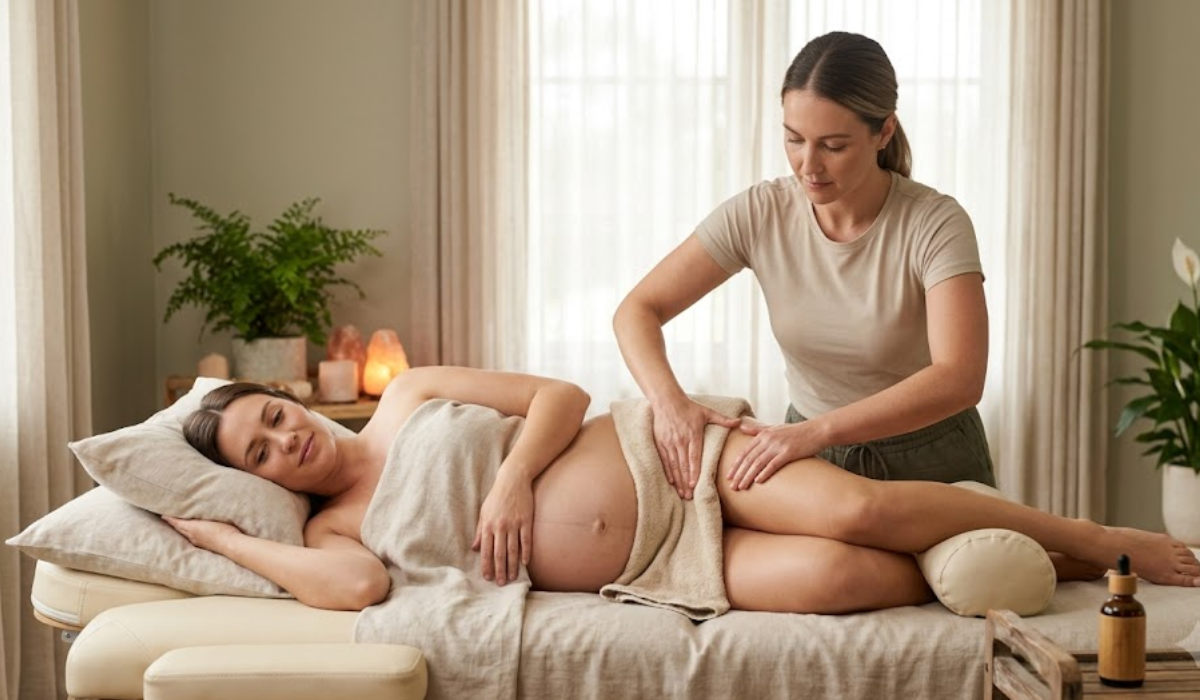
For most healthy pregnancies, prenatal massage and pregnancy acupuncture may help ease the muscle tension that drives a lot of hip and sciatic-type pain. Neither is a cure, but both can be gentle, drug-free ways to feel more comfortable.
This guide explains why hip pain and sciatica happen, whether it’s “really” sciatica, how massage and acupuncture may help, and the warning signs that mean you should call your provider right away.
Hip or leg pain making everyday life hard? The team at Circle Wellness in Melville can help you figure out whether massage, acupuncture, or both may be a fit — no booking required. Call (631) 888-5957 / (888) 293-5577 or reach out here.
Key Takeaways
- Hip pain and sciatic-type pain are common in pregnancy, usually driven by a loosening pelvis and shifting posture.
- Much “sciatica” in pregnancy is actually pelvic-related — and muscle-focused care may help.
- Prenatal massage may ease tight hips, glutes, and the muscle tension around the sciatic nerve.
- Acupuncture may support relaxation and ease aches when done by a pregnancy-trained provider.
- Some symptoms are serious. Significant leg weakness, numbness in the saddle area, or loss of bladder or bowel control needs emergency care.
Who This Guide Is For
Why You Can Trust This Guide
This article draws on widely accepted pregnancy-care guidance from sources like ACOG and the Mayo Clinic, combined with hands-on experience supporting expecting moms. At Circle Wellness, we offer both certified prenatal massage and licensed acupuncture, within a practice built around medical oversight and licensed specialists. We aim to set honest expectations and always point you back to your own provider for personal medical advice.
Why Do Hip Pain and Sciatica Happen in Pregnancy?
Your pelvis is the center of a lot of pregnancy changes, so it’s no surprise it complains:
- Relaxin loosens the pelvis. This hormone softens the joints — including the sacroiliac (SI) joints at the back of your pelvis — to prepare for birth, which can leave your hips achy or unstable.
- Your posture shifts. A growing belly tilts your posture forward and changes how you stand and walk, adding strain to the hips and glutes.
- Added weight and pressure. Carrying more weight, plus your baby’s position, can press on nearby muscles and nerves.
- Tight glute and piriformis muscles. These hip muscles often tighten in pregnancy, and the sciatic nerve runs right through this area, which can create sciatic-type pain.
- Round ligament strain. Stretching ligaments that support your growing uterus can add to hip and groin discomfort.
Is It Really Sciatica?
Why does this matter? Because muscle- and joint-focused care, like prenatal massage, may help when the pain comes from tight hips and pelvic strain. If your symptoms point to true nerve compression, your provider can help sort that out and guide treatment.
How Prenatal Massage May Help
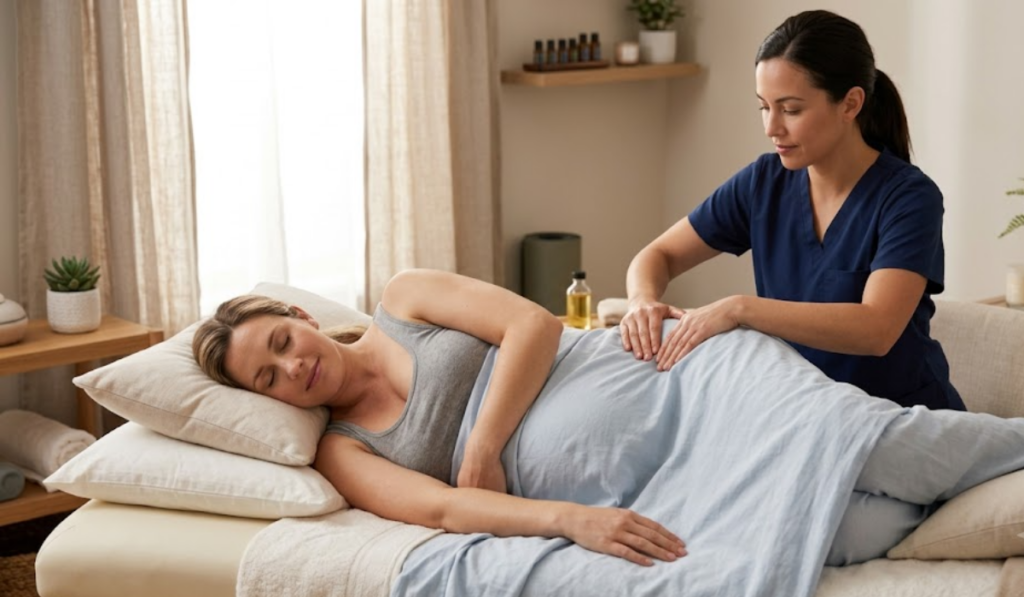
A trained therapist focuses on the muscles that tend to drive hip and sciatic-type pain. That often means gentle work on:
- The hips and glutes, easing tight, overworked muscles
- The lower back and SI-joint area, where pelvic strain collects
- The piriformis region, since tension there can irritate the sciatic nerve
- Overall relaxation, helping your whole body release tension
Many moms report that massage may help them move more comfortably and sleep better. Research suggests massage therapy may ease discomfort during pregnancy, though results vary and it isn’t a cure. (New to massage? See [what to expect at your first prenatal massage].)
How Acupuncture May Help
Some moms use acupuncture for relaxation and to ease hip and lower-back aches. Research on acupuncture for pregnancy-related pain is still developing, and experiences vary — some women report meaningful relief, while it isn't a guaranteed fix. Like massage, it's a comfort-focused option, not a substitute for medical care. (Curious? See [acupuncture during pregnancy].)
Massage vs. Acupuncture for Hip Pain and Sciatica
| Prenatal Massage | Pregnancy Acupuncture | |
| Best for | Tight hips, glutes, and SI-joint tension | Relaxation, aches, and stress |
| What it may help with | Hip and glute tightness adding to sciatic-type pain | Tension and discomfort; some report eased aches |
| What it feels like | Gentle, hands-on, side-lying | Thin needles at selected points; usually a mild sensation |
| Safety | Trained prenatal therapist, safe positioning | Pregnancy-trained acupuncturist who avoids inappropriate points |
| Who may prefer it | Wants targeted muscle relief | Open to a gentle, needle-based approach |
Drug-Free Ways to Ease Hip and Sciatic Pain
Massage and acupuncture work even better alongside everyday habits. Ask your provider which fit your pregnancy:
- Sleep on your side with a pillow between your knees to keep your hips aligned
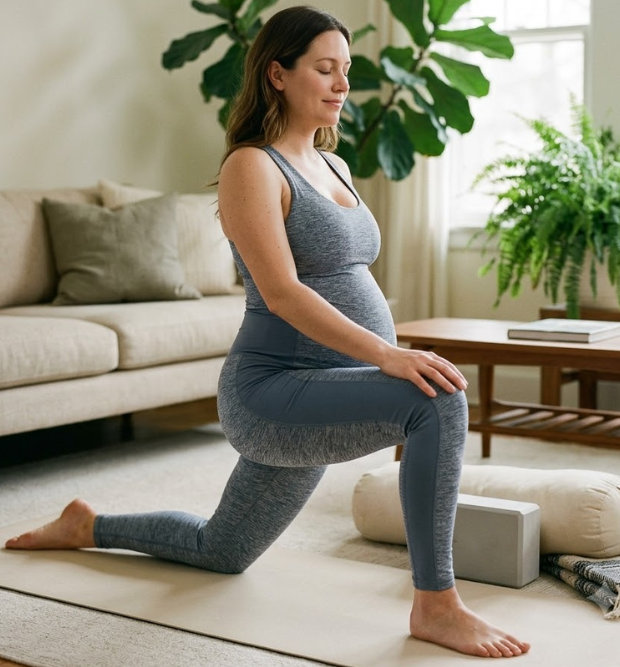
- Try gentle stretches or prenatal yoga to loosen tight hips (with your provider’s okay)
- Do gentle pelvic tilts to ease lower-back and pelvic tension
- Avoid standing or sitting in one position too long
- Wear supportive, low-heeled shoes and consider a pregnancy support belt
- Use a warm — not hot — compress on sore hips

When to Ask Your Doctor First
For most healthy pregnancies, massage and acupuncture from trained providers are safe options. But check with your OB-GYN or midwife before booking if you have a high-risk pregnancy, preeclampsia, uncontrolled high blood pressure, placenta previa, a history of preterm labor, unexplained bleeding, a history of blood clots, severe sudden swelling, or any condition your provider is monitoring. (More detail in [is prenatal massage safe during pregnancy].)
Warning Signs — When Not to Wait
- Significant or worsening weakness in a leg
- Numbness in the groin, inner thighs, or saddle area
- Loss of bladder or bowel control
- Rhythmic pain or tightening (possible contractions or preterm labor)
- Fever, vaginal bleeding, or fluid leaking
- Your baby moving less than usual
- Or any severe headache, vision changes, chest pain, trouble breathing, or one-sided leg swelling
Hip Pain and Sciatica by Trimester
- First trimester: Less common early on, but relaxin is already at work. Some therapists and providers prefer to wait until after the early weeks for massage.
- Second trimester: Hip and pelvic aches often start to build as your belly grows and posture shifts.
- Third trimester: Hip pain, SI-joint discomfort, and sciatic-type pain frequently peak. Side-lying support makes massage comfortable even late in pregnancy.
Common Myths About Pregnancy Hip Pain and Sciatica
Myth: Sciatica in pregnancy means something is wrong with the baby. Hip and sciatic-type pain is usually about your changing pelvis and muscles, not your baby. Still, share new or severe symptoms with your provider.
Myth: Nothing helps until after delivery. Gentle options like massage, acupuncture, stretching, and supportive sleep may help you feel more comfortable now.
Myth: Massage makes nerve pain worse. Gentle, trained prenatal massage focuses on easing the muscle tension that often adds to the pain. Tell your therapist exactly where and how it hurts.
Myth: You have to stay completely off your feet. Rest matters, but gentle movement often helps. Your provider can guide what’s right for you.
Who Benefits Most From Massage or Acupuncture for Hip Pain?
These options may be especially helpful if you have:
- Achy, sore, or unstable hips
- SI-joint or buttock pain
- Sciatic-type pain from tight hip and glute muscles
- Hip pain that disrupts your sleep
- General pelvic strain late in pregnancy
Questions to Ask Before Booking
- Are you trained and certified in prenatal massage, or a pregnancy-trained acupuncturist?
- Do you have experience with pregnancy hip and sciatic-type pain?
- What positioning do you use?
- Which acupuncture points do you avoid during pregnancy?
- Should I get clearance from my OB-GYN first?
Key Terms, Defined
- Sciatica: Pain along the sciatic nerve, traveling from the lower back or buttock down the leg.
- Pelvic girdle pain: Discomfort in the joints of the pelvis, common in pregnancy.
- Sacroiliac (SI) joint: The joint connecting your spine to your pelvis, often a source of pregnancy hip pain.
- Piriformis: A hip muscle near the sciatic nerve; tension here can cause sciatic-type pain.
- Round ligament pain: Sharp or achy discomfort from the ligaments supporting your growing uterus.
In Summary
- Hip and sciatic-type pain is common and usually pelvic- and muscle-related in pregnancy.
- Prenatal massage may ease tight hips, glutes, and the muscles around the sciatic nerve.
- Acupuncture may support relaxation and comfort when done by a trained provider.
- Some symptoms are emergencies — know the nerve red flags.
- A quick check-in with your provider helps you find relief safely.
A Note From Our Prenatal Massage Team
Find Relief From Hip Pain and Sciatica in Melville
If hip or sciatic pain is making everyday life hard, you don’t have to just power through it. At Circle Wellness, our certified prenatal massage therapists and licensed acupuncturists offer gentle, pregnancy-safe options for hip and pelvic discomfort — and we’ll explain everything before you begin.
📍 Circle Wellness — 25 Melville Park Rd, Suite 200 B, Melville, NY 11747 (near Route 110 & the LIE) 📞 Call or text [Phone Number] · 🗓️ [Book a session for hip or sciatic pain]( [Booking Link] )
We’re proud to support expecting moms across Melville and Long Island. No pressure — just answers when you’re ready.
Medical disclaimer
FAQs
Can prenatal massage help with pregnancy hip pain?
For many healthy pregnancies, yes — it may ease the tight hip and glute muscles that drive a lot of pregnancy hip pain. It’s a comfort-focused option, not a cure, so pair it with your provider’s guidance.
Can massage or acupuncture help with sciatica during pregnancy?
They may ease the muscle tension that adds to sciatic-type pain, which is often the main culprit in pregnancy. True nerve compression should be evaluated by your provider.
Is it really sciatica, or something else?
Much pregnancy “sciatica” is actually pelvic girdle pain or hip-muscle tension irritating the nerve. Your provider can help sort out the cause, which guides the best approach.
Is massage for hip pain safe in the third trimester?
It’s typically safe in the third trimester for healthy pregnancies, with proper side-lying support. It’s often when moms want relief most, since swelling and back discomfort tend to peak.
Is massage for hip pain safe in the third trimester?
It’s typically safe in the third trimester for healthy pregnancies, with proper side-lying support. It’s often when hip pain peaks, so many moms seek relief then.
What else helps pregnancy hip and sciatic pain?
Side-sleeping with a pillow between your knees, gentle stretches and prenatal yoga, pelvic tilts, supportive shoes, a support belt, and warm compresses can all help. Ask your provider what’s right for you.
When is hip or leg pain an emergency in pregnancy?
Seek emergency care for significant leg weakness, numbness in the saddle area, or loss of bladder or bowel control. Also call promptly for rhythmic pain or tightening, fever, bleeding, fluid leaking, or decreased fetal movement.
Do I need my doctor's approval before a prenatal massage?
Not always, but it’s strongly recommended with severe pain, neurological symptoms, a high-risk pregnancy, or any condition your provider is monitoring.
How often should I come in for hip or sciatic pain?
There’s no single rule. Some moms come occasionally, others more regularly as discomfort builds. Your therapist can suggest a comfortable rhythm based on your symptoms.
How do I book a session for hip or sciatic pain in Melville?
Call or text Circle Wellness at (631) 888-5957 / (888) 293-5577 or book online. We’re happy to answer questions before you schedule.


Looking for pregnancy hip pain relief in Melville, NY?
Our prenatal massage and acupuncture services support your comfort.