Is massage safe during pregnancy?
For most healthy pregnancies, yes, when performed by a therapist trained in prenatal massage. Pressure is kept light to moderate, and side-lying positioning is used rather than lying face down or flat on the back. Anyone with pregnancy complications should get clearance from their provider first.
Key facts
- The American Pregnancy Association states massage can begin at any point in pregnancy, while many facilities choose to wait until after 12 weeks.
- There is no research showing a link between massage and miscarriage; first-trimester caution is largely precautionary.
- Side-lying with pillow support is the position generally considered safest.
- After about 20 weeks, lying flat on the back can reduce blood flow, so it is avoided.
- Deep pressure on the legs is avoided, because pregnancy raises the risk of blood clots.
- Swedish technique is the approach the American Pregnancy Association describes as recommended during pregnancy.
- Prenatal certification is training beyond standard massage licensure.
- Preeclampsia, preterm contractions, bleeding and high-risk pregnancy all require provider clearance before booking.
Pregnancy massage sits in an awkward spot. The benefits people report are real and ordinary — a back that hurts less, a night of better sleep — but the information available online swings between “completely safe, book whenever” and dire warnings about pressure points that will start labour. Neither extreme is accurate.
What follows is the practical version: what changes by trimester, how you will be positioned, which areas get avoided and why, and the specific situations where the answer is to call your obstetrician or midwife before booking anything.
Trimester by trimester
Weeks 1–12 (First trimester)
This is the contested one. The American Pregnancy Association’s position is that massage can begin at any point in pregnancy. In practice, many clinics and spas decline to treat before 12 weeks, and the reason is usually caution rather than evidence — most miscarriages occur in this window, and no practice wants a coincidence of timing to become a question.
Practical points: nausea, dizziness and fatigue are common in early pregnancy and massage can make some people feel worse rather than better. If you want treatment before 12 weeks, the straightforward route is a note from your provider.
Weeks 13–27 (Second trimester)
The most common time to start. Early symptoms often settle, the bump changes posture and weight distribution, and lower back and hip discomfort typically arrive with it.
Positioning shifts during this stretch. From around 20 weeks, lying flat on the back is avoided because the weight of the uterus can press on the major vein returning blood to the heart, which can leave you dizzy or nauseated.
Week 28 onward (Third trimester)
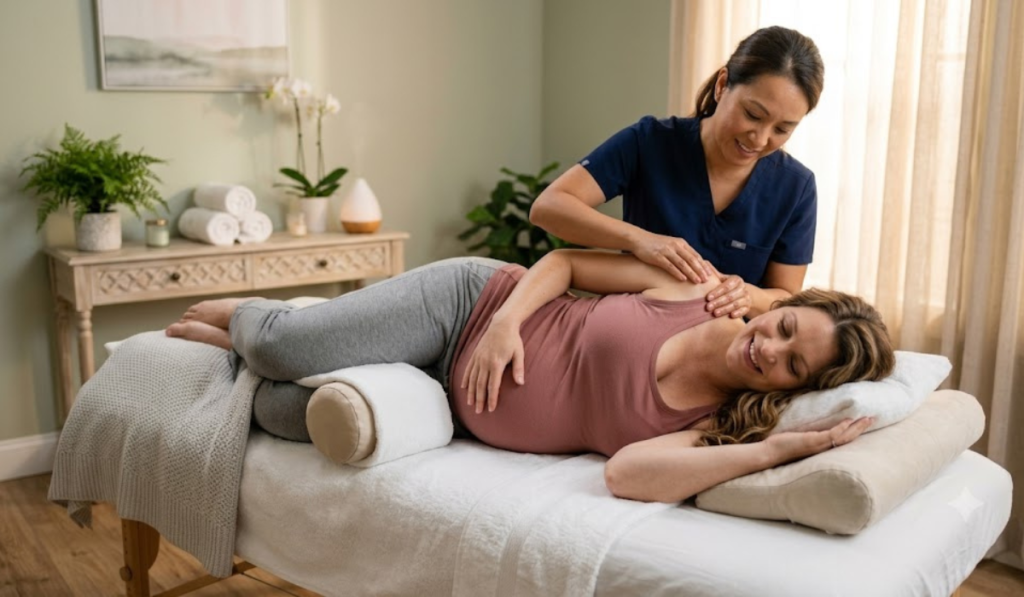
Sessions become more about comfort and less about technique. Side-lying with pillows between the knees and under the bump, shorter time in any one position, and slower transitions on and off the table.
Swelling is common in late pregnancy and usually unremarkable. Sudden swelling, particularly in the face or hands, is not — that one goes to your provider rather than your therapist.
How you will be positioned
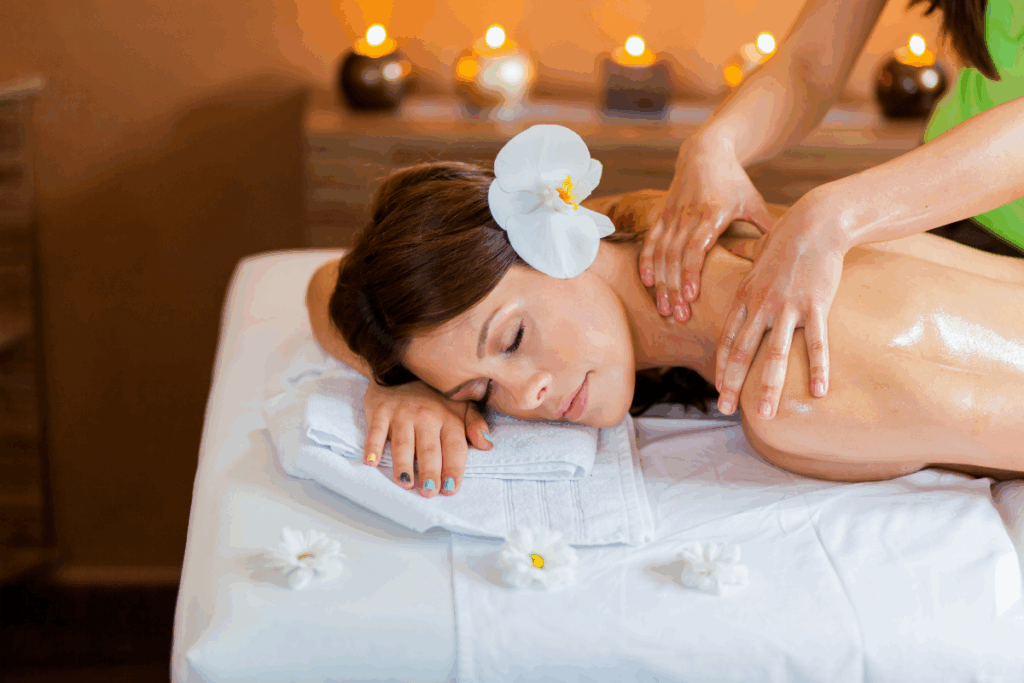
You will most likely be on your side, supported by pillows or a bolster, with a pillow between your knees and something under the bump. You stay covered throughout, and only the area being worked is uncovered.
Two positions get asked about often:
- Face down with a belly cutout. Some practices use tables with a hole for the bump. Cleveland Clinic’s guidance is that side-lying is generally the safest option regardless, and that is what we default to.
- Flat on your back. Avoided from around 20 weeks. A semi-reclined position, propped at an angle, is used instead when lying on your back would otherwise be useful.
If a position stops feeling comfortable at any point, say so. Comfort in pregnancy changes week to week and sometimes minute to minute, and adjusting is normal rather than a nuisance.
Where massage is avoided or approached with caution
- The abdomen. Not massaged. Light resting contact only, if anything.
- Deep pressure on the legs. Avoided. Pregnancy increases clot risk, and deep work on the calves and inner thighs is not worth the question mark.
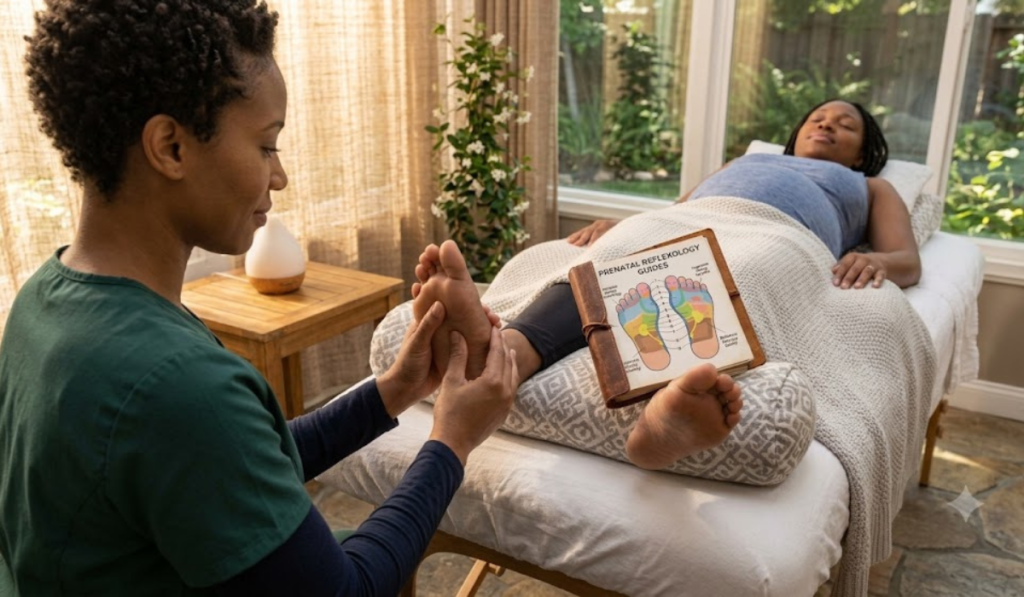
- Ankles, wrists and the web of the hand. Certain acupressure points in these areas are traditionally avoided during pregnancy. More on that below.
- Any area with varicose veins. Worked around rather than over.
- Areas of unexplained swelling, redness or warmth. Not treated — reported.
- Heat. Hot stones, saunas and very warm rooms are avoided during pregnancy.
When to speak to your provider first
Get provider clearance if you have
- A high-risk pregnancy, or you are carrying multiples
- Preeclampsia, or high blood pressure in pregnancy
- A history of preterm labour, or preterm contractions now
- Any bleeding, or fluid leaking
- Gestational diabetes
- A history of blood clots, or a clotting disorder
- Placenta problems identified on a scan
- Severe swelling, severe headaches, or changes in vision
- Anything your obstetrician or midwife has already told you to be careful with
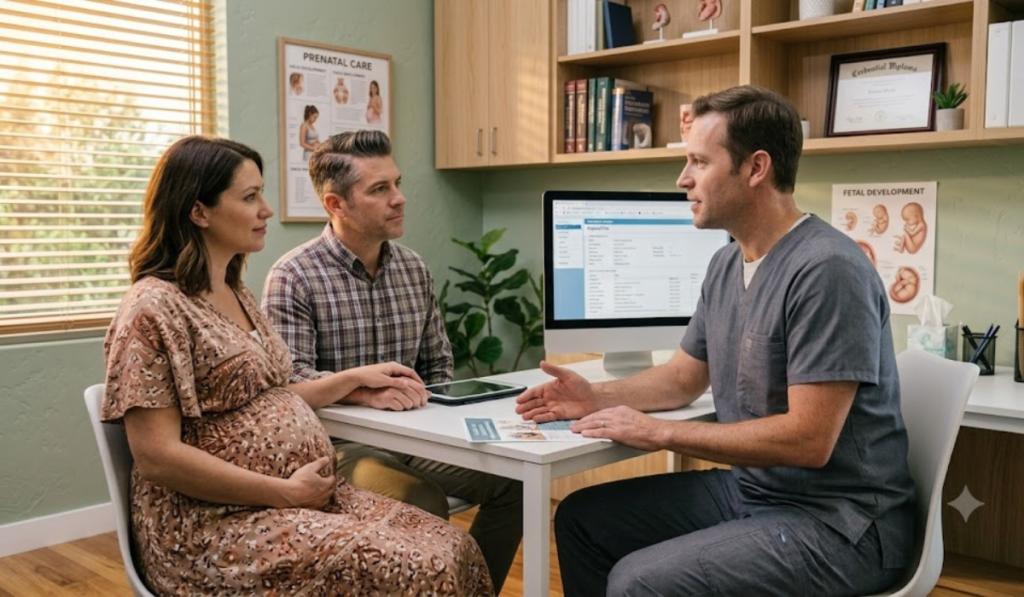
None of these automatically rules out massage. They mean the decision belongs to the person managing your pregnancy, not to a massage practice.
Do not book — seek medical care
Contact your provider or go to hospital if you have
- Vaginal bleeding or fluid loss
- Regular contractions before 37 weeks
- Severe or persistent headache, vision changes, or sudden swelling of the face or hands
- Reduced or changed fetal movement
- Pain, swelling, warmth or redness in one calf
- Severe abdominal pain
These need medical assessment, not a massage appointment. If in doubt, call your provider — they would far rather hear from you.
What a session looks like here
A first prenatal appointment starts with a conversation: how far along you are, how the pregnancy has gone, what your provider has said, where the discomfort sits, and anything that has changed recently. That takes a few minutes and shapes everything after it.
The work itself is gentler than a standard massage and focused on the places pregnancy loads: lower back, hips, upper back and shoulders, legs and feet within the limits above. You stay covered, you stay in control, and you can ask for lighter pressure, a different position, a break or an early finish at any point without explaining why.
Circle Wellness MD is at Melville Corporate Plaza, 25 Melville Park Road, Suite 200 B, Melville, NY. We are open Monday to Friday 10am to 7pm and Saturday 10am to 2pm.
Myth vs fact
| What people believe | What is actually true |
|---|---|
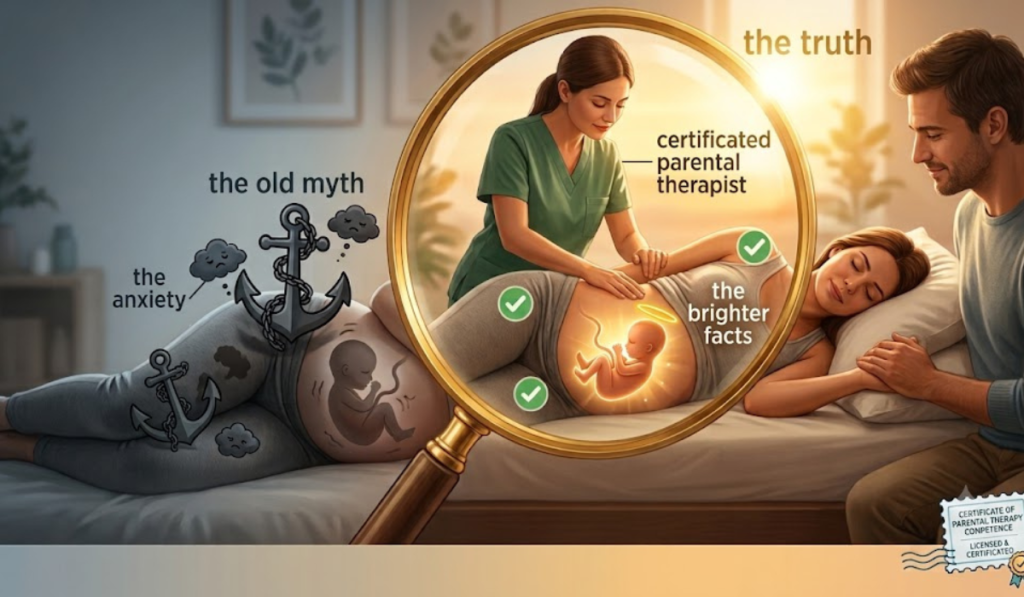
| Massage in the first trimester causes miscarriage | No research shows a link between massage and miscarriage. Many practices still wait until 12 weeks as a precaution, partly because most miscarriages happen in that window. |
| A pressure point can send you into labour | Certain acupressure points are routinely avoided during pregnancy, and the evidence that ordinary massage induces labour is limited. Avoiding them is caution, not a proven risk. |
| Lying on your back is fine if it feels comfortable | From around 20 weeks the weight of the uterus can compress the vein returning blood to the heart, so side-lying or semi-reclined positioning is used instead. |
| A table with a belly cutout is the safest option | Cleveland Clinic guidance is that side-lying is generally safest. A cutout table is not an upgrade on it. |
| Any licensed massage therapist can do prenatal work | Prenatal certification is training beyond standard licensure, covering positioning, uterine ligament strain and recognising signs of clots and varicose veins. |
| Swelling in pregnancy is always normal | Gradual swelling in the feet and ankles is common. Sudden swelling of the face or hands, especially with headache or vision changes, needs same-day medical assessment. |
Partner massage at home
A partner rubbing your shoulders or lower back is generally fine and often more use than anything else available at eleven at night. Keep pressure gentle, avoid the abdomen, avoid firm work on the calves, and stop if anything feels uncomfortable.
Mention it to your provider at your next appointment, as you would any other addition. If the pregnancy has any complicating factor, ask before rather than after.
FAQs

Can I get a massage in the first trimester?
The American Pregnancy Association says massage can begin at any point in pregnancy. Many practices prefer to wait until after 12 weeks as a precaution. If you want treatment earlier, ask your provider for clearance.
Is foot massage safe during pregnancy?
Generally yes, with a therapist trained in prenatal work who knows which points around the ankle to avoid. Deep pressure on the calves is avoided because of clot risk.
What position will I be in?
Side-lying with pillow support, most likely. Lying flat on the back is avoided from around 20 weeks, and face-down positioning is not used.
Where should you not massage a pregnant woman?
The abdomen, deep pressure on the legs, specific acupressure points at the ankles and in the web of the hand, areas with varicose veins, and any area with unexplained swelling, redness or warmth.
Can prenatal massage bring on labour?
There is limited evidence that ordinary massage induces labour. Certain points are avoided as a precaution rather than because an effect is established.
How often can I have prenatal massage?
There is no standard schedule. It depends on your symptoms, your pregnancy, and what your provider advises.
Is deep tissue massage safe in pregnancy?
Deep pressure is avoided, particularly on the legs. Prenatal work uses lighter to moderate pressure, and the American Pregnancy Association describes Swedish technique as the recommended approach.
Do I need a doctor's note?
Not usually for a straightforward pregnancy after 12 weeks. You do if you want treatment in the first trimester at most practices, or if your pregnancy has any complicating factor.
Can I use insurance for prenatal massage?
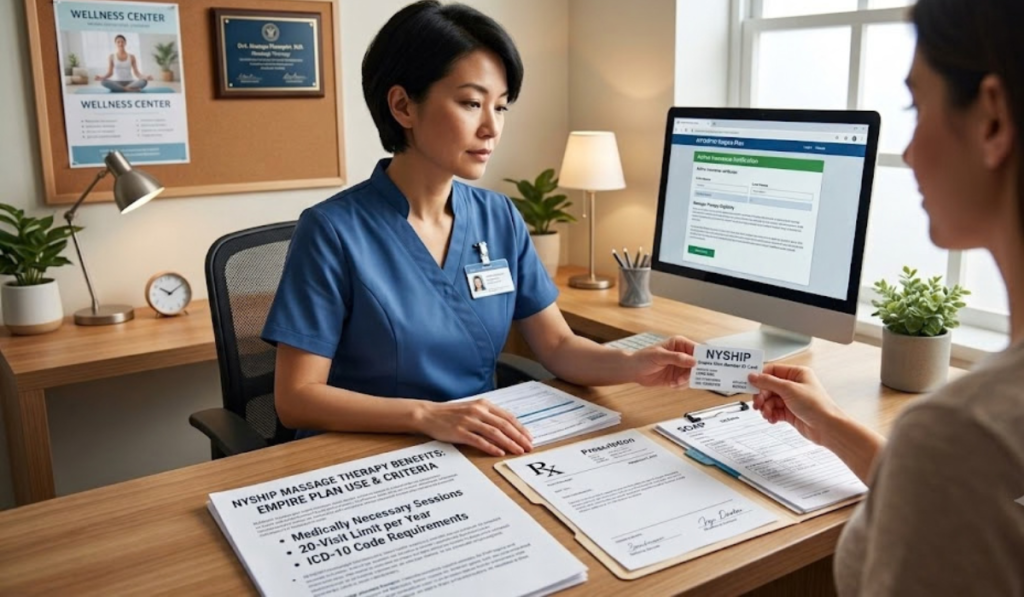
Possibly, when it is documented as medical massage and your plan covers massage therapy. Circle Wellness currently bills NYSHIP directly; other plans are self-pay. Our NYSHIP guide covers the Empire Plan rules.
What about massage after the birth?
Postnatal massage is common once you have been cleared at your postpartum check. Timing depends on the birth and your recovery, so ask your provider.
Ask us before you book

Give your body the care it deserves — book your massage today."
We will point you at the right question to ask and who to ask it of, before you book anything. Please keep medical details off the web form — call and we will take it from there.