
Why Your Sports Injury Keeps Coming Back — Even After Rest
For many active individuals, pain rarely begins with one dramatic injury.
Instead, it builds slowly.
A shoulder that keeps tightening after workouts.
A hip that feels locked after running.
A calf that never fully loosens.
A back that constantly feels strained no matter how much stretching you do.
At first, it feels manageable.
Until the discomfort starts affecting:
- movement
- recovery
- performance
- sleep
- everyday activities
This is often the reality of overuse pain.
And for athletes, gym-goers, runners, physically demanding workers, and active adults, chronic muscle tension can become just as limiting as an acute injury.
At Circle Wellness, one supportive therapy sometimes used for muscular tension and myofascial pain patterns is Trigger Point Injection (TPI) therapy.
While TPI is not appropriate for every injury or pain condition, it may help support:
- muscle relaxation
- mobility
- recovery
- movement comfort
- reduction of trigger point-related tension
as part of a physician-guided, integrative recovery approach.

What Are Sports Injuries & Overuse Pain Patterns? ?
Sports injuries are not always caused by sudden trauma.
Many develop gradually through:
- repetitive movement
- muscle overload
- poor recovery
- compensation patterns
- postural strain
- repetitive stress on tissues
Over time, muscles may develop areas of tightness and irritation often referred to as trigger points.
These trigger points can contribute to:
- localized pain
- muscle stiffness
- restricted movement
- referred pain patterns
- muscular weakness or guarding
Overuse pain commonly affects:
- shoulders
- neck
- hips
- lower back
- calves
- knees
- forearms
And because active individuals often continue training through discomfort, tension patterns may become increasingly chronic over time.

What Are Trigger Points?
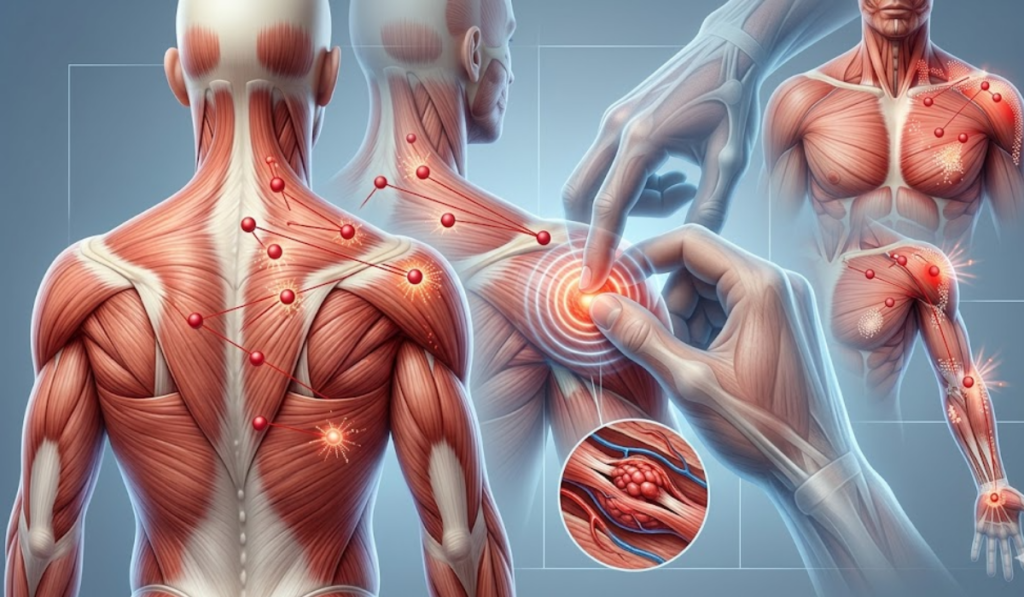
Trigger points are hyperirritable areas within tight muscle bands.
They are sometimes described as:
- “muscle knots”
- tender spots
- tight bands of muscle tissue
Trigger points may cause:
- localized pain
- movement restriction
- pain radiating into nearby areas
- muscular tightness during activity
For example:
- shoulder trigger points may contribute to neck tension
- hip trigger points may affect running mechanics
- back trigger points may limit mobility during exercise
Stress, repetitive motion, injury, and muscular compensation patterns may all contribute to trigger point formation.
What Are Trigger Point Injections (TPI)?
Trigger Point Injections are targeted injections administered into specific muscular trigger points.
The goal is to help reduce:
- muscular tightness
- irritation
- pain patterns
- movement restriction
TPI is commonly used in integrative musculoskeletal care for individuals experiencing chronic muscular tension or myofascial pain patterns.
At Circle Wellness, TPI is approached through a physician-guided wellness philosophy focused on:
- recovery support
- mobility optimization
- muscular balance
- whole-body function
Treatment plans are individualized based on:
- movement patterns
- injury history
- activity level
- muscular compensation
- recovery goals

How Trigger Point Injections May Help Support Sports Recovery
Muscle Relaxation & Tension Reduction
Trigger points may cause muscles to remain chronically tight and guarded.
TPI may help support muscular relaxation and reduce localized tension patterns.
Some individuals report:
- improved movement comfort
- less muscular tightness
- reduced “pulling” sensations
Improved Mobility
Restricted muscles can affect movement mechanics during:
- exercise
- lifting
- running
- sports performance
Reducing trigger point irritation may help support:
- range of motion
- flexibility
- movement efficiency
Support for Recovery From Repetitive Strain
Overuse injuries often involve repeated muscular stress without adequate recovery.
TPI may be incorporated into broader recovery strategies focused on:
- muscular recovery
- movement correction
- rehabilitation support
- physical therapy integration
Reduction of Referred Pain Patterns
Trigger points sometimes create pain that radiates into surrounding areas.
For example:
- shoulder trigger points may contribute to headaches
- glute trigger points may mimic sciatic discomfort
- calf trigger points may contribute to lower leg tension
Addressing trigger points may help reduce these referred discomfort patterns in some individuals.
Common Areas Treated With TPI for Active Individuals
Trigger point injections are often used in areas affected by repetitive muscular strain, including:
- neck and upper traps
- shoulders
- lower back
- hips and glutes
- calves
- forearms
- hamstrings
The treatment approach depends on:
- symptom patterns
- movement restrictions
- physical activity demands
- clinical evaluation findings
Who May Explore Trigger Point Injections?
Muscle Relaxation & Tension Reduction
Trigger points may cause muscles to remain chronically tight and guarded.
TPI may help support muscular relaxation and reduce localized tension patterns.
Some individuals report:
- improved movement comfort
- less muscular tightness
- reduced “pulling” sensations
Improved Mobility
Restricted muscles can affect movement mechanics during:
- exercise
- lifting
- running
- sports performance
Reducing trigger point irritation may help support:
- range of motion
- flexibility
- movement efficiency
Support for Recovery From Repetitive Strain
Overuse injuries often involve repeated muscular stress without adequate recovery.
TPI may be incorporated into broader recovery strategies focused on:
- muscular recovery
- movement correction
- rehabilitation support
- physical therapy integration
Reduction of Referred Pain Patterns
Trigger points sometimes create pain that radiates into surrounding areas.
For example:
- shoulder trigger points may contribute to headaches
- glute trigger points may mimic sciatic discomfort
- calf trigger points may contribute to lower leg tension
Addressing trigger points may help reduce these referred discomfort patterns in some individuals.
Common Areas Treated With TPI for Active Individuals
Trigger point injections are often used in areas affected by repetitive muscular strain, including:
- neck and upper traps
- shoulders
- lower back
- hips and glutes
- calves
- forearms
- hamstrings
The treatment approach depends on:
- symptom patterns
- movement restrictions
- physical activity demands
- clinical evaluation findings
Who May Explore Trigger Point Injections?
Some individuals who explore TPI include:
- runners
- athletes
- weightlifters
- desk workers with postural strain
- active adults with chronic muscular tightness
- individuals recovering from repetitive strain injuries
TPI may also be explored alongside:
- physical therapy
- stretching programs
- corrective exercise
- medical massage
- recovery-focused wellness care
However, TPI is not appropriate for every type of pain condition and should only be performed after proper medical evaluation.
Important Safety Considerations
- tendon injuries
- ligament damage
- nerve compression
- fractures
- inflammatory conditions
- structural joint problems
Certain individuals may require additional medical evaluation before treatment, including those with:
- infection
- bleeding disorders
- uncontrolled medical conditions
- acute injuries
- certain medication use
Possible side effects may include:
- temporary soreness
- bruising
- localized discomfort
- rare complications related to injection procedures
TPI is not intended to replace emergency care, orthopedic evaluation, or comprehensive rehabilitation when needed.

Why Circle Wellness Takes an Integrative Recovery Approach
At Circle Wellness, sports recovery and overuse pain are approached through a whole-body philosophy that considers:
- biomechanics
- muscular compensation patterns
- nervous system stress
- recovery capacity
- mobility limitations
- long-term movement quality
- muscular balance
- recovery strategies
- individualized wellness planning
- TPI
- medical massage
- OMT
- recovery-focused therapies
- mobility support strategies
Because lasting recovery often requires understanding why the body became overloaded in the first place.
Overuse Pain Is Often the Body’s Warning Sign
Many active individuals push through pain for weeks—or months—before seeking support.
But chronic muscular tension and repetitive strain patterns rarely improve by ignoring them.
Sometimes the body is asking for recovery, not more force.
If persistent muscular tightness, movement restriction, or sports-related discomfort have been affecting your quality of life or performance, understanding the underlying tension patterns may be the first step toward recovery.
At Circle Wellness, Medical Massage are used as part of a personalized, physician-guided wellness approach focused on:
- movement support
- muscular recovery
- mobility optimization
- whole-body healing
Because recovery is not just about returning to activity.
It’s about helping the body move comfortably and sustainably again.

FAQs
What are Trigger Point Injections?
Trigger Point Injections (TPI) are targeted injections used to address muscular trigger points associated with tightness, pain, and movement restriction.
Can TPI help sports injuries?
TPI may help support recovery for some individuals experiencing muscular tension and overuse-related discomfort as part of a broader treatment plan.
What causes trigger points?
Trigger points may develop due to repetitive movement, muscle overload, stress, poor posture, injury, or compensation patterns.
Are trigger point injections painful?
Some individuals experience mild discomfort during treatment, along with temporary soreness afterward.
Can trigger points affect athletic performance?
Yes. Trigger points may contribute to tightness, restricted movement, muscular fatigue, and altered movement mechanics.
Is TPI a replacement for physical therapy?
No. TPI is often integrated alongside rehabilitation, movement correction, stretching, and recovery-focused therapies.
How long does recovery take after TPI?
Recovery varies depending on the individual, activity level, muscular patterns, and overall treatment plan.
Medical Disclaimer
This article is intended for educational purposes only and does not constitute medical advice, diagnosis, or treatment. Sports injuries and chronic pain conditions should always be evaluated by a qualified healthcare professional. Trigger Point Injections are not appropriate for every condition and should only be administered by licensed medical providers following proper clinical evaluation.