JetPeel Facial vs Traditional Hydrafacial: Which Is Better for Sensitive Skin?
Sensitive skin often reacts differently to exfoliation, suction, friction, and aggressive resurfacing.
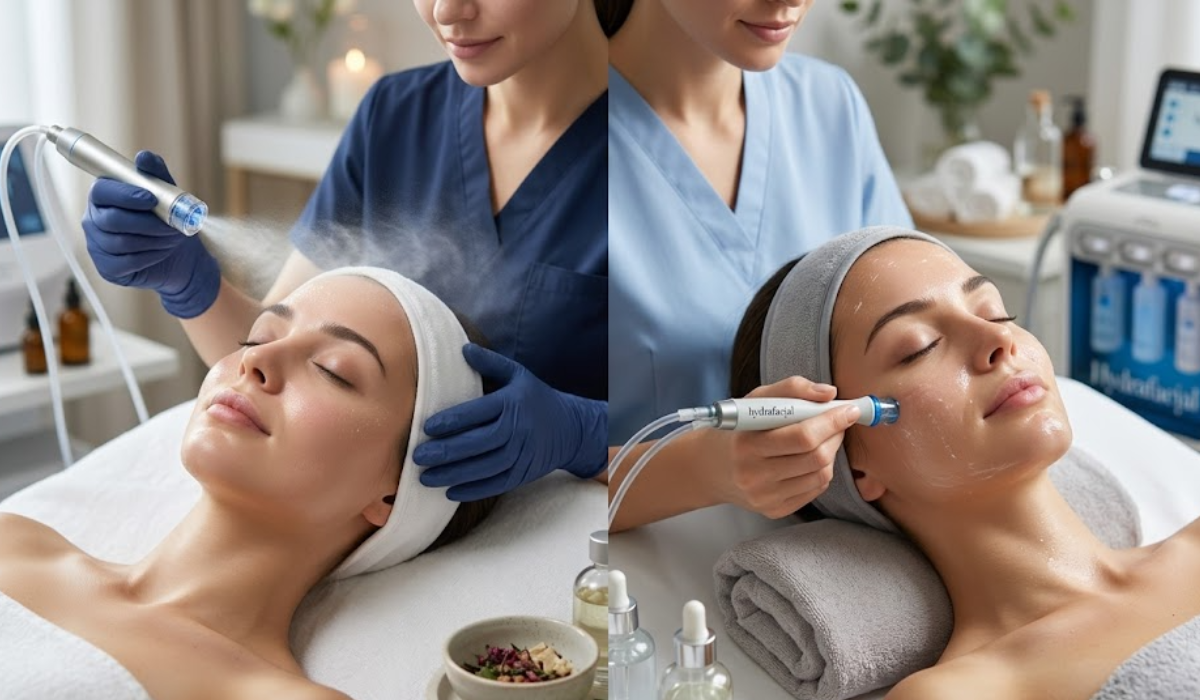
That is why many patients compare JetPeel facial vs Hydrafacial before booking a professional facial treatment.
Both treatments are popular for:
- Hydration
- Skin rejuvenation
- Glow enhancement
- Non-invasive skin renewal
- Temporary skin smoothness
But for people dealing with:
- Redness
- Rosacea-prone skin
- Barrier damage
- Reactive skin
- Acne with irritation
- Chronic dryness
the technology behind the treatment matters.
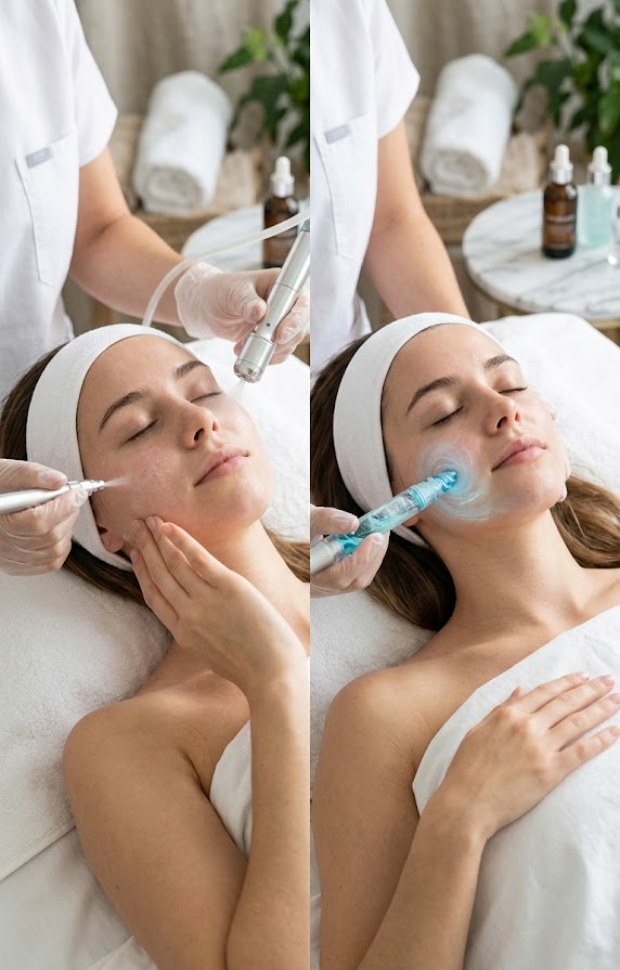
Some facials prioritize deeper exfoliation and extraction. Others focus more on hydration and minimizing skin stress.
Understanding those differences can help sensitive skin patients choose a treatment that feels supportive instead of overwhelming.
In clinical aesthetics settings, providers often adjust exfoliation intensity, suction levels, and hydration approaches based on skin barrier sensitivity and visible inflammation. Patients with reactive skin frequently prioritize lower-friction treatments during periods of irritation or barrier recovery.
Quick Comparison
| Feature | JetPeel Facial | Traditional Hydrafacial |
|---|---|---|
| Skin Contact | Minimal | Direct tip contact |
| Exfoliation Style | Jet-pressure infusion | Mechanical exfoliation |
| Extraction Intensity | Gentle | Moderate suction |
| Sensitive Skin Comfort | Often better tolerated | Depends on skin condition |
| Redness Risk | Typically lower | Mild redness possible |
| Hydration Delivery | Oxygen-powered infusion | Serum infusion with suction |
| Downtime | Usually minimal | Mild temporary redness possible |
| Best For | Reactive, dehydrated skin | Congested, textured skin |
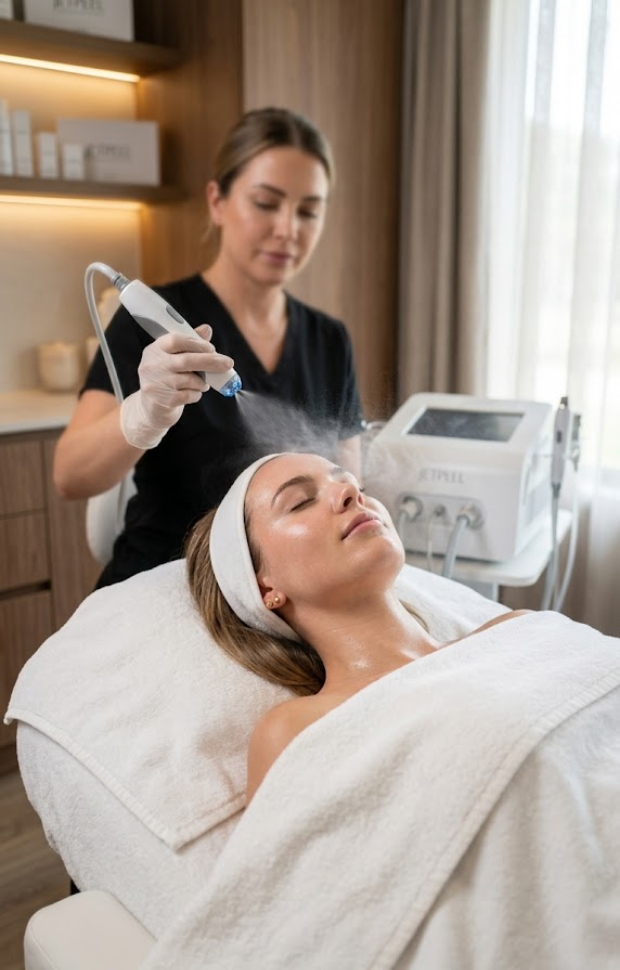
What Is a JetPeel Facial?
A JetPeel facial is a non-invasive treatment that uses high-velocity streams of oxygen and liquid microdroplets to cleanse, exfoliate, hydrate, and infuse the skin.
Unlike more abrasive facial technologies:
- No needles are used
- No harsh scraping occurs
- Minimal direct friction is involved
- The skin experiences less pulling and dragging
The treatment commonly combines:
- Oxygen
- Saline
- Customized serums
- Pressure-based transdermal delivery
Many patients choose JetPeel for:
- Gentle hydration
- Cooling skin support
- Sensitive skin concerns
- Barrier-friendly rejuvenation
- Minimal downtime
Learn more about the JetPeel Facial treatment at Circle Wellness.
What Is a Traditional Hydrafacial?
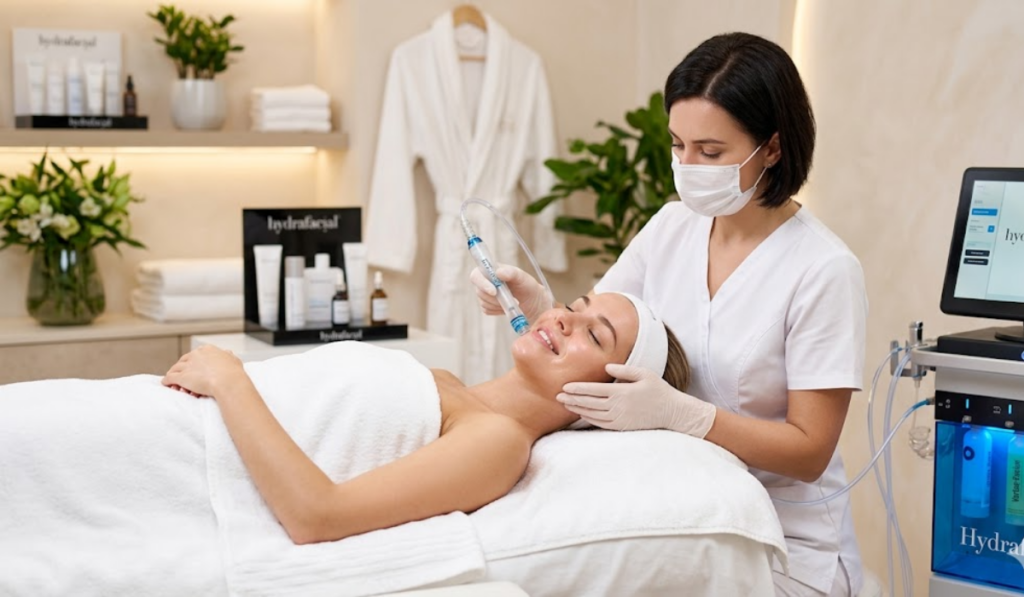
A Hydrafacial uses vortex-based technology that combines:
- Cleansing
- Exfoliation
- Extraction
- Hydration
- Serum application
The treatment typically includes:
- Physical exfoliation
- Chemical exfoliating solutions
- Vacuum-assisted extraction
- Hydrating serums
Hydrafacial is commonly used for:
- Congested pores
- Oily skin
- Mild acne
- Texture concerns
- Dull-looking skin
Patients often choose Hydrafacial for:
- Deep cleansing
- Blackhead extraction
- Immediate smoothness
- Temporary brightness enhancement
patients with highly reactive skin may respond differently depending on:
- Suction intensity
- Acid concentration
- Skin barrier condition
- Existing inflammation
Explore additional facial treatments at Circle Wellness for sensitive and reactive skin concerns.
Why Sensitive Skin Reacts More Easily
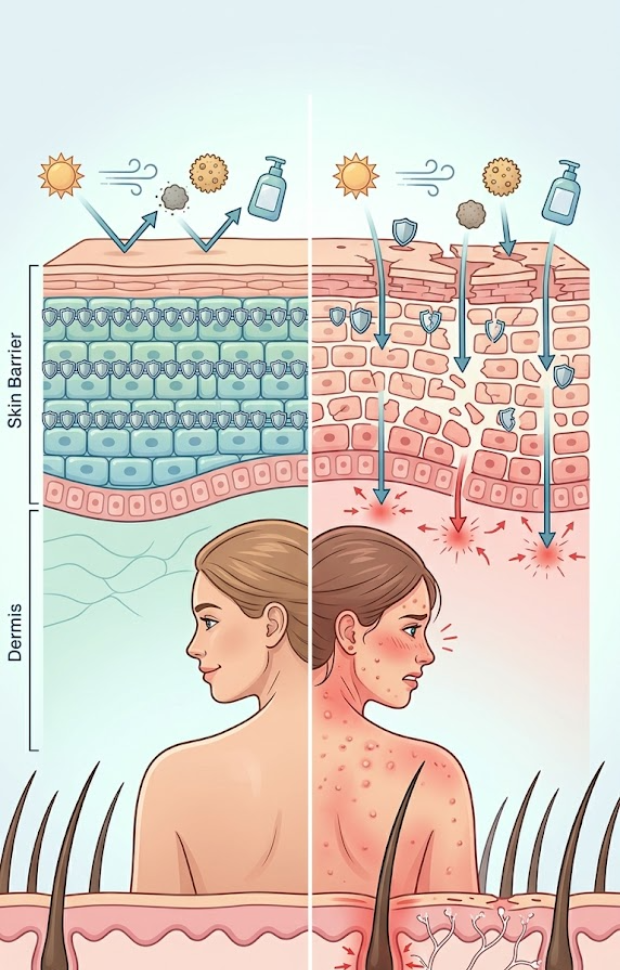
Sensitive skin is often associated with increased transepidermal water loss (TEWL), weakened barrier function, and heightened inflammatory responsiveness.
When the skin barrier becomes compromised, the skin may react more strongly to:
- Friction
- Harsh exfoliation
- Vacuum suction
- Strong acids
- Repeated irritation
Patients with impaired skin barriers may experience:
- Redness
- Burning
- Tightness
- Stinging
- Dryness
- Increased sensitivity after procedures
Because of this, many providers carefully evaluate hydration levels, irritation history, and overall barrier condition before recommending exfoliation-focused treatments.
How The Technologies Differ
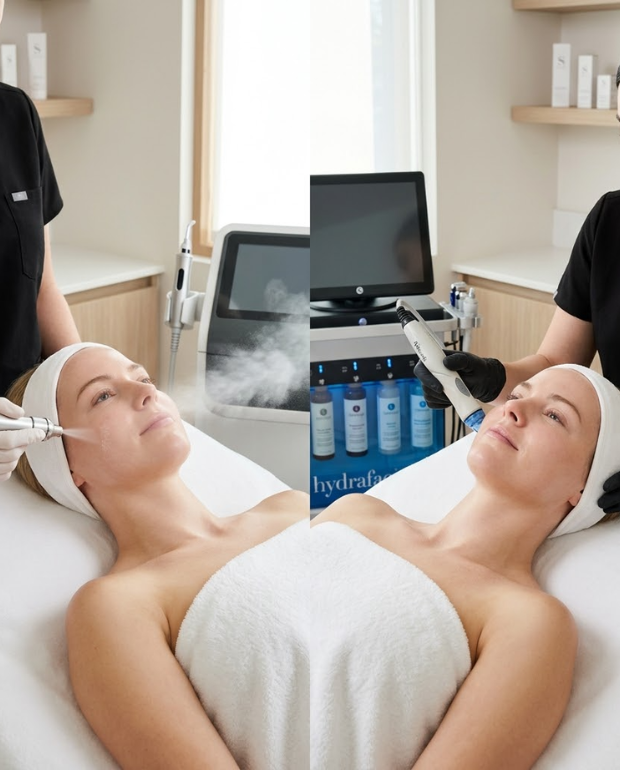
JetPeel Technology
JetPeel uses:
- Pressurized oxygen
- Liquid jet propulsion
- Needle-free serum infusion
This creates:
- Less mechanical friction
- Reduced skin dragging
- Cooling hydration delivery
- Minimal surface irritation
Many patients describe the treatment as:
- Cooling
- Airbrushed
- Relaxing
- Lightweight
Hydrafacial Technology
Hydrafacial relies on:
- Spiral treatment tips
- Vacuum suction
- Exfoliating solutions
- Mechanical extraction
This technology may:
- Improve pore cleansing
- Remove surface debris
- Enhance exfoliation
- Address congestion more aggressively
However, some sensitive skin patients may temporarily experience:
- Redness
- Tightness
- Mild irritation
- Post-treatment flushing
especially when the skin barrier is already compromised.
Which Facial Is Usually Better For Sensitive Skin?
For many people with reactive or easily irritated skin, JetPeel may feel gentler overall.
Why?
- Minimal friction
- Less suction stress
- Cooling delivery system
- Hydration-focused technology
- Reduced mechanical exfoliation
Patients whose skin feels irritated after traditional facials or aggressive exfoliation may sometimes prefer lower-friction treatments that focus more heavily on hydration and barrier support.
Hydrafacial can still work well for some sensitive skin types, especially when customized carefully by an experienced provider.
But people with:
- Rosacea tendencies
- Active irritation
- Barrier dysfunction
- Over-exfoliated skin
may tolerate JetPeel more comfortably.
Sensitive Skin Suitability Table
| Skin Concern | JetPeel | Hydrafacial |
|---|---|---|
| Rosacea-prone skin | Often preferred | May require caution |
| Inflamed acne | Gentle option possible | Suction may irritate some skin |
| Dehydrated skin | Strong hydration support | Good hydration support |
| Texture concerns | Mild improvement | Often stronger resurfacing |
| Blackheads | Mild cleansing | Better extraction support |
| Barrier damage | Usually gentler | Depends on customization |
Common Areas Treated With TPI for Active Individuals
One major difference in JetPeel facial vs Hydrafacial discussions is irritation potential.
JetPeel May Cause Less Redness Because:
- The skin experiences less pulling
- Minimal abrasion occurs
- Cooling hydration may calm reactive skin
- The treatment focuses heavily on gentle infusion
Hydrafacial May Trigger Temporary Redness Due To:
- Vacuum suction
- Exfoliating acids
- Mechanical extraction
- Increased circulation stimulation
For some patients, that redness fades quickly.
For others with reactive skin, irritation may linger longer depending on barrier condition, skincare use, and overall skin sensitivity.
Downtime Comparison
| Factor | JetPeel | Hydrafacial |
| Immediate redness | Usually mild | Mild to moderate |
| Skin sensitivity after treatment | Typically lower | Variable |
| Makeup return time | Often same day | Often same day |
| Post-treatment tightness | Less common | Possible |
| Barrier disruption risk | Lower | Moderate |
Which Facial Feels More Comfortable?
Many patients describe JetPeel as:
- Cooling
- Gentle
- Refreshing
- Relaxing
Hydrafacial often feels:
- More active
- Suction-focused
- Deep-cleaning
- Slightly intense during extraction
Comfort levels vary based on:
- Skin sensitivity
- Active inflammation
- Provider technique
- Current skincare routine
JetPeel vs Hydrafacial for Rosacea-Prone Skin
Rosacea-prone skin requires careful treatment selection because excessive exfoliation may worsen:
- Flushing
- Burning
- Inflammation
- Skin sensitivity
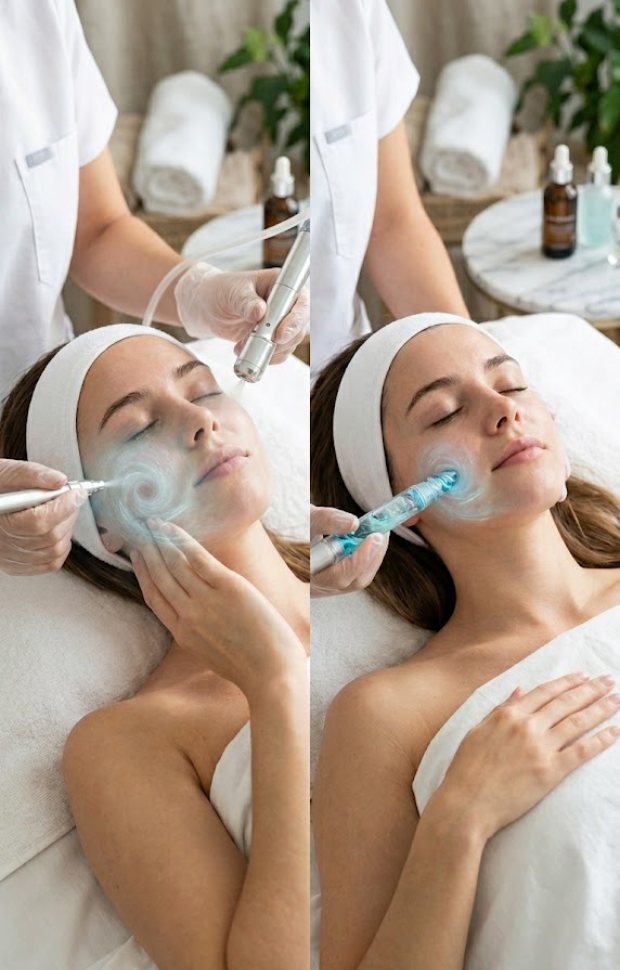
Some providers may lean toward JetPeel because it:
- Uses less friction
- Prioritizes hydration
- Avoids harsh resurfacing
- Delivers a cooling sensation
However:
- Every rosacea patient responds differently
- Active flare-ups may require postponing treatment
- Personalized assessment remains important
A licensed provider should evaluate:
- Skin barrier condition
- Trigger sensitivity
- Current inflammation
- Existing skincare products
Acne-Prone Yet Sensitive Skin: Which Works Better?
The answer depends on the primary skin concern.
JetPeel May Be Better For:
- Inflamed acne
- Dehydrated acne-prone skin
- Irritated skin from strong acne products
- Reactive or compromised skin barriers
Hydrafacial May Be Better For:
- Congested pores
- Oily buildup
- Blackheads
- Mild texture concerns
- Non-inflamed acne
In some cases, providers may alternate treatments depending on how the skin responds over time.
Possible Clinical Insight
Research indexed through the National Center for Biotechnology Information (NCBI) has discussed how preserving skin barrier integrity may help reduce irritation in sensitive and reactive skin.
Studies available through PubMed have also explored how non-invasive transdermal delivery systems may support hydration while minimizing mechanical irritation.
These findings may help explain why some patients with reactive skin prefer gentler facial technologies.
Which Treatment Gives Better Hydration?
Both treatments focus heavily on hydration, but the delivery methods differ.
JetPeel Hydration Approach
- Oxygen-assisted delivery
- Pressure-based serum infusion
- Cooling hydration streams
Hydrafacial Hydration Approach
- Serum infusion after exfoliation
- Moisture replenishment
- Hydration paired with extraction
Patients with compromised barriers may prefer the hydration-first feel of JetPeel.
Who May Prefer JetPeel?
JetPeel may be a better fit for people with:
- Sensitive skin
- Redness-prone skin
- Rosacea tendencies
- Dehydrated skin
- Thin skin barriers
- Over-exfoliated skin
It may also appeal to patients wanting:
- Minimal downtime
- Needle-free infusion
- Cooling treatment experiences
- Gentle skin rejuvenation
Explore the JetPeel Facial treatment at Circle Wellness to learn how the treatment works for sensitive skin concerns.
Who May Prefer Hydrafacial?
Hydrafacial may work better for people seeking:
- Stronger exfoliation
- Deeper pore cleansing
- Blackhead extraction
- Texture improvement
- Oil reduction support
It may suit:
- Combination skin
- Oily skin
- Congested skin
- Mild acne-prone skin
when customized carefully.
Questions To Ask Before Booking
Before choosing between JetPeel facial vs Hydrafacial, consider asking:
- Is my skin barrier compromised?
- Do I flush or react easily?
- Is congestion or sensitivity my primary concern?
- Have I reacted badly to exfoliation before?
- Am I currently using retinoids or acids?
- Does my skin feel irritated after facials?
These factors can significantly influence which treatment may feel more comfortable.
Compare Treatments With A Provider
Sensitive skin rarely responds well to one-size-fits-all skincare decisions.
The best treatment often depends on:
- Barrier condition
- Current inflammation
- Hydration levels
- Acne activity
- Skin sensitivity triggers
- Long-term skin goals
A personalized consultation can help determine whether JetPeel or Hydrafacial may better align with your skin’s needs.
Ready to compare treatments with a provider? Contact Circle Wellness here to schedule a personalized skin consultation.
You can also explore all available facial treatments at Circle Wellness to find options designed for sensitive, reactive, and dehydrated skin.
Medical Review & Editorial Standards
FAQs
Is JetPeel gentler than Hydrafacial?
Many patients with reactive or redness-prone skin describe JetPeel as gentler because it uses less friction and suction.
Can sensitive skin tolerate Hydrafacial?
Some sensitive skin patients tolerate Hydrafacial well when customized carefully, while others may experience temporary redness or irritation.
Which facial has less downtime?
JetPeel typically has minimal downtime for many patients, although individual reactions vary.
Is JetPeel good for rosacea-prone skin?
Some providers may consider JetPeel for rosacea-prone skin because of its hydration-focused and lower-friction approach.
Which treatment is better for clogged pores?
Hydrafacial generally provides stronger extraction and pore-cleansing support compared to JetPeel.