Is Prenatal Massage Safe During Pregnancy? : What Every Expecting Mom Should Know
Pregnancy asks a lot of your body. Your back aches, your hips feel loose, your feet swell, and a good night’s sleep can feel impossible. So it’s natural to wonder: can a prenatal massage actually help — and is it even safe right now?
Here’s the short answer. For most healthy, low-risk pregnancies, prenatal massage is considered a safe and soothing way to ease everyday discomfort — as long as it’s done by a therapist trained in pregnancy massage. A few situations call for your doctor’s okay first, and we’ll walk you through exactly which ones.
This guide is written to give you calm, clear answers, not pressure. Take what’s helpful, and talk to your own provider about your specific pregnancy.
Key Takeaways

- Prenatal massage is widely viewed as safe for most healthy pregnancies when performed by a trained, certified prenatal massage therapist.
- Positioning matters. Side-lying support is common, especially later in pregnancy. Some providers use specialized pregnancy cushions or tables — comfort and safety always guide the setup.
- Some pregnancies need a doctor’s okay first, including high-risk pregnancies and certain conditions your provider is watching.
- Massage is a comfort-focused wellness service, not medical treatment. It may ease discomfort, but it won’t cure pain or prevent complications.
- When in doubt, ask your OB-GYN or midwife. A quick conversation gives you confidence to relax.
Who This Guide Is For
This is for expecting moms who want relief but want to feel safe first. If you’re dealing with back pain, sore hips, swollen feet, stress, or restless sleep — and you’ve wondered whether massage is okay during pregnancy — you’re in the right place. Your body is doing a lot, and wanting comfort is completely reasonable.
So, Is Prenatal Massage Safe During Pregnancy?

For most healthy pregnancies, yes. Prenatal massage is a gentle, comfort-focused therapy that many expecting moms use to ease tension and stress. The most important factor is who is performing it.
A prenatal massage isn’t just a regular massage on a pregnant body. A certified prenatal therapist understands pregnancy-safe positioning, adjusts pressure for your body, and knows which areas to treat gently or avoid. That training is what makes pregnancy massage different — and what helps keep it safe.
It’s also important to be clear about what massage is. It’s a wellness service, not a medical treatment. It may help you feel more comfortable, but it can’t cure pregnancy pain or prevent complications. Think of it as one supportive piece of your overall pregnancy care — alongside, never instead of, the guidance from your OB-GYN or midwife.
Why Pregnancy Causes So Much Discomfort
Understanding why your body aches can make it feel a little less frustrating. A few things are happening at once:
- Relaxin. Your body releases a hormone called relaxin that loosens your joints and ligaments to get ready for birth. Helpful for delivery — but it can leave your hips, pelvis, and lower back feeling achy or unstable.
- A shifting center of gravity. As your belly grows, your posture changes. Your lower back and hips work harder to keep you balanced, which leads to tension and fatigue.
- Fluid retention. Your body holds more fluid in pregnancy, which can cause swelling (called edema) in your feet, ankles, and legs.
- Less sleep. Getting comfortable gets harder as the weeks go on, and poor sleep makes everything feel worse.
- Stress. Pregnancy is a big emotional experience, and tension often settles into the neck, shoulders, and back.
None of this means something is wrong. It means your body is adapting — and that adapting can be uncomfortable.
How Prenatal Massage May Help
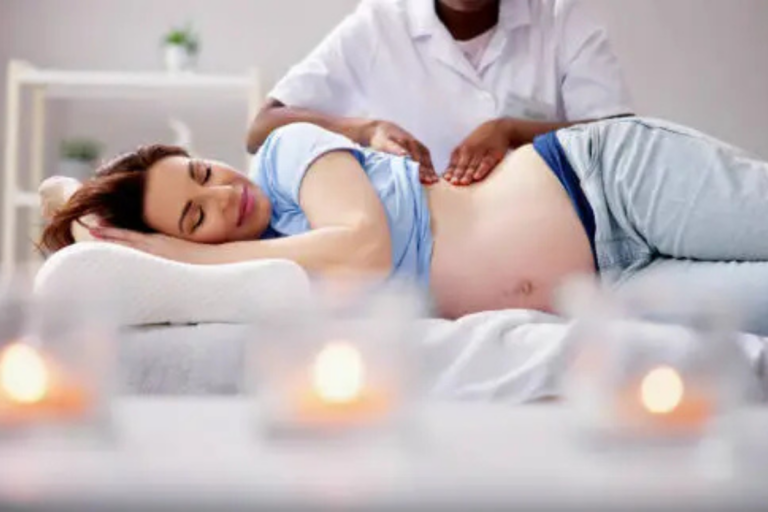
A pregnancy massage is tailored to the spots where pregnancy creates the most tension. Depending on your needs, a trained therapist may focus on:
- Your lower back and hips, where shifting weight and relaxin often cause aches
- Your neck and shoulders, common spots for stress-related tightness
- Your legs and feet, with gentle techniques some moms find soothing for tired, swollen legs
- Overall relaxation, using a calm, supported setting to help your body unwind
Many expecting moms say massage may help them feel less tense, sleep a little better, and feel calmer. Some women report real relief; others simply enjoy a restful break. Research suggests massage therapy may support relaxation and ease discomfort during pregnancy, though it’s not a cure — and your results may vary.
What About Positioning? (The Belly Question)
This is one of the most common questions we hear, and it’s a good one. You won’t lie face-down on your belly, and you generally won’t lie flat on your back for long stretches, especially later in pregnancy.
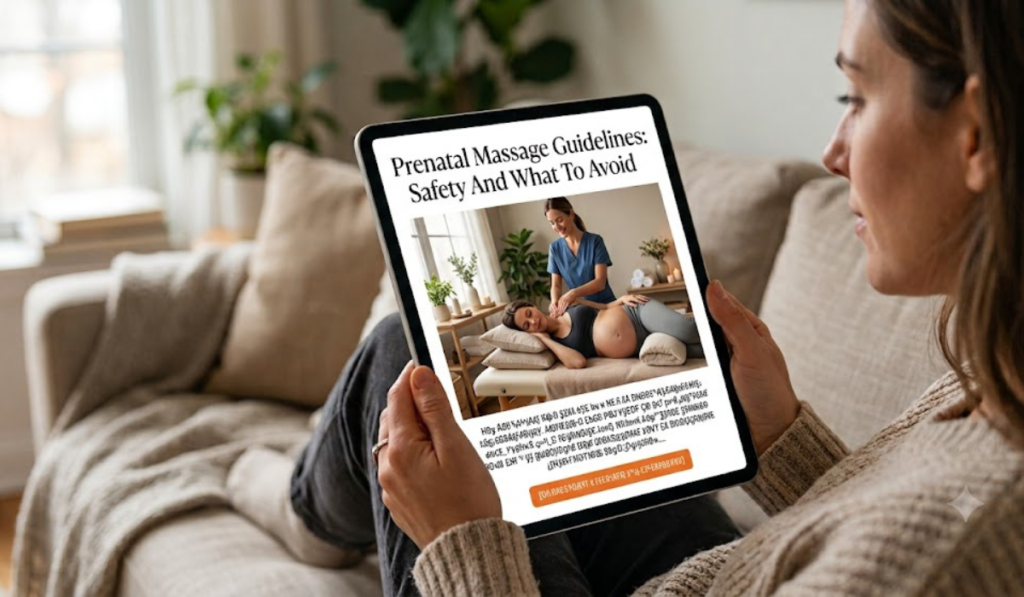
Instead, most prenatal massage uses a side-lying position, cushioned with pillows or supportive bolsters so you and your baby stay comfortable. Some trained providers use specialized pregnancy cushions or tables designed to support a growing belly. There’s no single “right” setup for everyone — your comfort and safety guide the positioning, and a good therapist will adjust until you feel supported.
You’ll be covered with a sheet throughout, with only the area being worked on uncovered at a time. And you can ask to change positions anytime.
When to Ask Your Doctor First

Massage is gentle, but every pregnancy is different. It’s a good idea to talk with your OB-GYN, midwife, or healthcare provider before booking if any of these apply to you:
- A high-risk pregnancy or one your provider is closely monitoring
- Preeclampsia or uncontrolled high blood pressure (hypertension)
- Placenta previa or other placental concerns
- A history of preterm labor or early contractions
- Unexplained bleeding or spotting
- A history of blood clots (such as DVT) or a clotting disorder
- Severe or sudden swelling
- Any condition your provider has asked you to be careful about
This isn’t meant to worry you. Most of the time, the answer is a simple “yes, that’s fine.” A quick check-in just makes sure massage fits safely into your specific care plan.
Warning Signs That Need Prompt Medical Attention
Separate from massage, every expecting mom should know the symptoms that mean call your provider or seek care right away. The CDC highlights these as urgent maternal warning signs. If you notice any of them — at any time, massage or not — don’t wait:
- A severe or constant headache
- Vision changes, like blurriness or seeing spots
- Chest pain or trouble breathing
- Pain, swelling, or redness in one leg (a possible blood clot)
- Heavy bleeding
- Severe belly pain
- A fever
- Your baby moving less than usual
- Sudden swelling of your face or hands
When something feels off, it’s always okay to call. These signs aren’t about massage — they’re simply worth acting on quickly during any pregnancy.
Is Prenatal Massage Safe in Every Trimester?
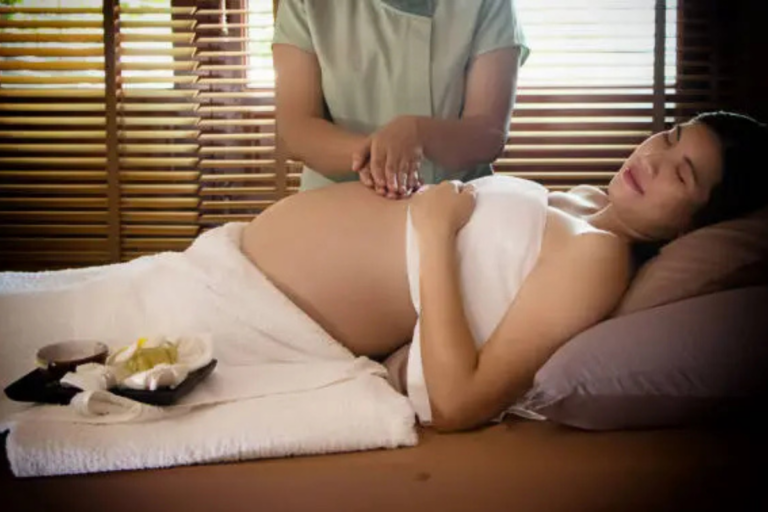
Safety can look a little different at each stage. Your provider’s guidance always comes first.
Prenatal massage in the first trimester
Some therapists and providers are comfortable with first-trimester massage for healthy pregnancies, while others prefer to wait until after the early weeks. Early pregnancy can also bring nausea and fatigue. If you’re newly pregnant, this is a good time to check with your provider and choose a therapist experienced with early pregnancy.
Prenatal massage in the second trimester
The second trimester is often when moms feel most comfortable getting massage. Early nausea has usually eased, energy may be steadier, and back and hip aches start to build as your belly grows. Side-lying positioning keeps you supported.
Prenatal massage in the third trimester
The third trimester is often when moms want massage the most — swelling, pelvic pressure, lower-back ache, and sleep struggles tend to peak. Massage is typically safe at this stage for healthy pregnancies, with careful side-lying support so you’re never flat on your back or belly.
What to Expect at Your Appointment
If you’ve never had a prenatal massage, here’s what usually happens, so there are no surprises:
- Positioning: Side-lying with pillow support (or a pregnancy cushion), never face-down.
- Draping: You stay covered with a sheet the whole time; only the area being worked on is uncovered.
- Communication: Your therapist checks in about pressure and comfort. Speak up anytime — softer, firmer, a break, a new position. It’s your session.
- Length: A typical prenatal massage runs about 45 to 60 minutes, though it can vary.
- Pace: Pregnancy massage is usually gentler and more relaxation-focused than deep-tissue work.
You’re always in control. If anything doesn’t feel right, you can adjust or stop.
What to Tell Your Provider Before Treatment

A few minutes of sharing helps your therapist keep your session safe and comfortable. Before you begin, let them know:
- How far along you are (your trimester and due date)
- Your current symptoms (back pain, swelling, sciatica, poor sleep, etc.)
- Any pregnancy complications or a high-risk diagnosis
- Medications you’re taking
- Any restrictions from your OB-GYN or midwife
- Prior pregnancy history that may matter
- Comfort concerns, like positioning preferences or areas to avoid
The more your therapist knows, the better they can tailor the session to you.
Common Myths About Pregnancy Massage
Myth: Pregnant women can’t get a massage.
For most healthy pregnancies, massage from a trained prenatal therapist is a safe option. Training, positioning, and your provider’s guidance matter far more than pregnancy itself.
Myth: You can never get a massage in the first trimester.
Many providers are fine with early-pregnancy massage; some prefer to wait. It’s a personal conversation, not a universal rule.
Myth: Prenatal massage is only for pampering.
Relaxation is part of it, but many moms come for real discomfort — back pain, hip tension, tired legs, and stress.
Myth: More pressure means a better massage.
Pregnancy massage is gentler by design. Comfort and safety guide the pressure, not intensity.
A Note From Our Prenatal Massage Team

Most expecting moms who walk through our doors aren’t looking for luxury — they’re looking for relief from the daily discomfort of pregnancy. The questions we hear most are honest and simple: Is this safe? Will I be comfortable? Can I really lie this way with my belly?
Those questions deserve clear answers. A good prenatal session is built around making you feel safe, supported, and genuinely listened to — and around knowing when to send you back to your doctor first. That’s the kind of care we try to bring to every mom in Melville and across Long Island.
Looking for Prenatal Massage Near You in Melville?
If you’re pregnant and tired of pushing through back pain, swelling, stress, or restless nights, you don’t have to figure it out alone. A prenatal massage consultation is a low-pressure way to talk through your symptoms and find out whether pregnancy-safe massage may be a good fit for you.
At Circle Wellness in Melville, NY, our certified prenatal massage therapists can walk you through positioning, comfort options, and therapist training, and answer any questions before you decide. We’re proud to support expecting moms across Melville and Long Island.
Consider two hypothetical patients in Melville:
FAQs

Is prenatal massage safe during pregnancy?
For most healthy pregnancies, yes — when it’s performed by a certified prenatal massage therapist using safe positioning. Some conditions need a doctor’s okay first, so check with your provider if you have a high-risk pregnancy or any complications.
When can I start getting prenatal massage?
Many moms begin once they feel comfortable and have checked with their provider. Some therapists work with clients in all trimesters; others prefer to wait until after the first trimester. Ask both your provider and your therapist what they recommend.
Is prenatal massage safe in the first trimester?
It can be for healthy pregnancies, though some providers and therapists prefer to wait until after the early weeks. This is a personal decision worth discussing with your OB-GYN or midwife.
Is prenatal massage safe in the third trimester?
It’s typically safe in the third trimester for healthy pregnancies, with proper side-lying support. It’s often when moms want relief most, since swelling and back discomfort tend to peak.
How often should I get a prenatal massage?
There’s no single rule. Some moms come occasionally for relief, others more regularly as discomfort builds. Your therapist can suggest a comfortable rhythm based on your symptoms, always within your provider’s guidance.
Do I need my doctor's approval first?
Not always, but it’s strongly recommended if you have a high-risk pregnancy, a complication, or any condition your provider is monitoring. For uncomplicated pregnancies, a quick heads-up to your provider is still a smart idea.
What if I feel uncomfortable during the session?
Tell your therapist right away. You can ask for lighter pressure, a position change, a break, or to stop. A good prenatal therapist welcomes your feedback and checks in often.
Who should avoid prenatal massage?
Anyone whose provider has advised against it, and those with conditions like some high-risk pregnancies, preeclampsia, placenta previa, a history of preterm labor, unexplained bleeding, or clotting concerns should talk with their provider before booking.
Can prenatal massage cause early labor?
There’s no strong evidence that gentle, properly performed prenatal massage causes labor in a healthy pregnancy. If you have concerns or a high-risk pregnancy, talk with your provider and choose a therapist trained specifically in prenatal work.
Where can I find a pregnancy-safe massage near me in Melville?
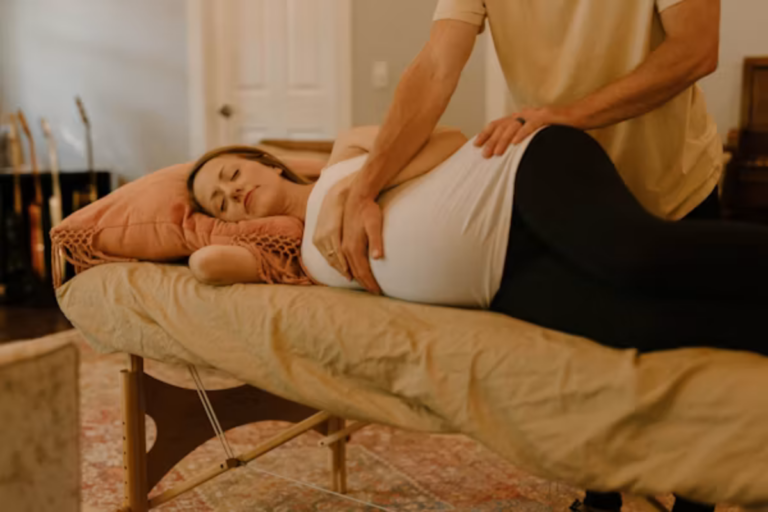
Circle Wellness in Melville, NY offers prenatal massage with certified therapists. You can call [Phone Number – (888) 293-5577] or [book online]( [appointment] ) to ask questions or schedule a consultation.