Why Medical Oversight Matters More Than Marketing
Wellness trends often move quickly.
- Wellness clinics
- Medical spas
- Recovery lounges
- Concierge wellness services
- Social media wellness marketing
- Instant energy
- Rapid recovery
- “Detox” support
- Beauty-focused hydration
- Performance enhancement
What matters most is not just the ingredients inside an IV bag — but how treatment decisions are made, who oversees the process, and whether care is tailored to the individual receiving it.
At Circle Wellness in Melville, NY, IV therapy is approached through medically guided wellness planning focused on safety, individualized assessment, and realistic expectations rather than generalized marketing claims.
In clinical practice, IV therapy is often considered for individuals seeking hydration support, wellness-focused nutrient supplementation, or recovery care under professional supervision.
What Is IV Therapy?

IV therapy involves delivering fluids, vitamins, minerals, or supportive wellness ingredients directly into the bloodstream through an intravenous line.
Unlike oral supplements, intravenous delivery bypasses the digestive system.
Depending on treatment planning, IV therapy formulations may include:
- Hydration fluids
- Electrolytes
- Vitamins
- Amino acids
- Antioxidant-support ingredients
Some individuals explore IV therapy for:
- Hydration support
- Wellness maintenance
- Recovery support
- Fatigue concerns
- Lifestyle-related wellness goals
Treatment recommendations vary depending on individual health considerations and provider assessment.
Why Does Medical Oversight Matter for IV Therapy?
Medical oversight may help support safer IV therapy experiences by considering:
- Medical history
- Current medications
- Heart and kidney health
- Blood pressure considerations
- Ingredient sensitivities
- Hydration status
- Potential contraindications
Because symptoms such as fatigue, headaches, dizziness, or low energy can have multiple possible causes, individualized evaluation often matters more than generalized wellness marketing.

The Difference Between Wellness Marketing and Medical Evaluation
Online IV therapy advertisements sometimes emphasize:
- Quick results
- Immediate energy
- “Detoxification”
- Universal wellness benefits
However, medically responsible IV therapy typically focuses more on:
- Patient screening
- Treatment appropriateness
- Monitoring protocols
- Ingredient transparency
- Individualized wellness planning
Responsible providers generally avoid promising guaranteed outcomes because individual responses may vary significantly.
The Science Behind IV Therapy
Intravenous therapy allows fluids and nutrients to enter circulation directly through the vascular system.
In clinical settings, IV therapy has long been used for:
- Hydration support
- Electrolyte replacement
- Nutritional support
- Medical recovery care
Some wellness-focused IV formulations are discussed for hydration and nutrient supplementation support, though evidence surrounding wellness-specific applications may vary depending on:
- Ingredients used
- Dosage
- Patient condition
- Treatment purpose

Educational resources aligned with the National Institutes of Health (NIH) continue to discuss the importance of individualized medical assessment and evidence-based treatment considerations when using intravenous nutrient therapies.
Why Personalized Screening Matters Before IV Therapy
Not every individual is automatically an ideal candidate for IV therapy.
A medical evaluation may help identify:
- Medication interactions
- Kidney function concerns
- Cardiovascular conditions
- Fluid balance issues
- Blood pressure risks
- Sensitivities to certain ingredients
This is particularly important because symptoms like fatigue or dehydration may sometimes be linked to underlying medical conditions requiring broader evaluation.
What Happens During a Medically Supervised IV Therapy Appointment?

At Circle Wellness, IV therapy planning is individualized rather than standardized.
A professionally supervised session may include:
Health Assessment
Providers may review:
- Medical history
- Medications
- Allergies
- Wellness goals
- Hydration habits
- Previous IV therapy experiences
Vital Sign Evaluation
Some individuals may undergo assessment of:
- Blood pressure
- Heart rate
- General wellness indicators
This may help support safer treatment planning.
Customized IV Planning
Treatment formulations are often selected based on:
- Individual wellness goals
- Hydration status
- Provider assessment
- Overall health considerations
Monitoring During Treatment
Professional monitoring may help identify:
- Discomfort
- Dizziness
- Vein irritation
- Sensitivity reactions
- Unexpected symptoms
Patients are generally observed throughout the treatment process for comfort and safety.
Why Ingredient Transparency Matters
- Which ingredients are included
- Why those ingredients are selected
- Possible risks or side effects
- Whether treatment is appropriate for their health profile
Potential Benefits Commonly Discussed With IV Therapy
Some individuals report benefits such as:
- Temporary hydration support
- Feeling refreshed
- Wellness-focused recovery support
- Improved fluid intake support
Responses vary significantly based on:
- Sleep quality
- Nutrition
- Stress
- Underlying health conditions
- Lifestyle habits
IV therapy is not considered a guaranteed solution for fatigue, illness, or chronic medical symptoms.
Potential Risks and Side Effects of IV Therapy
Although IV therapy is commonly used in wellness settings, no procedure is entirely risk-free.
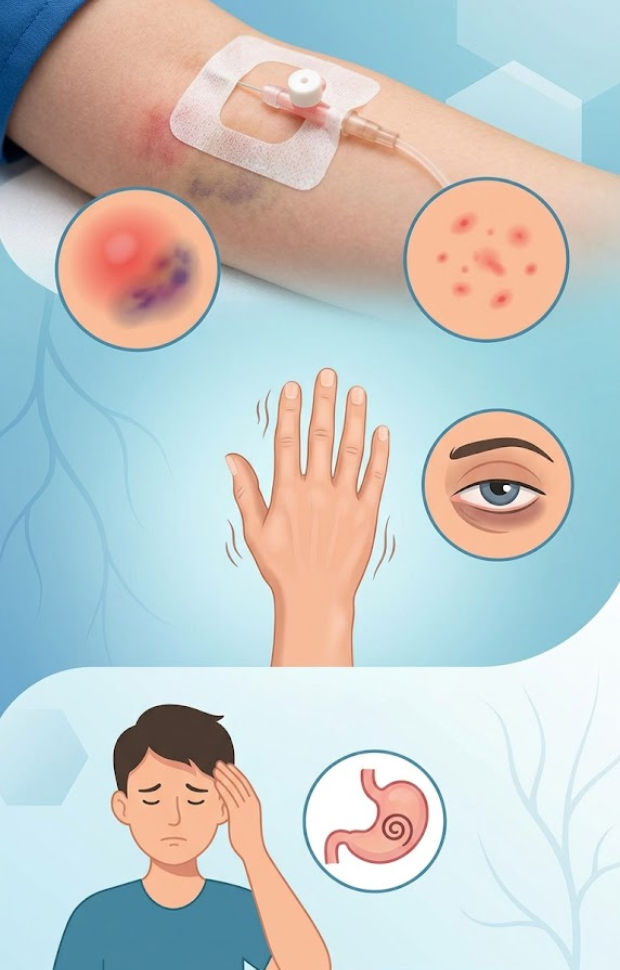
Possible side effects may include:
- Bruising
- Vein irritation
- Discomfort at the IV site
- Infection risk
- Electrolyte imbalance
- Fluid overload in some individuals
- Sensitivity reactions
Medical supervision may help reduce avoidable risks through appropriate screening and monitoring.
Who May Need Additional Caution?
Additional medical evaluation may be important for individuals with:
- Kidney disease
- Heart conditions
- High blood pressure
- Diabetes
- Pregnancy
- Chronic illnesses
- Certain medication regimens
Treatment recommendations are typically individualized based on patient health considerations.
Clinical Considerations and Limitations
While IV therapy may support hydration and wellness-focused care for some individuals, it is not considered a one-size-fits-all treatment.
IV therapy may not replace:
- Comprehensive medical evaluation
- Nutritional planning
- Lifestyle modifications
- Management of chronic medical conditions
Persistent fatigue, dizziness, or ongoing symptoms should be appropriately evaluated rather than assumed to be solely related to hydration or vitamin deficiency.
According to educational insights aligned with evidence-based wellness practices, individualized assessment remains important for determining appropriate treatment approaches.
What Questions Should You Ask Before IV Therapy?
Individuals considering IV therapy on Long Island may wish to ask:
- Is medical screening performed beforehand?
- Who supervises treatment planning?
- Are ingredients explained clearly?
- What side effects are possible?
- Is treatment customized?
- What monitoring is provided during the session?
These discussions may help support informed decision-making and safer wellness planning.
Why Treatment Setting Matters
Where IV therapy is performed may influence:
- Safety protocols
- Monitoring standards
- Treatment customization
- Professional oversight
- Patient education
At Circle Wellness in Melville, NY, IV therapy services are:
- Guided through individualized wellness planning
- Performed under medically informed protocols
- Customized according to patient assessment
- Focused on realistic, safety-conscious care

This approach may help support safer and more personalized wellness experiences.
Looking for Wellness Support Beyond Marketing Claims?
Individuals exploring IV therapy on Long Island often seek:
- Hydration support
- Recovery-focused care
- Wellness optimization
- Personalized treatment planning
Questions about IV therapy suitability, ingredient options, or individualized wellness care can often be discussed during a professional consultation.
People interested in medically guided wellness support may also benefit from learning more about customized IV therapy options designed around their specific health goals and overall wellness considerations.
FAQs
Is IV therapy safe?
IV therapy may be appropriate for some individuals when professionally supervised. Treatment suitability varies depending on medical history and overall health.
Why does medical oversight matter for IV therapy?
Medical oversight may help support safer treatment planning by considering medications, health conditions, hydration status, and possible risks.
Can IV therapy cure fatigue?
Fatigue can have many possible causes. IV therapy is not considered a guaranteed solution and persistent symptoms may require broader medical evaluation.
What are possible side effects of IV therapy?
Possible side effects may include bruising, vein irritation, temporary discomfort, or sensitivity reactions depending on the individual and treatment formulation.
How long does an IV therapy session take?
Many IV therapy sessions may last between 30 minutes and one hour depending on treatment planning and formulation type.
Moving Beyond Marketing in IV Therapy Decisions
Modern wellness care is increasingly shifting away from one-size-fits-all marketing — and toward individualized, medically informed treatment planning.
IV therapy reflects that shift when approached responsibly.
Rather than focusing only on trends or exaggerated wellness promises, medically supervised IV therapy emphasizes:
- Patient safety
- Individualized care
- Professional monitoring
- Evidence-conscious wellness support
At Circle Wellness, IV therapy is approached as part of broader personalized wellness planning designed around patient-specific goals, safety considerations, and long-term wellbeing.
Medical Disclaimer
This content is intended for informational and educational purposes only and does not constitute medical advice, diagnosis, or treatment. Individual responses and wellness needs vary. Always consult a qualified healthcare professional regarding personalized medical or wellness recommendations.