Stress Doesn’t Just Affect Your Mind— It Affects Your Entire Body
Many people think stress is only emotional.
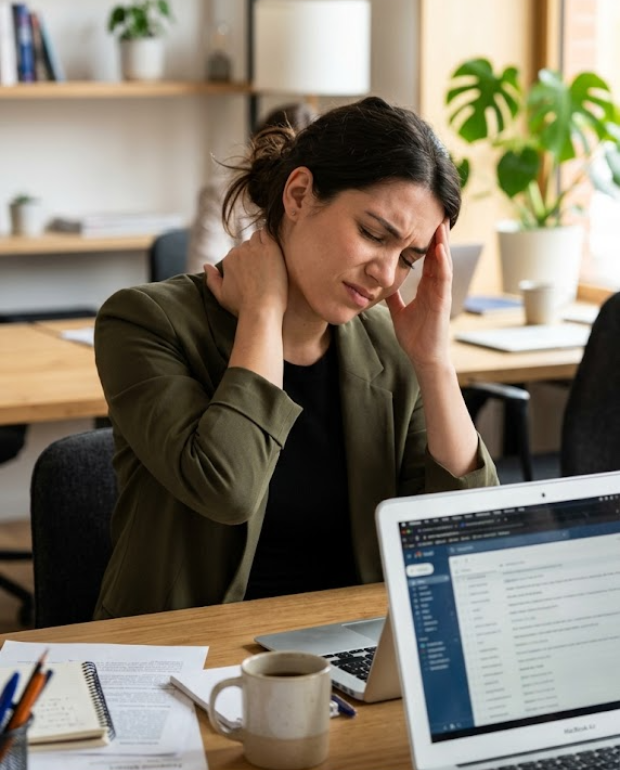
But chronic stress often shows up physically:
- Tight shoulders
- Jaw clenching
- Neck pain
- Headaches
- Fatigue
- Shallow breathing
Over time, these patterns become stored in the body.
Even when the stressful moment passes, the body may remain in a prolonged state of tension.
At Circle Wellness, many patients seek care not just for pain—but for the physical effects of chronic stress. One integrative approach commonly used is OMT (Osteopathic Manipulative Treatment).
What Are Stress & Tension Patterns?
Stress activates the body’s fight-or-flight response.
- When this response becomes chronic, it can contribute to:
- Muscle tightness
- Restricted movement
- Nervous system imbalance
- Poor posture
- Sleep disruption
- Common areas affected include:
- Neck and shoulders
- Upper back
- Jaw
- Lower back
- Chest and diaphragm
- Over time, these tension patterns may contribute to:
- Chronic pain
- Headaches
- Fatigue
- Reduced mobility
Why Stress Often Becomes Physical
The nervous system and musculoskeletal system are deeply connected.
When the body stays in a prolonged stress state:
- Muscles remain contracted
- Breathing patterns change
- Circulation may become restricted
- Recovery and healing slow down
This is why stress management is not just mental—it’s also physical.
What Is OMT (Osteopathic Manipulative Treatment)?
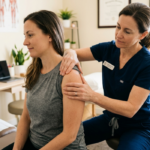
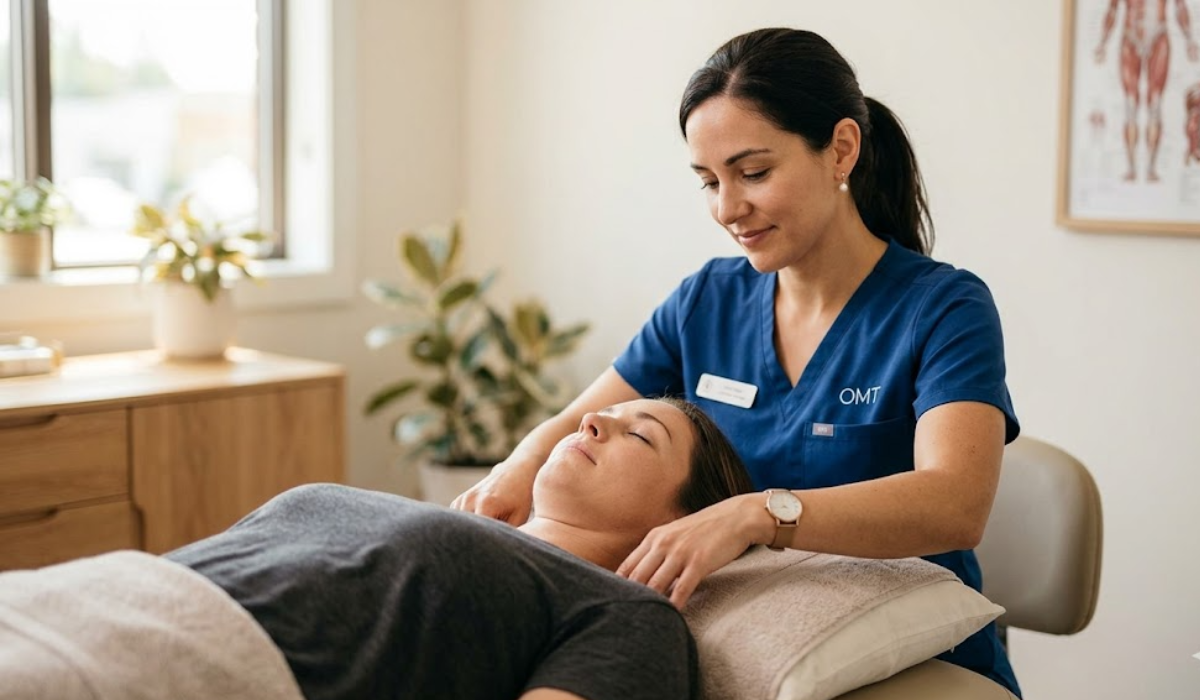
OMT is a hands-on treatment performed by licensed osteopathic physicians (DOs).
- It focuses on improving how the body’s systems work together, including:
- Muscles
- Joints
- Fascia (connective tissue)
- Nervous system function
- Common OMT techniques include:
- Myofascial release
- Soft tissue stretching
- Gentle joint mobilization
- Cranial techniques
The goal is to reduce restriction, improve movement, and support the body’s ability to self-regulate.
How OMT May Help Stress & Tension Patterns
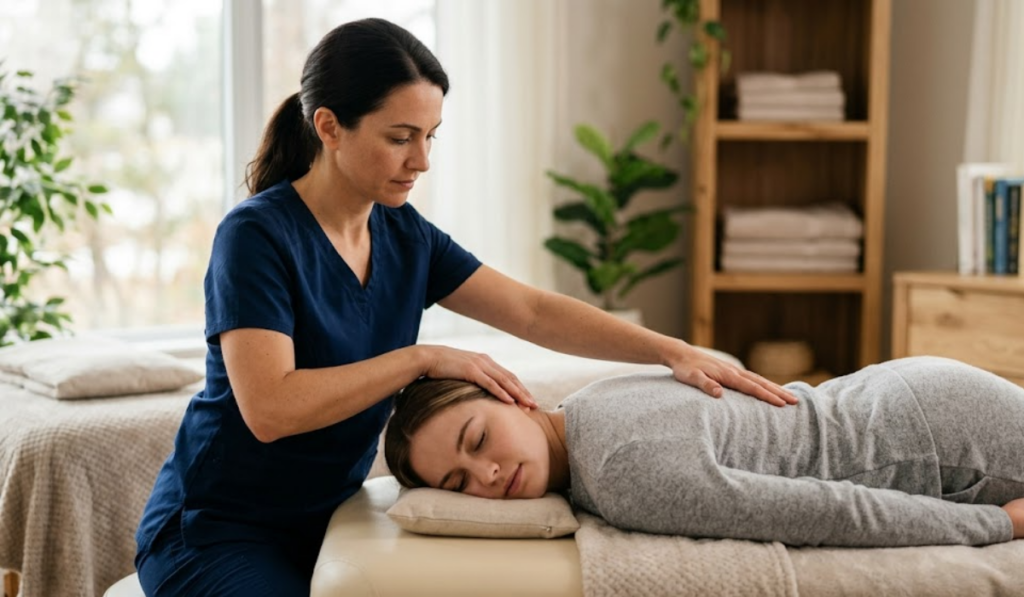
Relieves Chronic Muscle Tightness
OMT helps release tension in areas commonly affected by stress.
Supports Nervous System Regulation
Gentle hands-on techniques may help shift the body away from a chronic stress response.
Improves Breathing Mechanics
Stress often causes shallow breathing and chest tightness.
OMT may help improve mobility in the ribs, diaphragm, and upper back.
Enhances Circulation
Improved blood flow may support relaxation and tissue recovery.
Restores Movement Patterns
Chronic stress can alter posture and movement.
OMT helps improve balance and mobility throughout the body.
In clinical practice, OMT is often used for patients experiencing chronic muscle tightness, posture-related discomfort, or stress-related physical tension that has not fully improved through rest, stretching, or lifestyle changes alone.
The Science Behind OMT & Stress Response
Research suggests that manual osteopathic techniques may influence:
- Muscle tension
- Autonomic nervous system activity
- Circulation and relaxation responses
Some studies have reported improvements in:
- Stress-related symptoms
- Musculoskeletal discomfort
- Overall sense of well-being
Important
What to Expect During an OMT Session
- At Circle Wellness, treatment begins with a personalized assessment.
- Your session may include:
-
- Medical Consultation
- Review of symptoms, stress patterns, and physical discomfort
- Physical Evaluation
- Posture, muscle tension, and mobility assessment
- Hands-On Treatment
- Gentle, targeted manual techniques
- Medical Consultation
- What it feels like:
- Mild stretching and pressure
- Generally relaxing
- Non-invasive and medication-free
- Many patients report feeling:
- Looser
- More relaxed
- Physically lighter after treatment
Who May Benefit from OMT for Stress & Tension?
OMT may be helpful for:
- Chronic muscle tightness
- Stress-related headaches
- Neck and shoulder tension
- Jaw tension (TMJ-related discomfort)
- Postural strain related to stress or desk work
It may also complement:
- Mindfulness practices
- Physical therapy
- Mental wellness support
- Lifestyle management strategies
Who May Not Be Ideal Candidates for OMT
- Acute neurological symptoms
- Certain severe spinal conditions
- Recent traumatic injuries
- Active infections or inflammatory disorders
- Unstable medical or psychiatric conditions requiring immediate care
Safety & Medical Considerations
OMT is generally considered safe when performed by a licensed osteopathic physician.
However:
- Severe or unexplained pain should be medically evaluated first
- OMT is not a replacement for psychiatric or emergency care
- Patients with complex medical conditions require individualized assessment
A proper evaluation helps ensure safe and appropriate treatment.
Why Choose a Medical Wellness Clinic
Stress-related physical symptoms are rarely isolated to one area of the body.
At Circle Wellness, care is:
- Physician-guided
- Personalized to your physical and lifestyle patterns
- Integrated with whole-body wellness strategies
This approach focuses on:
- Long-term nervous system support
- Functional movement
- Sustainable stress recovery

Ready to Release Chronic Tension?
If stress is showing up physically in your body, addressing the underlying tension patterns may help improve how you feel overall.
At Circle Wellness, OMT is used as part of a personalized approach to:
- Reduce muscular tension
- Support nervous system balance
- Improve overall physical well-being
FAQs
Can OMT help with stress?
OMT may help reduce physical tension associated with stress by improving mobility, circulation, and nervous system balance.
Does stress cause muscle tightness?
Yes. Chronic stress can lead to persistent muscle contraction, especially in the neck, shoulders, and back.
Is OMT relaxing?
Many patients describe OMT as calming and physically relaxing due to its gentle hands-on techniques.
Can OMT help tension headaches?
OMT may help reduce tension-related headaches by addressing muscle tightness and postural strain.
Is OMT safe for stress-related symptoms?
When performed by a licensed osteopathic physician, OMT is generally considered safe and non-invasive.
How many OMT sessions are needed?
Treatment frequency varies depending on symptoms, tension patterns, and individual response.

Author & Medical Review
Written by: Licensed Osteopathic Medical Content Specialist at Circle Wellness, Melville, NY
Medically Reviewed by: Board-Certified Osteopathic Physician (DO) specializing in musculoskeletal medicine, stress-related tension disorders, and integrative wellness care
Conclusion
Stress affects more than emotions—it changes how the body moves, breathes, and functions.
OMT offers a physician-guided, non-invasive approach focused on reducing physical tension and supporting nervous system balance naturally.
And for many patients, restoring that balance is an important step toward feeling better both physically and mentally.