
Why Acne Scars Can Be Difficult to Treat
Acne scars develop when inflammation damages the skin’s deeper structural layers. Once collagen fibers are disrupted, the skin may heal unevenly, resulting in depressions, texture changes, or discoloration that can persist for years.
While many skincare products promise dramatic improvements, significant acne scarring often requires professional treatments that stimulate skin remodeling beneath the surface.
Two of the most commonly recommended options are microneedling and chemical peels for acne scars.
What Are Acne Scars?
Acne scars are long-term changes in skin texture or pigmentation that remain after inflammatory acne lesions heal.
Common Types of Acne Scars
-
Ice Pick Scars
- Narrow, deep scars extending into the skin.
-
Boxcar Scars
- Wider depressions with defined edges.
-
Rolling Scars
- Broad, wave-like depressions that create uneven skin texture.
-
Post-Inflammatory Hyperpigmentation (PIH)
- Dark marks left behind after acne resolves.
-
Post-Inflammatory Erythema (PIE)
- Persistent red or pink marks after breakouts.
Understanding your scar type is one of the most important factors in selecting the right treatment.
What Is Microneedling?
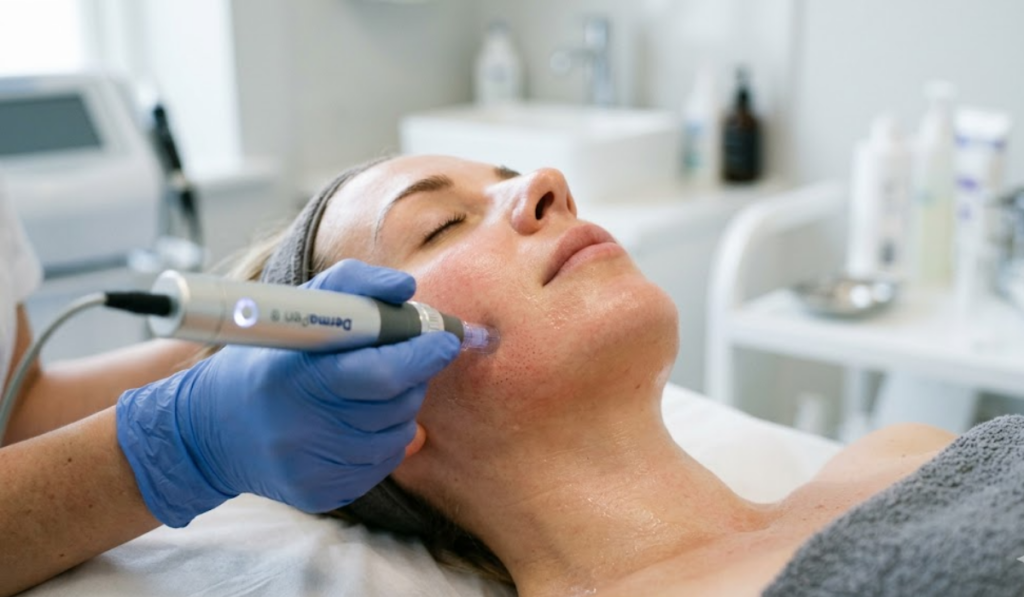
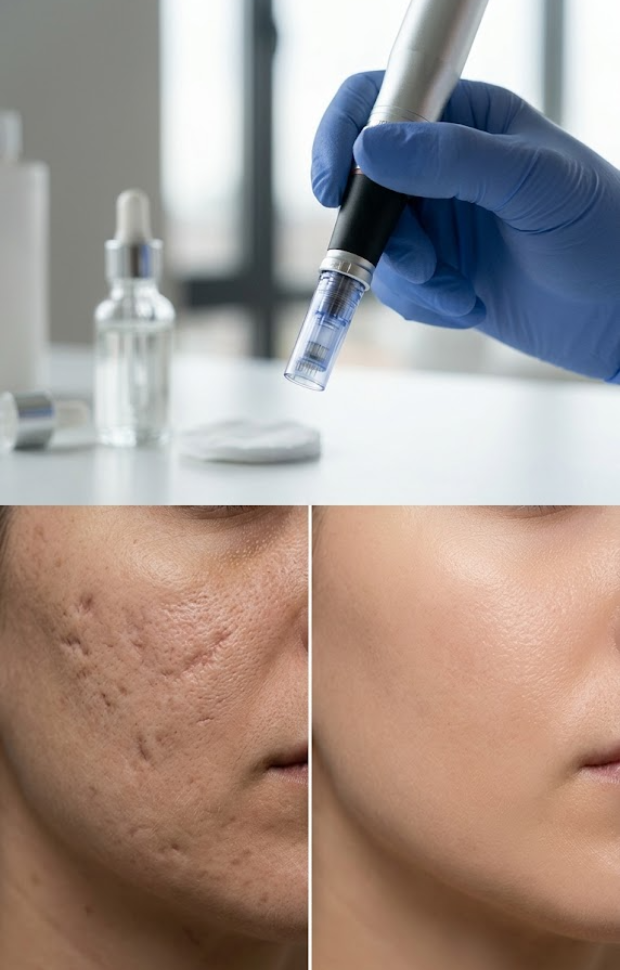
Microneedling is a minimally invasive skin rejuvenation procedure that uses sterile needles to create controlled micro-injuries within the skin.
How Microneedling Works
- Collagen production
- Elastin production
- Cellular turnover
- Tissue remodeling
Benefits of Microneedling for Acne Scars
Short-Term Benefits
- Improved skin texture
- Brighter complexion
- Enhanced skincare absorption
- Minimal downtime
Long-Term Benefits
- Reduction in scar depth
- Increased collagen density
- Improved skin firmness
- Smoother skin surface
Why Patients Choose Microneedling
Many patients appreciate that microneedling addresses structural skin remodeling rather than simply treating surface-level concerns.
What Is a Chemical Peel?
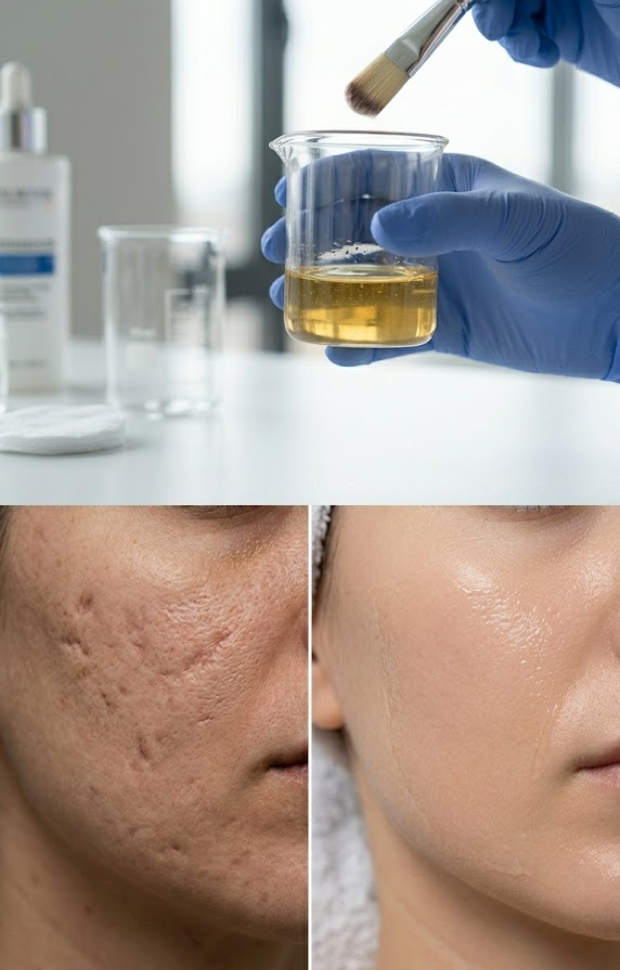
A chemical peel uses carefully selected acids to exfoliate damaged skin layers and stimulate skin renewal.
Common Types of Chemical Peels
- Glycolic Acid
- Lactic Acid
- Salicylic Acid
- Trichloroacetic Acid (TCA)
- Phenol-Based Peels
Benefits of Chemical Peels for Acne Scars
Short-Term Benefits
- Brighter skin tone
- Improved skin clarity
- Reduced congestion
Long-Term Benefits
- Improved hyperpigmentation
- More even skin tone
- Smoother skin texture
- Reduction of mild acne scarring
Why Patients Choose Chemical Peels
Chemical peels can address multiple skin concerns simultaneously, including discoloration, sun damage, and uneven texture.
Microneedling vs Chemical Peels: Side-by-Side Comparison
| Feature | Microneedling | Chemical Peel |
| Main Goal | Collagen Remodeling | Skin Resurfacing |
| Best for Deep Scars | ✓ | Limited |
| Best for Pigmentation | Moderate | ✓ |
| Collagen Stimulation | High | Moderate |
| Downtime | Mild | Variable |
| Risk of Pigmentation Changes | Generally Lower | Depends on Peel Strength |
| Results Timeline | Gradual | Often Faster for Pigmentation |
Which Treatment Is Better for Different Acne Scar Types?
| Scar Type | Preferred Treatment |
|---|---|
| Ice Pick Scars | Microneedling |
| Rolling Scars | Microneedling |
| Boxcar Scars | Microneedling |
| Hyperpigmentation | Chemical Peel |
| Uneven Skin Tone | Chemical Peel |
| Mixed Concerns | Combination Therapy |
Pros and Cons Comparison
| Treatment | Pros | Cons |
|---|---|---|
| Microneedling | Stimulates collagen production, improves deeper acne scars, suitable for many skin tones, minimal downtime | Requires multiple sessions, results develop gradually, temporary redness may occur |
| Chemical Peels | Improves pigmentation, brightens skin tone, enhances texture, can address multiple concerns simultaneously | May cause peeling, risk of pigmentation changes in some skin types, downtime varies by peel strength |
Microneedling is often preferred when scar depth and collagen remodeling are the primary concerns.
Chemical peels are often favored when discoloration, uneven skin tone, and superficial textural concerns are the main issues.
Many patients benefit from a customized treatment plan that incorporates elements of both.
Potential Risks and Side Effects
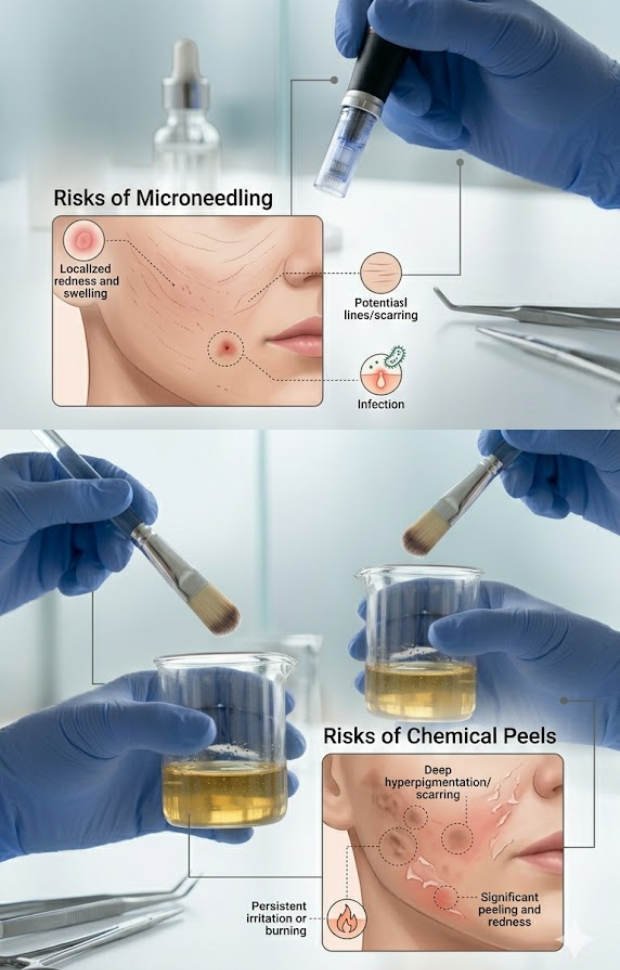
Microneedling Side Effects
Temporary redness
Mild swelling
Skin sensitivity
Temporary dryness
Chemical Peel Side Effects
Flaking and peeling
Temporary redness
Increased sun sensitivity
Hyperpigmentation risk in susceptible individuals
Risk levels vary based on treatment intensity and individual skin characteristics.
Recovery Timeline: What Results Can You Expect?
| Timeline | Microneedling | Chemical Peel |
|---|---|---|
| Day 1 | Mild redness and sensitivity | Redness, tightness, or mild irritation |
| Days 2–5 | Skin feels slightly dry or rough | Peeling or flaking may occur |
| Week 1 | Skin begins to appear smoother | Most visible peeling has resolved |
| Weeks 2–4 | Early collagen production begins | Improved skin tone and brightness become noticeable |
| Months 1–3 | Continued scar remodeling and texture improvement | Ongoing skin renewal and pigmentation improvement |
| Months 3–6 | Maximum collagen remodeling and scar improvement often become more noticeable | Long-term improvement depends on peel type and treatment plan |
Who May Be a Good Candidate?
Microneedling May Be Appropriate For:
Atrophic acne scars
Enlarged pores
Fine lines
Textural skin concerns
Chemical Peels May Be Appropriate For:
Acne-related pigmentation
Sun damage
Mild acne scars
Uneven skin tone
A consultation is necessary to determine suitability.
Who Should Avoid These Treatments?
Speak with a qualified provider if you have:
- Active skin infections
- Open wounds
- Active cystic acne
- Certain inflammatory skin disorders
- History of abnormal scar formation
More What We See at Circle Wellness
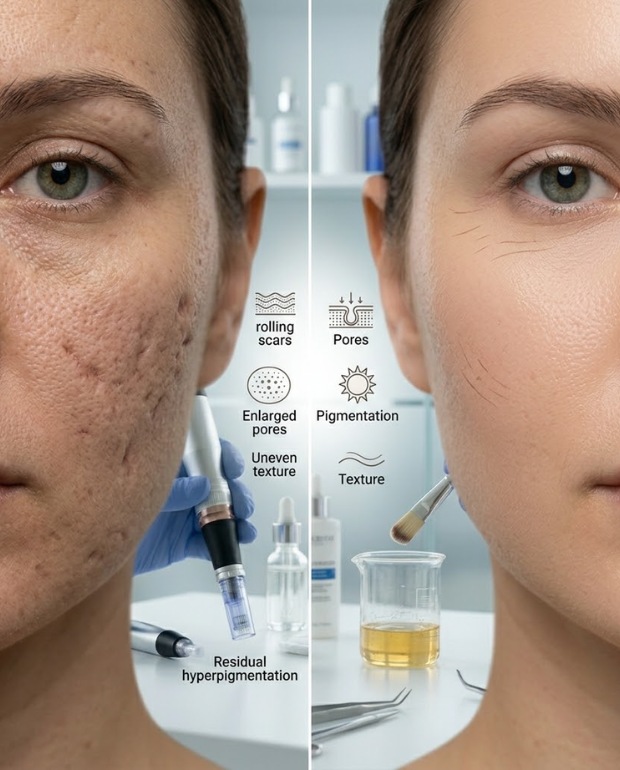
In clinical practice, most patients seeking acne scar treatment do not present with a single scar type.
Instead, many have a combination of:
- Rolling scars
- Enlarged pores
- Uneven texture
- Residual pigmentation
- Early signs of skin aging
Because acne scarring is often multifactorial, treatment plans frequently require a personalized combination approach rather than a one-size-fits-all solution.
Latest Research
Recent dermatology literature continues to support both microneedling and chemical peels as valuable treatment options for acne scars.
Research Highlights
- A systematic review published in Dermatologic Surgery reported that microneedling significantly improved atrophic acne scar appearance with a favorable safety profile.
- Studies published in the Journal of Clinical and Aesthetic Dermatology have demonstrated meaningful improvements in post-inflammatory hyperpigmentation following appropriately selected chemical peels.
- Multiple reviews suggest that combination treatment strategies may provide superior overall cosmetic outcomes compared with a single treatment modality.
Research continues to evolve, and treatment recommendations should always be individualized.
Common Mistakes Patients Make
- Expecting complete scar removal after one session
- Choosing treatment solely based on social media trends
- Ignoring post-treatment skincare instructions
- Failing to use sunscreen consistently
- Comparing results with patients who have different scar types
Questions to Ask Your Provider
- What type of acne scars do I have?
- Am I at risk for post-treatment pigmentation changes?
- How many sessions may I need?
- What downtime should I expect?
- Would combination therapy improve my results?
- What maintenance treatments might be necessary?
When Should You See an Aesthetic Provider?
- Acne scars affect your confidence
- Over-the-counter treatments have failed
- Skin texture concerns continue to worsen
- Hyperpigmentation persists for months
- You want a customized treatment strategy
Key Takeaways
- Microneedling is often preferred for deeper acne scars.
- Chemical peels are highly effective for pigmentation concerns.
- Both treatments require multiple sessions.
- Results vary depending on scar type and skin characteristics.
- Combination therapy may provide the most comprehensive improvement.
- Professional evaluation is essential for optimal treatment selection.
FAQs
Is microneedling better than chemical peels for acne scars?
Not necessarily. Microneedling often performs better for deeper scars, while chemical peels excel at treating pigmentation and superficial texture concerns.
How many sessions are usually needed?
Many patients require three to six sessions or more, depending on scar severity and treatment goals.
Which treatment has less downtime?
This varies based on peel depth and treatment intensity, but both are generally associated with manageable recovery periods.
Can darker skin tones receive these treatments?
Yes, although treatment selection should be individualized to minimize pigmentation risks.
Can acne scars be completely removed?
Most professional treatments improve the appearance of scars rather than eliminating them entirely.
Can microneedling and chemical peels be combined?
Yes. Combination protocols are commonly used to address multiple skin concerns simultaneously.
How long do results last?
Results can be long-lasting, especially when combined with appropriate skincare and sun protection.
Are these treatments painful?
Most patients experience mild discomfort that is generally manageable.
What is the recovery timeline?
Recovery varies by treatment type, intensity, and individual skin response.
Which treatment is more affordable?
Costs vary depending on provider expertise, treatment complexity, geographic location, and number of sessions required.
Making the Right Treatment Choice
Microneedling and chemical peels are both valuable acne scar treatments, but they serve different purposes. Microneedling is particularly effective for collagen stimulation and scar remodeling, while chemical peels excel at improving pigmentation and surface texture. The most appropriate treatment depends on scar type, skin tone, recovery goals, and overall skin health. A professional assessment remains the best way to determine the right treatment plan.