The Pregnancy Sleep Struggle: How Prenatal Massage May Help You Rest Better
You’re exhausted, but the moment your head hits the pillow, sleep feels impossible. Your back aches, you can’t get comfortable, you’re up to use the bathroom again, and your mind won’t quiet down. Pregnancy sleep struggles are real — and they can be one of the hardest parts of these months.
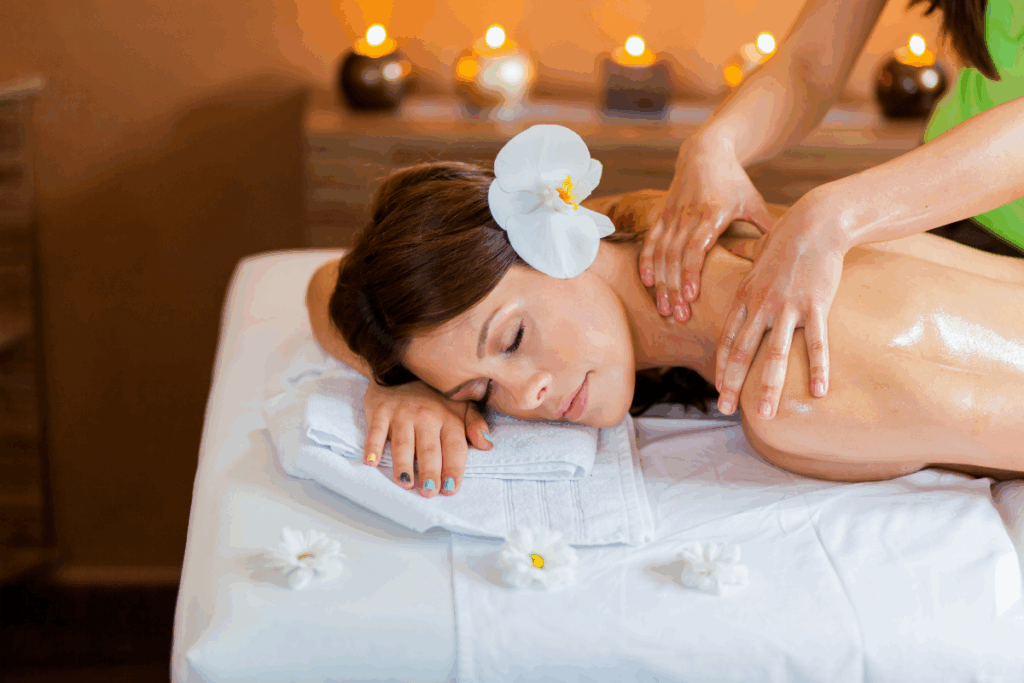
Here’s some comfort: for most healthy pregnancies, prenatal massage may help you relax and ease the tension and aches that interrupt sleep, making it a little easier to rest. It’s not a cure for sleepless nights, but it can be one calming piece of a better routine.
This guide explains why sleep gets so hard in pregnancy, how massage may help, the best sleep positions, and simple habits to help you rest.
Worn out from poor sleep? The team at Circle Wellness in Melville can talk through whether a relaxation-focused prenatal massage may help — no booking required.
Call or text Circle Wellness at (631) 888-5957 / (888) 293-5577 or book online .
Key Takeaways
- Sleep trouble is extremely common in pregnancy and usually has more than one cause.
- Prenatal massage may help you relax and ease the back, hip, and tension issues that disrupt sleep.
- Sleep position matters — side-sleeping with pillow support is generally recommended later in pregnancy.
- Simple habits help, like a wind-down routine, a cool dark room, and gentle movement.
- Talk to your provider about persistent insomnia, loud snoring, or restless legs — and before any sleep aid.
Who This Guide Is For
Why You Can Trust This Guide
This article draws on widely accepted pregnancy-care guidance from sources like ACOG and the Mayo Clinic, combined with hands-on experience supporting expecting moms. At Circle Wellness, prenatal sessions are performed by certified prenatal massage therapists, within a practice built around medical oversight and licensed specialists. We aim to set honest expectations and always point you back to your own provider for personal medical advice.
Why Is Sleep So Hard During Pregnancy?
Sleep gets harder because so many things change at once:
- Back and hip discomfort. Aches make it tough to settle and stay comfortable.
- A growing belly. Finding a comfortable position becomes a nightly puzzle.
- Frequent bathroom trips. Pressure on your bladder means more wake-ups.
- Heartburn. Hormones and pressure on your stomach can make lying down uncomfortable.
- Leg cramps and restless legs. These are common in pregnancy and can interrupt sleep.
- A racing mind. Excitement, worry, and hormones can keep your thoughts spinning.
- Shortness of breath. Later in pregnancy, your growing uterus can make breathing feel harder when lying down.
None of this means something is wrong. It means your body — and your mind — have a lot going on.
How Prenatal Massage May Help You Sleep
Massage won’t make pregnancy discomfort vanish, but it may help in a few meaningful ways:
- It promotes relaxation, helping your nervous system shift into a calmer state
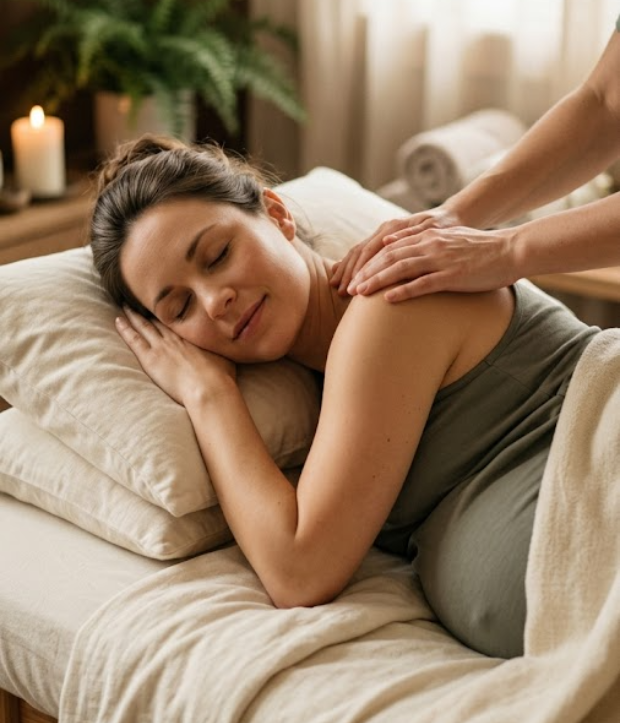
- It eases muscle tension in the back, hips, and shoulders that often interrupts sleep
- It can quiet a busy mind, offering a rare hour of rest
- It may make it easier to fall asleep when your body feels less tense
Some women report sleeping better after massage, and research suggests massage therapy may support relaxation and improved sleep during pregnancy. Results vary, and massage works best alongside good sleep habits — but for many moms, that sense of calm is exactly what they need. (New to massage? See [what to expect at your first prenatal massage].)
Related benefits moms often notice: less back and hip tension, lower stress, and a steadier mood.
Best Sleep Positions in Pregnancy
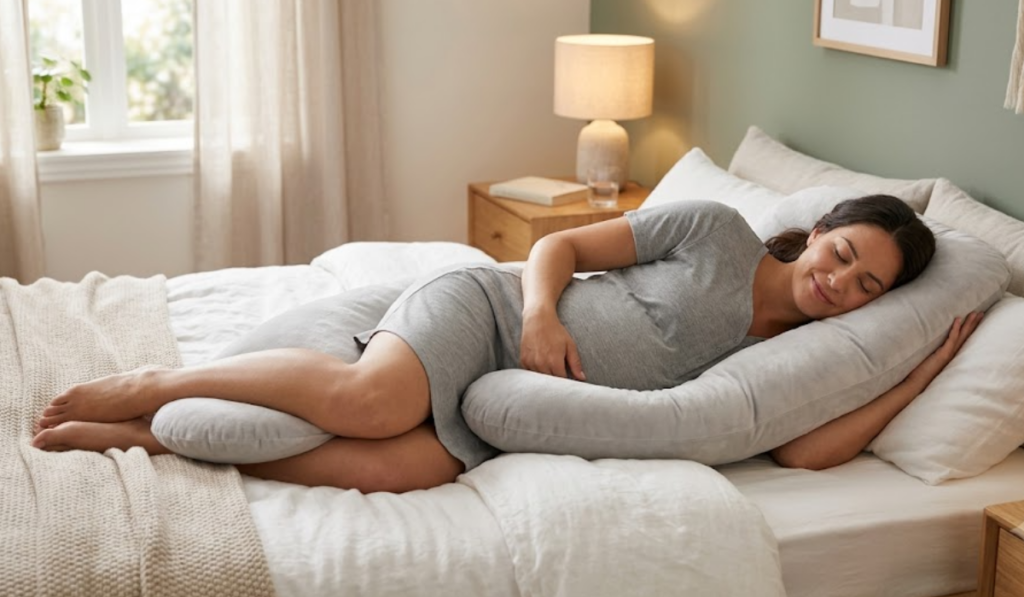
Comfort and safety guide your sleep setup, but here’s the general guidance — always check with your provider for your situation:
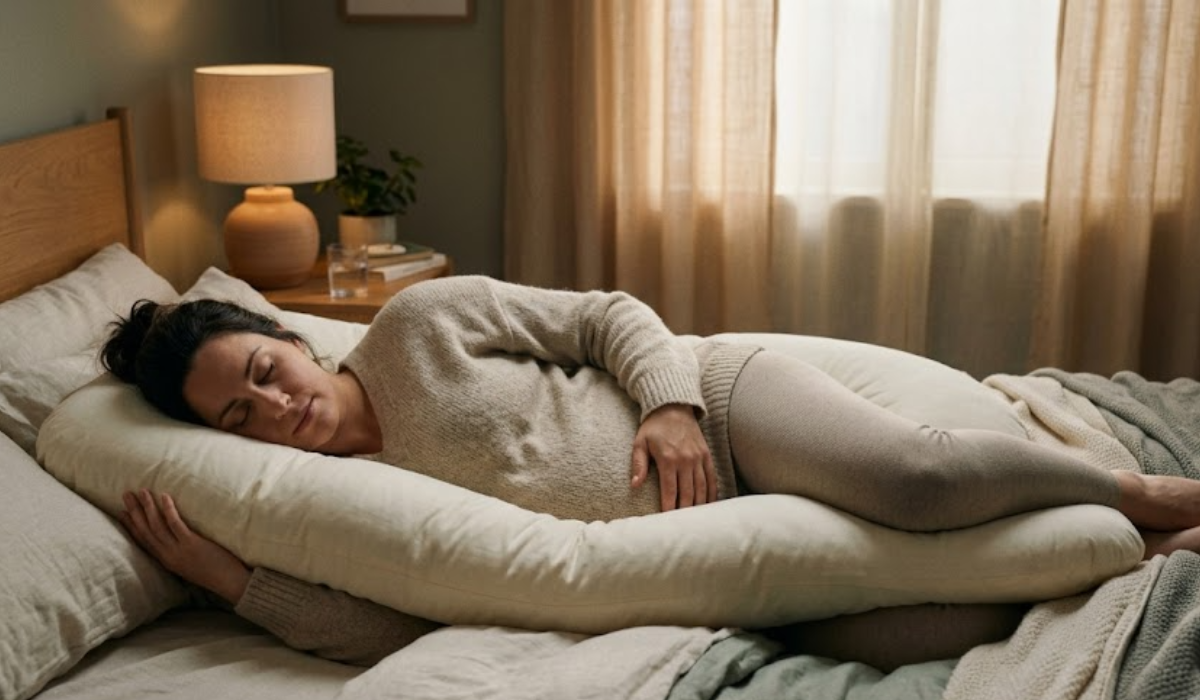
- Sleep on your side, which is generally recommended in later pregnancy. Many providers suggest the left side, which may support healthy circulation.
- Use pillows — one between your knees, one supporting your belly, and one behind your back can make side-sleeping much more comfortable.
- Avoid lying flat on your back for long stretches in the second and third trimesters, since this can press on a major blood vessel. If you wake up on your back, simply roll to your side.
- A pregnancy or body pillow can be a game-changer for staying comfortable.
Common Sleep Disruptors and What May Help
| Common disruptor | Why it happens | What may help |
| Back and hip discomfort | Weight, posture, and relaxin | Side-sleeping with pillows; prenatal massage to ease tension |
| Trouble getting comfortable | A growing belly | A pregnancy or body pillow; side-lying support |
| Frequent urination | Pressure on the bladder | Stay hydrated during the day, ease up on fluids before bed (ask your provider) |
| Heartburn | Hormones and pressure on the stomach | Smaller evening meals, propping up your head; ask your provider |
| Restless or crampy legs | Common in pregnancy | Gentle stretching and movement; raise it with your provider |
| A racing mind | Stress and hormones | A wind-down routine, slow breathing, relaxation; massage for calm |
Other Simple Ways to Rest Better
These habits often help — ask your provider which fit your pregnancy:
- Keep a consistent sleep routine, going to bed and waking around the same time
- Wind down with dim lights and a calm activity before bed
- Limit screens in the hour before sleep
- Keep your room cool and dark
- Stay active during the day with gentle movement or prenatal yoga
- Try slow, deep breathing or a short relaxation practice
- Ask your provider before using any sleep aid, supplement, or remedy
When to Ask Your Doctor First
When Not to Wait — Warning Signs
- A severe or constant headache
- Vision changes, like blurriness or seeing spots
- Chest pain or trouble breathing
- Pain, swelling, or redness in one leg
- Heavy bleeding or severe belly pain
- A fever
- Your baby moving less than usual
- Sudden swelling of your face or hands
Sleep by Trimester
- First trimester: Fatigue is high, but nausea and frequent urination can interrupt rest. Naps can help if you’re able.
- Second trimester: Often the easiest stretch for sleep, as early symptoms ease. A good time to build solid sleep habits.
- Third trimester: Usually the hardest — a big belly, pelvic pressure, heartburn, and restless legs all peak. Side-sleeping with plenty of pillows and a relaxing routine matter most now.
Common Myths About Pregnancy Sleep
Myth: Sleeping on your back with extra pillows is fine all pregnancy. In the second and third trimesters, it’s generally best to avoid long stretches on your back. Side-sleeping is usually recommended.
Myth: You’ll never sleep well pregnant, so don’t bother trying. Sleep is harder, but small changes — comfort, routine, relaxation — really can help.
Myth: Napping always ruins your night sleep. For many pregnant moms, short daytime rest is helpful, especially when nights are rough.
Myth: Over-the-counter sleep aids are always safe in pregnancy. Always check with your provider before using any sleep aid or supplement.
Who Benefits Most From a Relaxation-Focused Prenatal Massage?
This kind of session may be especially helpful if you:
- Struggle to fall or stay asleep
- Have back, hip, or shoulder tension at bedtime
- Feel stressed or have a racing mind at night
- Want a calm, restful break during a hard stretch of pregnancy
Questions to Ask Before Booking
- Are you trained and certified in prenatal massage?
- Do you offer a relaxation-focused session for better sleep?
- What positioning do you use?
- Should I get clearance from my OB-GYN first?
- When in the day is a massage most helpful for sleep?
Key Terms, Defined
- Insomnia: Trouble falling asleep, staying asleep, or getting restful sleep.
- Restless legs syndrome: An uncomfortable urge to move the legs, often at night; common in pregnancy.
- Sleep apnea: A condition where breathing repeatedly pauses during sleep, sometimes signaled by loud snoring and daytime sleepiness.
- Relaxin: A hormone that loosens joints during pregnancy, contributing to aches that can disrupt sleep.
In Summary
- Sleep trouble is common in pregnancy and usually has several causes.
- Prenatal massage may help you relax and ease the tension that interrupts rest.
- Side-sleeping with pillow support is generally recommended later on.
- Habits like routine, a cool dark room, and gentle movement help too.
- Tell your provider about persistent insomnia, snoring, or restless legs.
A Note From Our Prenatal Massage Team
Rest a Little Easier — Prenatal Massage in Melville
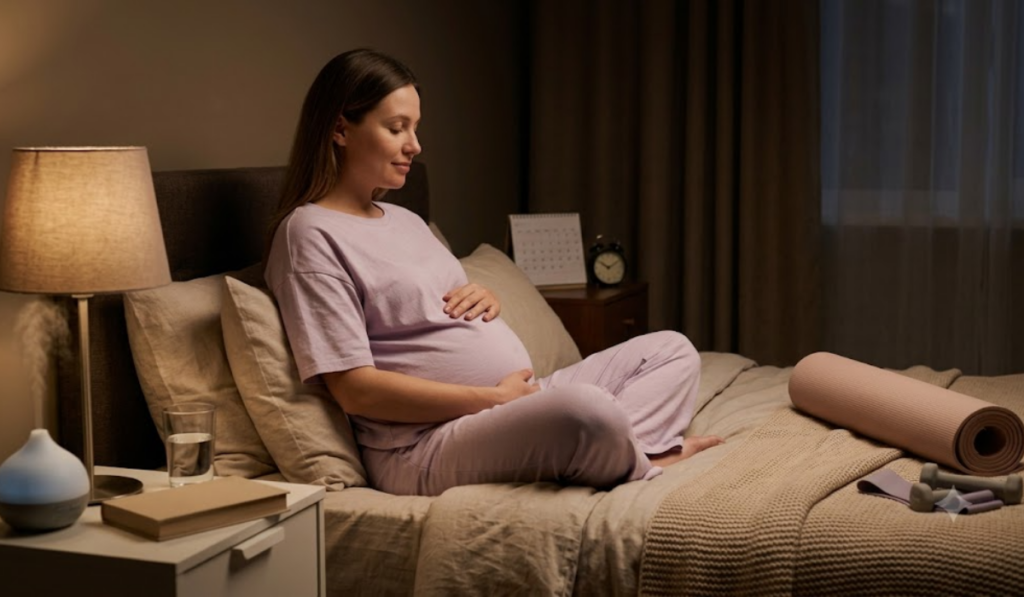
If poor sleep is wearing you down, you don’t have to just tough it out. At Circle Wellness, our certified prenatal massage therapists offer gentle, relaxation-focused sessions designed to help you unwind — and we’ll explain everything before you begin.
📍 Circle Wellness — 25 Melville Park Rd, Suite 200 B, Melville, NY 11747 (near Route 110 & the LIE)
📞 Call or text – (631) 888-5957 / (888) 293-5577·
🗓️ Book a gentle prenatal massage
We’re proud to support expecting moms across Melville and Long Island. No pressure — just answers when you’re ready.
Medical disclaimer
FAQs
Can prenatal massage help me sleep better during pregnancy?
For many healthy pregnancies, it may help by promoting relaxation and easing the back, hip, and tension issues that interrupt sleep. It isn’t a cure for insomnia, so pair it with good sleep habits and your provider’s guidance.
What's the best sleep position during pregnancy?
Side-sleeping is generally recommended later in pregnancy, often on the left side, with pillows between your knees and supporting your belly. Avoid long stretches flat on your back in the second and third trimesters.
Is a relaxation massage safe in the third trimester?
A gentle, relaxation-focused massage is typically safe in the third trimester for healthy pregnancies, with side-lying support. It’s often when sleep is hardest, so many moms find it soothing then.
Why can't I sleep in the third trimester?
A larger belly, pelvic pressure, heartburn, frequent urination, and restless legs all tend to peak late in pregnancy. Side-sleeping with pillow support and a calm routine can help.
What else helps pregnancy sleep besides massage?
A consistent routine, a cool dark room, limited screens before bed, gentle daytime movement, and slow breathing can all help. Ask your provider before using any sleep aid.
Should I tell my doctor about my sleep problems?
Yes, especially for persistent insomnia, loud snoring with pauses in breathing, or restless legs, since these may have treatable causes.
Are sleep supplements like melatonin safe in pregnancy?
Always check with your provider before taking any sleep supplement or aid during pregnancy.
Do I need my doctor's approval before a prenatal massage?
Not always, but it’s strongly recommended with a high-risk pregnancy, a complication, or any condition your provider is monitoring.
How do I book a relaxing prenatal massage in Melville?
Call or text Circle Wellness at (631) 888-5957 / (888) 293-5577 or book online .
We’re happy to answer questions before you schedule.