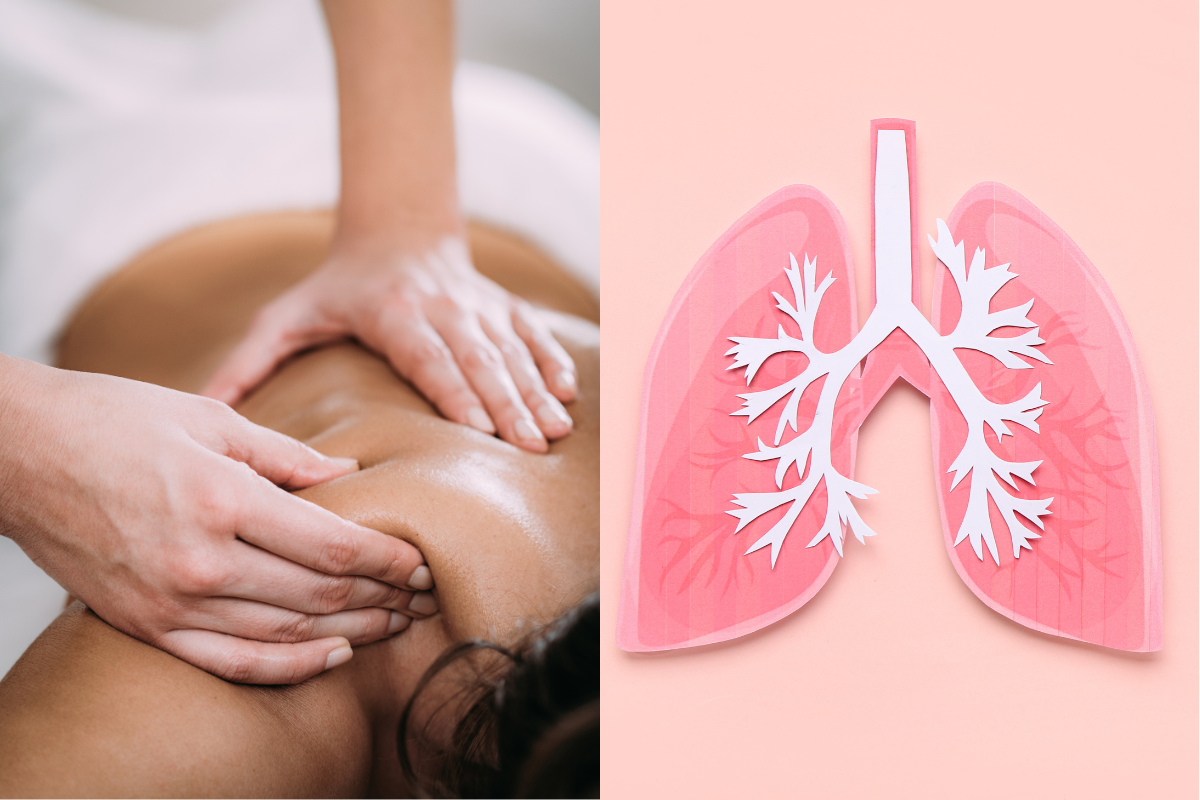
Massage therapy cannot open narrowed airways, increase oxygen levels, clear a lung infection, reverse lung damage, or treat the underlying cause of asthma, COPD, pneumonia, or another respiratory disease.
It may still have a limited supportive role. Frequent coughing, increased breathing effort, or recovery from illness may cause neck, shoulder, upper-back, chest-wall, or abdominal muscle soreness. When the respiratory condition is medically stable, modified massage may help reduce some muscular discomfort or provide temporary relaxation.
Feeling more comfortable after massage does not necessarily mean lung function or oxygen levels have improved.
Evidence specifically supporting massage for respiratory disease remains limited.
Key Takeaways
- Massage does not treat asthma airway inflammation or stop an asthma attack.
- It does not reverse COPD, emphysema, pulmonary fibrosis, or other lung damage.
- It cannot treat pneumonia or respiratory infections.
- It does not reliably increase blood oxygen levels.
- It may temporarily reduce muscular tension associated with coughing, stress, posture, or increased breathing effort.
- Pulmonary rehabilitation, prescribed medication, breathing training, and airway-clearance therapy when indicated have stronger respiratory roles.
- Postpone massage during acute shortness of breath, fever, contagious illness, asthma attack, COPD exacerbation, unexplained chest pain, or unstable oxygen needs.
What Counts as a Respiratory Issue?
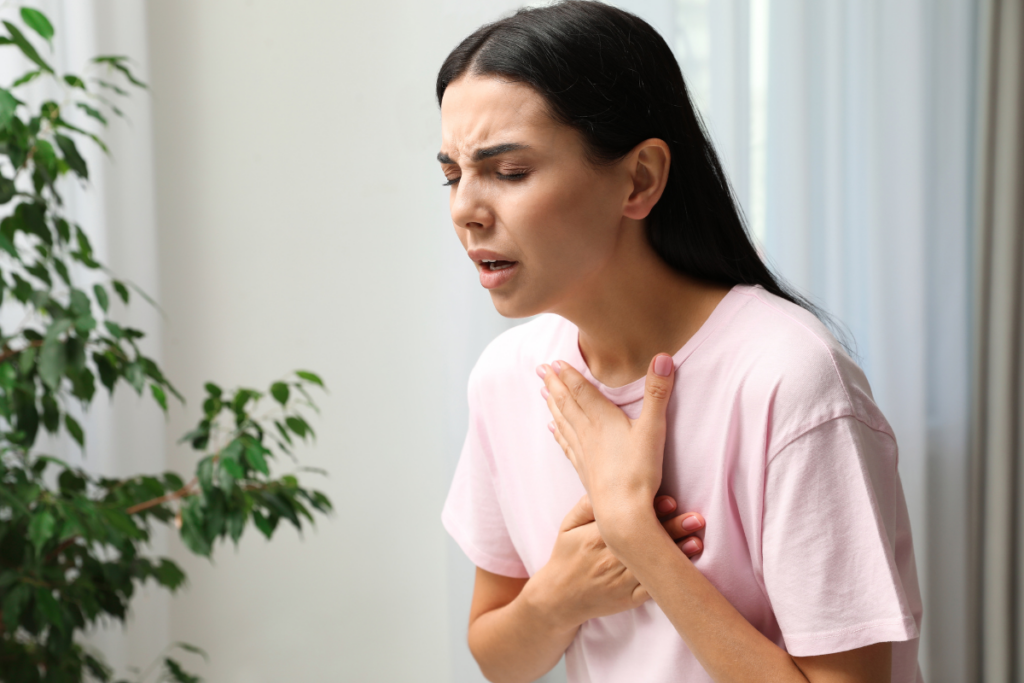
“Respiratory issue” may include asthma, COPD, bronchitis, emphysema, bronchiectasis, pulmonary fibrosis, pneumonia, viral infections, long COVID, allergies, or breathing-pattern disorders.
Breathlessness can also come from heart disease, blood clots, neurological conditions, or anxiety. These conditions require different treatment, so symptoms should be medically understood before massage is considered.
How Breathing Problems Can Affect Muscles
The diaphragm is the main breathing muscle, but the neck, shoulders, upper ribs, chest, upper back, and abdominal muscles may work harder when breathing demand increases.
Frequent coughing or labored breathing may contribute to neck and shoulder fatigue, upper-back soreness, chest-wall tenderness, rib discomfort, abdominal soreness, or difficulty finding a comfortable position.
Massage may address these secondary muscular symptoms—not the respiratory disease itself.
A therapist should not claim that the diaphragm is “stuck,” muscles are blocking oxygen, or massage can reset the breathing system.
What Massage May Realistically Help
For a medically stable person, massage may help with:
- Temporary neck and shoulder tension
- Upper-back soreness
- Muscular discomfort after coughing
- Selected chest-wall muscle tension
- Stress-related guarding
- Positioning comfort
- Relaxation
Chest or rib work should be gentle, specifically consented to, and avoided with unexplained chest pain, fracture risk, recent surgery, infection, or respiratory instability.
What Massage Cannot Do
- Opens constricted airways
- Stops an asthma attack
- Reverses COPD
- Restores damaged lung tissue
- Reliably raises oxygen saturation
- Treats pneumonia
- Kills respiratory infections
- Clears a pulmonary embolism
- Replaces oxygen or inhalers
- Clears mucus from the lungs
- Cures long COVID
- Detoxifies the respiratory system
What Does the Evidence Show?
Evidence remains limited.
A Cochrane review found insufficient evidence to support or reject manual therapy for asthma.
Small studies of manual diaphragm techniques in stable COPD have reported possible changes in diaphragm mobility, inspiratory capacity, or exercise measures, but they do not establish ordinary massage as standard COPD care.
Airway-clearance guidelines also distinguish specialized respiratory therapy from ordinary massage.
Massage and Asthma
Massage does not treat airway inflammation or bronchospasm.
When asthma is stable, massage may help with muscular tension, upper-back soreness, or relaxation.
Do not continue massage during an asthma attack, severe wheezing, difficulty speaking, faintness, or severe breathing distress. Follow the asthma action plan and prescribed reliever treatment.
Massage and COPD
A person with stable COPD may experience shoulder fatigue, upper-back discomfort, coughing-related soreness, or difficulty lying flat.
Massage may be considered when symptoms and oxygen needs are stable and there is no current exacerbation.
Postpone treatment for worsening breathlessness, increased wheezing or cough, changed sputum, fever, confusion, new chest pain, increased oxygen requirement, or recent hospitalization without clearance.
Pulmonary rehabilitation has a much stronger clinical role than massage.
Massage After Respiratory Infection
After flu, COVID-19, pneumonia, or another infection, massage should wait until fever has resolved, the contagious period has passed, breathing is stable, symptoms are improving, and the patient can tolerate the appointment.
Massage does not “sweat out” an infection, kill viruses, prevent pneumonia, or detoxify the body.
Massage and Long COVID
One small study combined manual diaphragm release with inspiratory-muscle training, but it does not prove that ordinary massage treats long COVID. Treatment should be conservative, and patients should not be encouraged to push through symptom flares.
Can Massage Clear Mucus?
Ordinary massage is not mucus-clearance therapy.
Specialized airway-clearance treatment may include directed coughing, postural drainage, percussion, vibration, positive-expiratory-pressure devices, or cough-assistance techniques. These should be selected by appropriately trained respiratory or rehabilitation professionals.
Which Areas May Be Treated?
Neck, Shoulders, and Upper Back
Gentle massage may be used for muscular tension. Pressure should be modified for osteoporosis, anticoagulant use, rib fragility, or recent illness.
Chest Wall and Ribs
Treatment should be optional, gentle, and clearly explained. Unexplained chest pain should be medically evaluated first.
Diaphragm Region
A therapist cannot directly knead the entire diaphragm. “Diaphragm release” usually refers to manual contact near the lower rib margins and requires specific training.
Abdomen
Abdominal treatment is optional and may be unsuitable during pregnancy, after surgery, with hernia, acute pain, or unexplained swelling.
Who May Be a Reasonable Candidate?
When Should Massage Be Postponed?
Postpone massage for:
- Acute or worsening shortness of breath
- Asthma attack or COPD exacerbation
- Fever or contagious respiratory illness
- Suspected pneumonia
- New chest pain
- New or increased oxygen need
- Coughing up blood
- Confusion or fainting
- Suspected blood clot
- Recent respiratory hospitalization without clearance
Seek urgent medical care for severe breathing difficulty, persistent chest pressure, confusion, fainting, seizures, or rapidly worsening symptoms.
What Happens During a Respiratory-Aware Massage?
The therapist should review the respiratory diagnosis, recent symptoms, infections, hospitalizations, oxygen use, medications, blood thinners, comfortable positions, and treatment goals.
Possible positions include semi-reclined, side-lying, seated, or face up with the upper body elevated. Pressure should start conservatively.
Stop or modify treatment for worsening breathlessness, chest pain, dizziness, wheezing, nausea, unusual weakness, or inability to tolerate the position.
Oxygen Safety
Patients using supplemental oxygen may still receive modified massage when medically stable.
The therapist should never change oxygen flow, turn it off without medical direction, kink tubing, or disconnect equipment unnecessarily.
Oxygen supports combustion, so oil-based or petroleum products should be kept away from oxygen equipment.
How Should Benefit Be Measured?
Track practical outcomes such as neck or shoulder discomfort, upper-back soreness, positioning comfort, sleep comfort, ability to participate in prescribed activity, duration of benefit, and side effects.
Oxygen saturation, spirometry, peak flow, inhaler use, exacerbations, or exercise testing should be interpreted by medical or respiratory professionals.
There is no evidence-based preset number of massage sessions.

Medical Massage at Circle Wellness
Circle Wellness provides medical massage through licensed therapists in Melville.
FAQs

Can massage improve breathing?
It may reduce muscular tension or help a stable person relax, but it is not proven to improve lung function or oxygen levels.
Can massage help asthma?
It may help secondary muscle tension when asthma is stable. It does not treat an asthma attack.
Can massage help COPD?
Possibly for muscular comfort in stable patients, but it does not reverse airflow obstruction.
Can massage help pneumonia?
No. Active pneumonia requires medical treatment.
Can massage help long COVID?
Evidence is limited. Massage should not be presented as a long COVID treatment.
Is massage safe while using oxygen?
It may be when the patient is stable and oxygen safety precautions are followed.
Is deep tissue massage appropriate?
Often not for medically fragile patients, people with rib pain, anticoagulant use, osteoporosis, or recent respiratory illness.
How many sessions are needed?
There is no evidence-based number. Continue only when massage provides meaningful muscular comfort or functional benefit.
Final Takeaway
Massage therapy may have a limited supportive role for medically stable people with neck, shoulder, upper-back, chest-wall, or coughing-related muscular discomfort.
It should not be presented as a treatment that opens airways, raises oxygen, clears pneumonia or mucus, reverses COPD, cures asthma, restores damaged lungs, or replaces pulmonary rehabilitation.
The key question is whether there is a safe, clearly defined muscular problem that massage may help without delaying the respiratory care the patient actually needs.
Medical Disclaimer
- Severe or worsening shortness of breath
- Chest pain or pressure
- Blue, gray, or unusually pale lips or skin
- Coughing up blood
- Confusion
- Fainting
- New oxygen needs
- Severe weakness
- A serious asthma attack
- Another concerning respiratory symptom