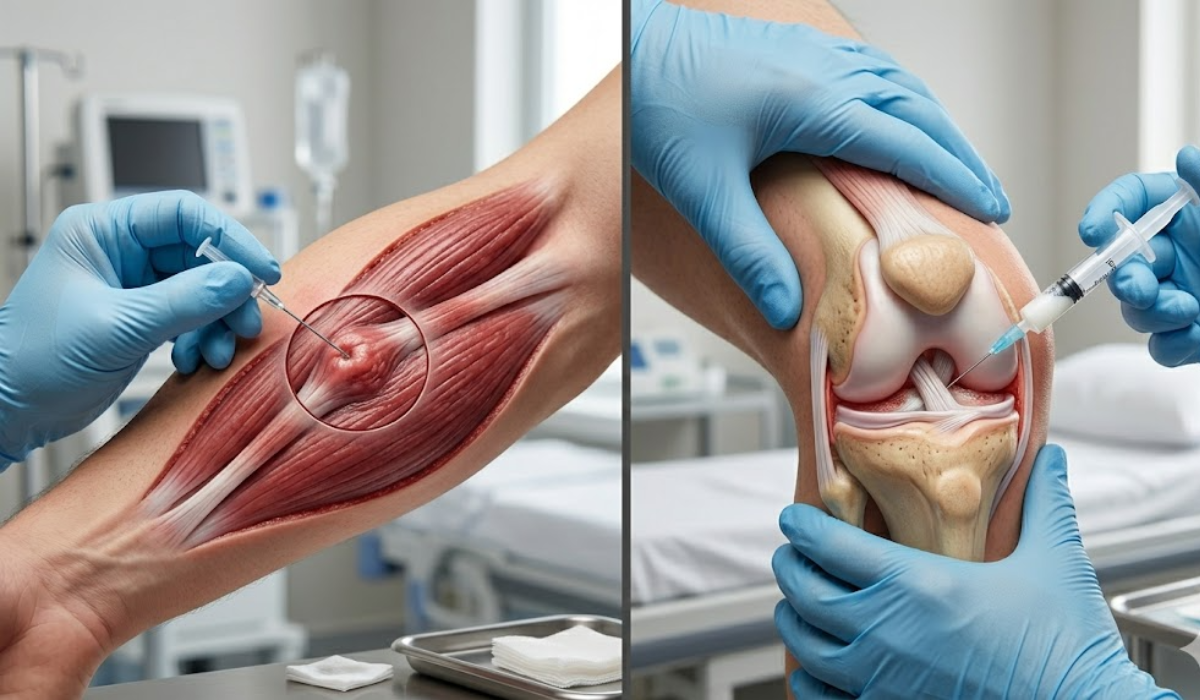
Key Facts at a Glance
| Feature | Trigger Point Injections | Cortisone Shots |
|---|---|---|
| Target Area | Muscle knots (myofascial pain) | Joints, tendons, bursae |
| Main Purpose | Relax tight muscle bands | Reduce inflammation |
| Common Use | Neck, shoulders, back pain | Arthritis, tendonitis, joint pain |
| Medication Used | Local anesthetic ± saline | Corticosteroid |
| Onset of Relief | Fast (minutes to days) | Few days |
| Duration | Short to moderate | Moderate to long |
Understanding Chronic Musculoskeletal Pain
Musculoskeletal pain can arise from different structures in the body, including muscles, joints, tendons, and connective tissue.
In many patients, pain is not caused by a single issue. For example:
- Muscle tightness can refer pain to other areas
- Joint inflammation can limit movement and cause stiffness
- Poor posture or injury can trigger both at the same time
Because of this, injection-based therapies are often chosen based on the exact source of pain, not just the location.
What Are Trigger Point Injections?
Trigger point injections are used to treat myofascial pain syndrome, a condition where tight bands of muscle fibers form painful “knots.”
How Trigger Point Injections Work
- Relax muscle fibers
- Improve blood flow
- Break pain-spasm cycles
- Reduce referred pain patterns
- Restore normal muscle function
Benefits of Trigger Point Injections

Short-Term Benefits
- Rapid muscle relaxation
- Reduced localized pain
- Improved range of motion
- Decreased muscle stiffness
Long-Term Benefits
- Reduced recurrence of muscle spasms
- Improved posture-related pain
- Better functional movement
- Enhanced response to physiotherapy
Limitations of Trigger Point Injections
- Relief may be temporary without addressing root cause
- Multiple sessions may be required
- Works best when combined with stretching or rehab
- Not effective for joint inflammation
What Are Cortisone Shots?
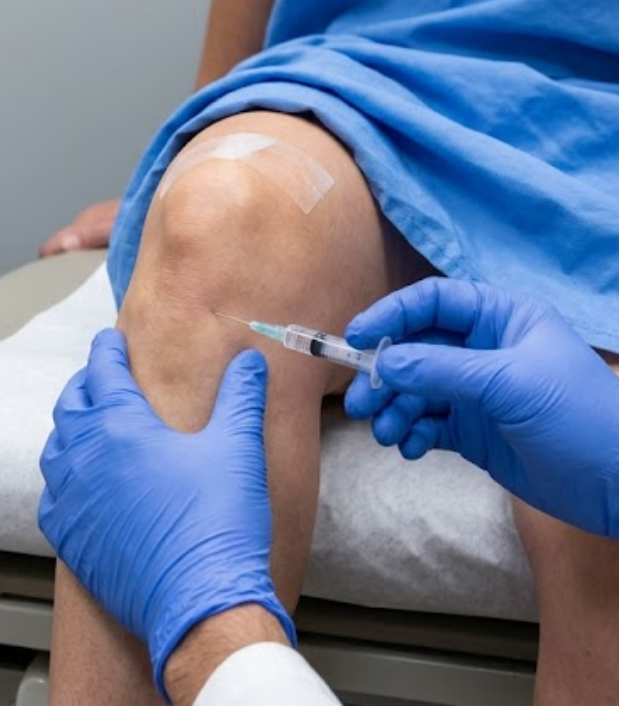
Cortisone injections are anti-inflammatory treatments that deliver corticosteroid medication directly into a joint, tendon, or inflamed tissue.
How Cortisone Shots Work
Corticosteroids reduce inflammation by:
- Blocking inflammatory chemicals
- Reducing swelling in tissues
- Decreasing immune system overactivity in the area
- Improving joint mobility and pain levels
Benefits of Cortisone Shots
Short-Term Benefits
- Significant pain relief
- Reduced swelling and inflammation
- Improved joint movement
- Relief from flare-ups
Long-Term Benefits
- Extended symptom control in chronic conditions
- Improved function in degenerative joint disease
- Delayed need for more invasive procedures in some cases
Limitations of Cortisone Shots
- Not a permanent cure
- Repeated use may weaken tissues over time
- Effects may diminish with frequent use
- Not suitable for all conditions
Trigger Point Injections vs Cortisone Shots: Key Differences
| Factor | Trigger Point Injections | Cortisone Shots |
|---|---|---|
| Primary Target | Muscle tightness | Inflammation |
| Pain Type | Myofascial pain | Joint/tendon pain |
| Mechanism | Muscle relaxation | Anti-inflammatory action |
| Best For | Muscle knots, spasms | Arthritis, bursitis, tendonitis |
| Treatment Goal | Release muscle tension | Reduce inflammation |
| Duration of Effect | Short to moderate | Moderate to long |
Which Treatment Is Better for Different Conditions?
Trigger Point Injections Work Best For:
- Neck and shoulder muscle knots
- Upper back tightness
- Myofascial pain syndrome
- Postural muscle strain
- Referred muscular pain
Cortisone Shots Work Best For:
- Osteoarthritis
- Bursitis
- Tendonitis
- Joint inflammation (knee, shoulder, hip)
- Swollen or inflamed joints

Can These Treatments Be Combined?
Yes. In some patients, both muscle tension and joint inflammation coexist.
A combined treatment plan may:
- Improve overall pain relief
- Address multiple pain sources
- Reduce dependency on oral medications
- Improve rehabilitation outcomes
However, treatment sequencing should always be determined by a medical professional.
What We See at Circle Wellness
In clinical practice, many patients with chronic pain present with overlapping issues such as:
- Muscle tightness due to posture or stress
- Joint inflammation from overuse or degeneration
- Reduced mobility leading to compensatory muscle strain
In such cases, a single injection type may not fully resolve symptoms. A comprehensive approach—combining injections with rehabilitation, posture correction, and lifestyle modification—often provides more sustainable relief.
Common Mistakes Patients Make
- Assuming all pain is “muscle pain”
- Choosing injections without proper diagnosis
- Ignoring physiotherapy after injections
- Expecting permanent results from a single shot
- Delaying treatment until pain becomes severe
When Should You Consider These Treatments?
Seek evaluation if you experience:
- Persistent muscle or joint pain for more than 2–4 weeks
- Pain that limits daily activities
- Stiffness or reduced range of motion
- Recurrent flare-ups
- Pain not responding to basic treatment
Key Takeaways
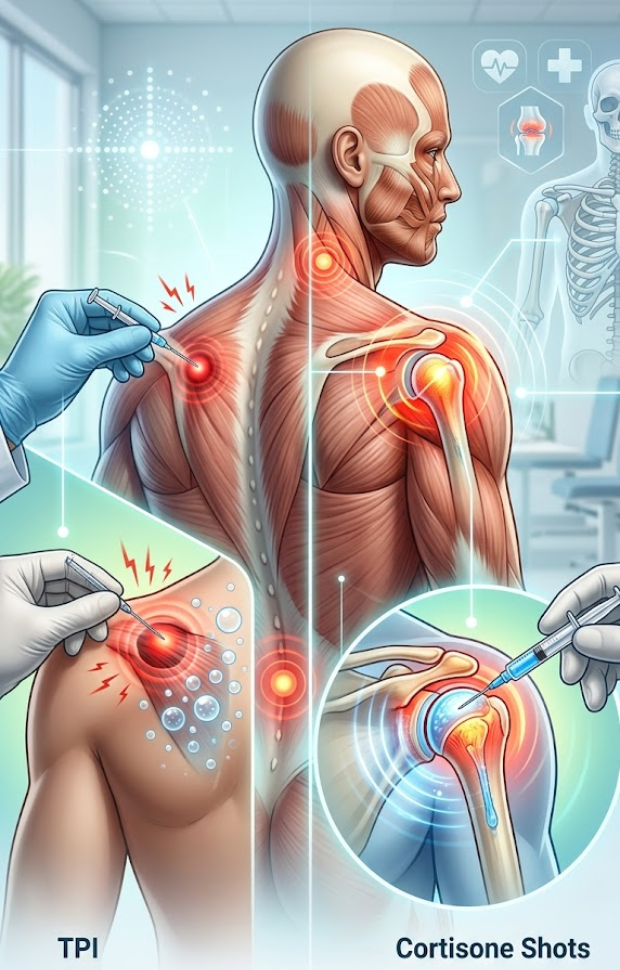
- Trigger point injections target muscle knots and tightness
- Cortisone shots target inflammation in joints and soft tissues
- They treat different pain mechanisms
- Correct diagnosis is essential for effective treatment
- Some patients may benefit from both approaches
- Long-term results improve when combined with rehabilitation
FAQs
Are trigger point injections painful?
Most patients feel mild discomfort during the injection, followed by relief as muscle tension reduces.
How long do cortisone shots last?
Relief may last from several weeks to a few months depending on the condition.
Which is safer: trigger point injections or cortisone shots?
Both are generally safe when administered by qualified professionals, but suitability depends on diagnosis.
Can I return to normal activities after injections?
Yes, but activity modification may be recommended for optimal recovery.
How many injections will I need?
This varies based on condition severity and response to treatment.
Making the Right Treatment Choice
Trigger point injections and cortisone shots are both effective pain management tools, but they are not interchangeable. Trigger point injections focus on releasing muscle tension, while cortisone shots reduce inflammation within joints and soft tissues. The best treatment depends on the underlying cause of pain, and many patients achieve optimal results through a personalized, multi-modal approach tailored to their condition.