You’re Tired All Day— But Still Can’t Sleep at Night
You finally get into bed, hoping tonight will be different.
But instead:
- Your mind keeps racing
- Your body feels tense
- You wake up multiple times
- Or you sleep for hours and still feel exhausted
For many people, sleep disturbances become a frustrating cycle:
- Poor sleep increases stress
- Stress increases physical tension
- Tension makes sleep even harder
At Circle Wellness, many patients are surprised to learn that sleep issues are often connected to the body’s physical stress patterns—not just mental exhaustion.
One integrative approach used to support whole-body relaxation is OMT (Osteopathic Manipulative Treatment).
What Are Sleep Disturbances?

Sleep disturbances refer to ongoing problems that affect sleep quality, timing, or restoration.
This may include:
- Difficulty falling asleep
- Frequent waking during the night
- Restless sleep
- Waking up feeling unrefreshed
- Stress-related sleep disruption
Occasional sleep problems are common. But when poor sleep becomes chronic, it can affect:
- Energy levels
- Mood
- Immune health
- Focus and productivity
- Overall wellness
You’re Tired All Day— But Still Can’t Sleep at Night

Sleep is closely tied to the nervous system.
When the body remains in a prolonged stress response:
- Muscles stay tight
- Breathing becomes shallow
- Heart rate may remain elevated
- Relaxation becomes more difficult
Common tension areas include:
- Neck and shoulders
- Jaw
- Chest and diaphragm
- Lower back
Even if you feel mentally tired, the body may still feel physically “on alert.”
What Is OMT (Osteopathic Manipulative Treatment)?
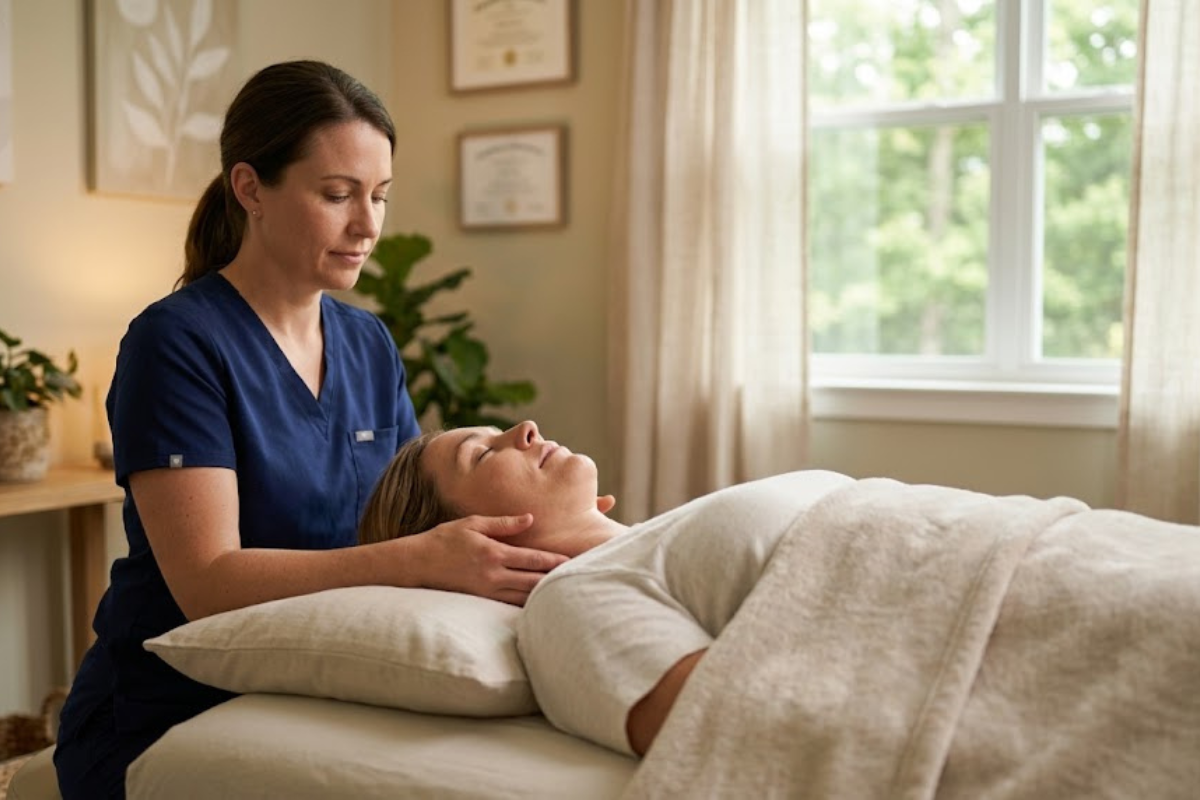
OMT is a hands-on treatment performed by licensed osteopathic physicians (DOs).
It focuses on improving how the body’s systems work together, including:
- Muscles
- Joints
- Connective tissue (fascia)
- Nervous system function
Common techniques may include:
- Myofascial release
- Gentle soft tissue manipulation
- Cranial osteopathic techniques
- Rib and diaphragm mobilization
The goal is to reduce physical restriction and support the body’s ability to regulate and recover naturally.
How OMT May Help Sleep Disturbances

Helps Reduce Physical Tension
Chronic muscle tightness can make it difficult for the body to fully relax before sleep.
OMT helps release stress-related tension patterns.
Supports Nervous System Balance
Gentle osteopathic techniques may help calm the body’s stress response and promote relaxation.
Improves Breathing Mechanics
Tension in the ribs, chest, or diaphragm may affect breathing quality during sleep. OMT may help improve mobility and breathing efficiency.
Helps Address Pain-Related Sleep Disruption
Neck pain, back discomfort, and tension headaches can interrupt sleep throughout the night.
Reducing physical discomfort may support better rest.
Encourages Whole-Body Relaxation
Many patients report feeling calmer and less physically “wired” after treatment.
The Science Behind OMT & Sleep Support

Research suggests osteopathic manipulative techniques may influence:
- Muscle tension
- Autonomic nervous system regulation
- Relaxation responses
Some studies have shown improvements in:
- Stress-related symptoms
- Physical comfort
- Overall well-being
Important:
OMT is not a cure for insomnia or serious sleep disorders. Sleep disturbances can also be linked to medical, neurological, or psychological conditions that require proper evaluation.
What to Expect During an OMT Session
At Circle Wellness, treatment begins with a personalized assessment.
Your session may include:
1. Medical Consultation
- Discussion of sleep concerns, stress patterns, and physical symptoms
2. Physical Evaluation
- Assessment of posture, breathing mechanics, and muscular tension
3. Hands-On Treatment
- Gentle manual techniques designed to reduce restriction and support relaxation
What it feels like:
- Calm and non-invasive
- Mild stretching and pressure
- Relaxing rather than forceful
Many patients report feeling:
- More physically relaxed
- Less tense
- Better able to unwind after treatment
Who May Benefit from OMT for Sleep Disturbances?

OMT may be helpful for:
- Stress-related sleep disruption
- Tension-related discomfort affecting sleep
- Poor sleep associated with chronic muscle tightness
- Patients seeking non-pharmaceutical wellness support
It may also complement:
- Healthy sleep habits
- Stress management strategies
- Mental wellness support
- Conventional medical care
In clinical practice, OMT is often used for patients experiencing chronic stress-related tension, shallow breathing patterns, or physical discomfort that may interfere with the body’s ability to fully relax before sleep.
Safety & Medical Considerations

OMT is generally considered safe when performed by a licensed osteopathic physician.
However:
- Persistent insomnia should be medically evaluated
- Conditions such as sleep apnea require proper diagnosis and treatment
- OMT is not a replacement for psychiatric or emergency medical care
A comprehensive medical assessment is important before beginning treatment.
Why Choose a Medical Wellness Clinic?
Sleep disturbances are rarely caused by one single issue.
At Circle Wellness, care is:
- Physician-guided
- Personalized to your physical and lifestyle patterns
- Focused on whole-body wellness
This approach helps address:
- Nervous system stress
- Physical tension
- Recovery and relaxation patterns
Rather than simply masking symptoms.
Ready to Support Better Sleep Naturally?

If stress, tension, or physical discomfort are making it harder to rest, addressing the underlying patterns may help improve your sleep quality over time.
At Circle Wellness, OMT is used as part of a personalized wellness approach to:
- Reduce tension
- Support relaxation
- Promote overall recovery and well-being
Book your personalized consultation today to receive a physician-guided assessment and customized wellness plan tailored to your sleep concerns, tension patterns, and long-term recovery goals.
Because better sleep often starts with helping the body finally let go of tension.
FAQs
Can OMT help with sleep disturbances?
OMT may help reduce physical tension and support nervous system relaxation, which can improve sleep quality for some patients.
Does stress affect sleep quality?
Yes. Chronic stress can keep the nervous system overactive, making restful sleep more difficult.
Is OMT relaxing?
Many patients describe OMT as calming and physically relaxing due to its gentle hands-on techniques.
Can physical tension cause poor sleep?
Yes. Muscle tightness, discomfort, and stress-related tension can interfere with the body’s ability to fully relax during sleep.
Is OMT safe?
When performed by a licensed osteopathic physician, OMT is generally considered safe and non-invasive.
Can OMT replace sleep medication?
OMT should not replace prescribed treatment plans without medical guidance, but it may complement broader wellness and sleep-support strategies.
Conclusion
Sleep disturbances are often connected to both the mind and body.
OMT offers a non-invasive, physician-guided approach focused on reducing physical tension, supporting nervous system balance, and helping the body relax more naturally.
And for many patients, that physical relaxation is an important step toward deeper, more restorative sleep.